New membrane speeds up purification of industrial solvents
Researchers at KU Leuven have developed a graphene oxide membrane that efficiently separates water from isopropanol, reducing energy use in solvent purification.
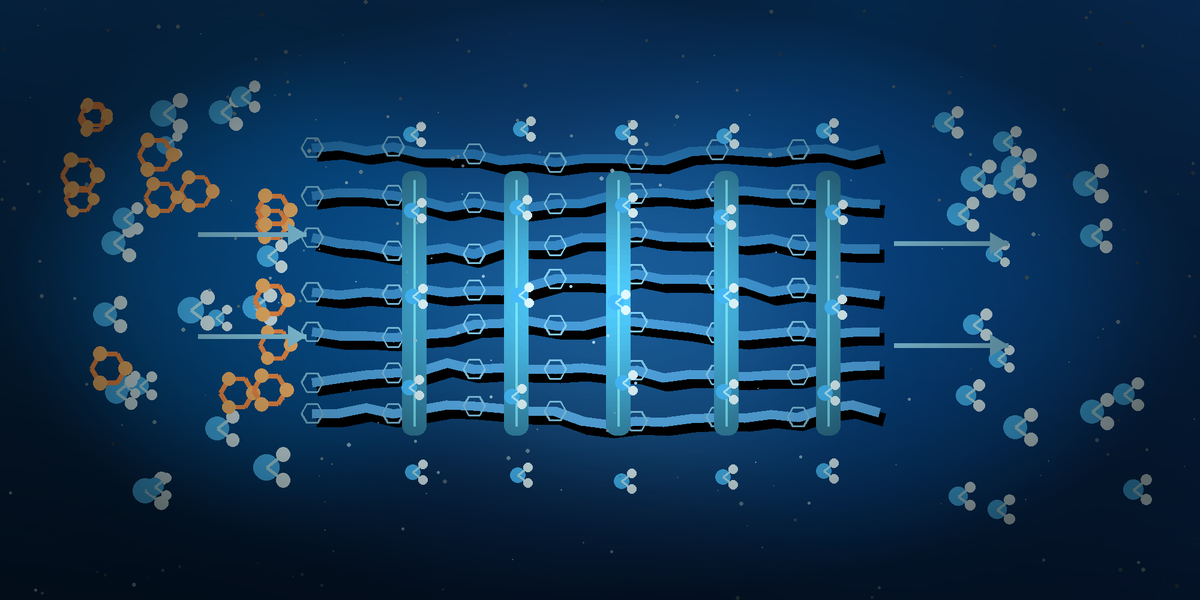
Researchers at KU Leuven, in collaboration with an international team, have developed a graphene oxide-based membrane technology that enhances the purification efficiency of industrial solvents. This innovation focuses on separating water from isopropanol, a solvent extensively used in the pharmaceutical and electronics industries. The findings, published in Nature Communications, present a more energy-efficient alternative to traditional purification methods.
Purifying chemical mixtures into pure components is a vital yet energy-demanding process in industrial chemistry, consuming 10 to 15% of global energy. Isopropanol purification, crucial in the pharmaceutical and electronics sectors, typically relies on energy-intensive heating and distillation, impacting both energy use and CO₂ emissions.
To address the need for sustainable production processes, the research team developed a membrane using graphene oxide, composed of ultra-thin carbon layers. By integrating conventional graphene oxide sheets with new variants featuring smaller pores, they created a structure that efficiently blocks larger molecules while allowing water to pass through.
The challenge lies in designing channels that balance size to ensure efficient separation without compromising purity or increasing energy consumption. The new membrane effectively separates water from a mixture of 90% isopropanol and 10% water, achieving a permeate with about 99.6% water content. This process is faster and requires less energy than existing methods, as it operates without high temperatures.
Professor Bart Van der Bruggen notes that the membrane improves purity, reduces energy consumption, and enhances economic efficiency. The team is exploring the technology's application to other chemical mixtures and considering patenting the innovation. The study, led by doctoral researcher Lei Jiang, Dr. Pengrui Jin, Professor Shushan Yuan, and Professor Bart Van der Bruggen, was conducted by scientists from KU Leuven, the University of Bath, and several other institutions.
Source: Graphene Feed