New process for making MXenes via vapor-phase synthesis could expand its applications
Researchers have developed a vapor-phase synthesis method to produce MXene nanomaterials, potentially reducing costs and improving scalability for electronic, environmental, and quantum technology applications.
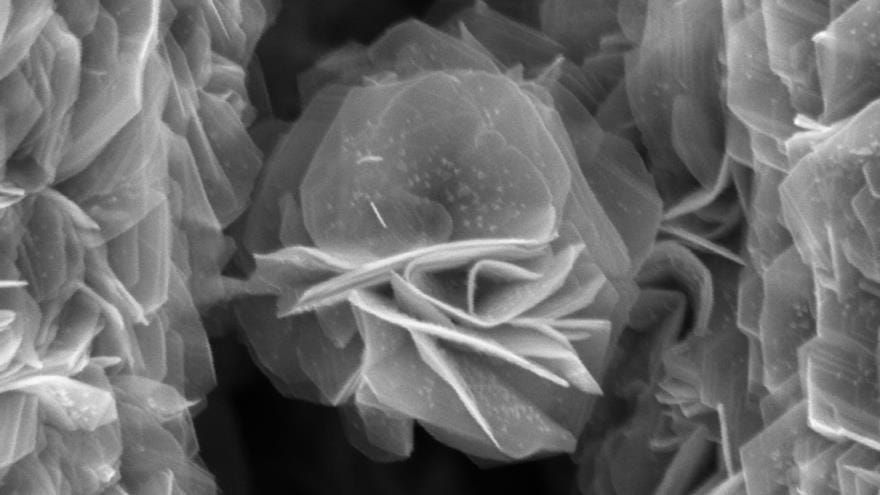
Researchers have developed a new method for producing MXene nanomaterials using chemical vapor deposition, potentially expanding their applications in electronics, environmental, and quantum technologies. MXenes, first synthesized at Drexel University in 2011, are recognized as an emerging technology by the International Union of Pure and Applied Chemistry. However, their widespread use has been limited by the complex production process. A recent study by Drexel University, the University of Pennsylvania, and Murata Manufacturing Co., Ltd. demonstrates that chemical vapor deposition can produce MXenes with improved form, quality, and quantity, potentially reducing costs.
Traditionally, MXene production involves a multi-step process using a MAX phase precursor and liquid etchants, which adds cost and generates toxic waste. The new vapor-phase synthesis method bypasses these steps, using titanium tetrachloride and methane as precursors. This approach was reported in the Journal of the American Chemical Society by Yury Gogotsi, PhD, and his team. The process involves heating titanium powder with methane in a quartz tube, forming MXene on the substrate as the mixture cools.
This method allows for the direct growth of crystalline MXene from abundant precursors, offering a complementary route to low-defect crystals for future electronics and quantum technologies. The researchers also found that by adjusting the reaction conditions, MXene can form porous nanocrystal networks, which continue to grow laterally, suggesting the feasibility of producing large-area MXene crystals.
The scalability of this process is comparable to industrial titania production, as both use titanium tetrachloride as a vapor precursor. This similarity suggests that the engineering principles could be adapted to produce MXene powder on a large scale. The research team plans to refine the process to enhance structural uniformity and explore MXenes with different compositions for various applications.
Contributors to this research include Jongyoun Kim and Teng Zhang from Drexel University, Yasunori Hioki from Murata Manufacturing Co., Ltd., and Swarnendu Das and Eric A. Stach from the University of Pennsylvania. The study was supported by the U.S. National Science Foundation, U.S. Department of Energy, and Murata Manufacturing Co., Ltd. A patent application related to this work has been filed by Murata Manufacturing Co., Ltd.
For further details, the full paper is available at: https://pubs.acs.org/jacsat/article/doi/10.1021/jacs.6c10774/5260618/Vapor-Phase-Synthesis-of-Ti2CCl2-MXene
Source: MXenes