Obayashi Converts Construction Site Wood Formwork into Biochar for Concrete
Obayashi used biochar-derived material in precast concrete curtain wall panels for the first time.
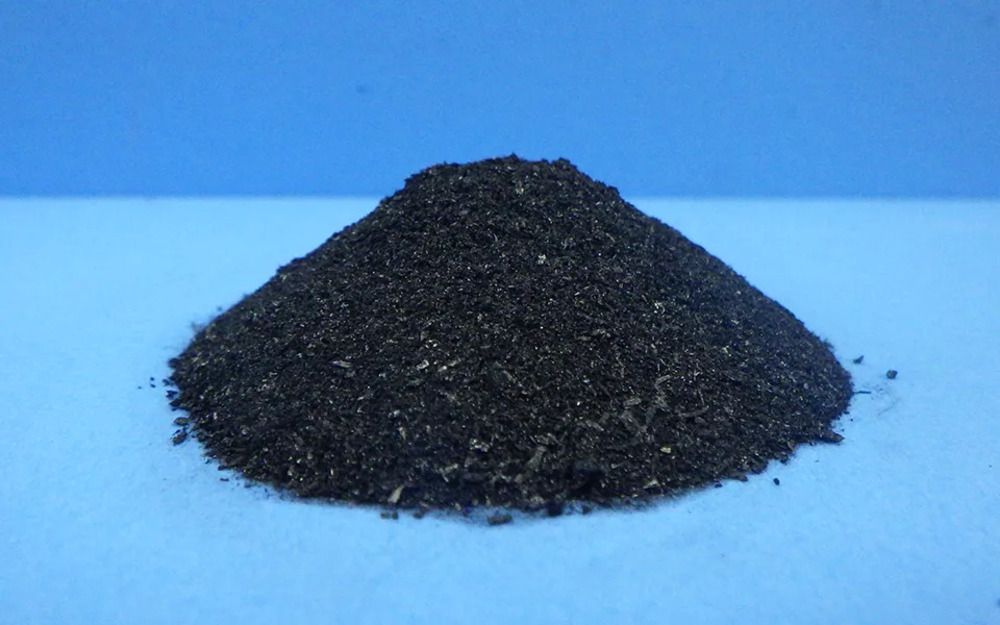
Obayashi Corporation has developed a technology to utilize biochar, derived from wooden formwork used at construction sites, as a CO2 absorption and fixation material in its "Clean Crete N" carbon-fixing concrete. The company applied this biochar-enhanced concrete for the first time in precast concrete curtain wall panels at the experimental building "Open Lab 3 (OL3)," located at its Technical Research Institute in Kiyose City, Tokyo.
Clean Crete N is designed to reduce CO2 emissions by incorporating CO2 absorption and fixation materials into Obayashi's low-carbon concrete, "Clean Crete." Depending on the proportion of these materials, it is possible to achieve net-zero or even negative CO2 emissions during manufacturing.
To broaden the application of Clean Crete N, Obayashi has been exploring various raw materials for CO2 absorption and fixation. In addition to the calcium-carbonate-derived materials previously used, the company has confirmed that biochar from wooden formwork can serve as an effective CO2 absorption material. This biochar is produced by carbonizing waste from used wooden formwork, thus repurposing materials that would otherwise be discarded. Carbonizing biomass like wood is recognized for its carbon storage capabilities.
OL3 is an experimental building that reuses steel-frame and concrete components from demolished structures, integrating various environmentally friendly technologies. It serves as a facility to implement and evaluate circular construction practices.
For OL3, a total of 67.3 m³ of Clean Crete N was used: 58.3 m³ with calcium-carbonate-derived material and 9.0 m³ with biochar-derived material. Compared to traditional concrete, these materials achieved CO2 emission reduction rates of approximately 104% and 79%, respectively, resulting in a total reduction of 19.3 tonnes of CO2 emissions. The color difference between the white calcium-carbonate-derived material and the black biochar-derived material was incorporated into the exterior wall design.
Other companies in the construction industry are also exploring biochar in concrete. In March 2026, Shimizu Corporation announced its "SUSMICS-C" concrete, which includes biochar and has received a construction material technology performance certification. This concrete was first used in the rebuilding of the Tokyo Woodworking Plant. Additionally, in November 2024, Fujita Corporation and Tokuyama Corporation developed "Biochar Interlocking Blocks," a sidewalk paving material that mixes large granular charcoal into concrete products, achieving net-zero greenhouse gas emissions.
Source: Biochar Feed