Old tires, new resources: making cars carbon neutral from the ground up
Bridgestone showcased tires made with recovered carbon black at the Super Taikyu event in Okayama, using precise pyrolysis technology to recycle end-of-life tires into new ones.
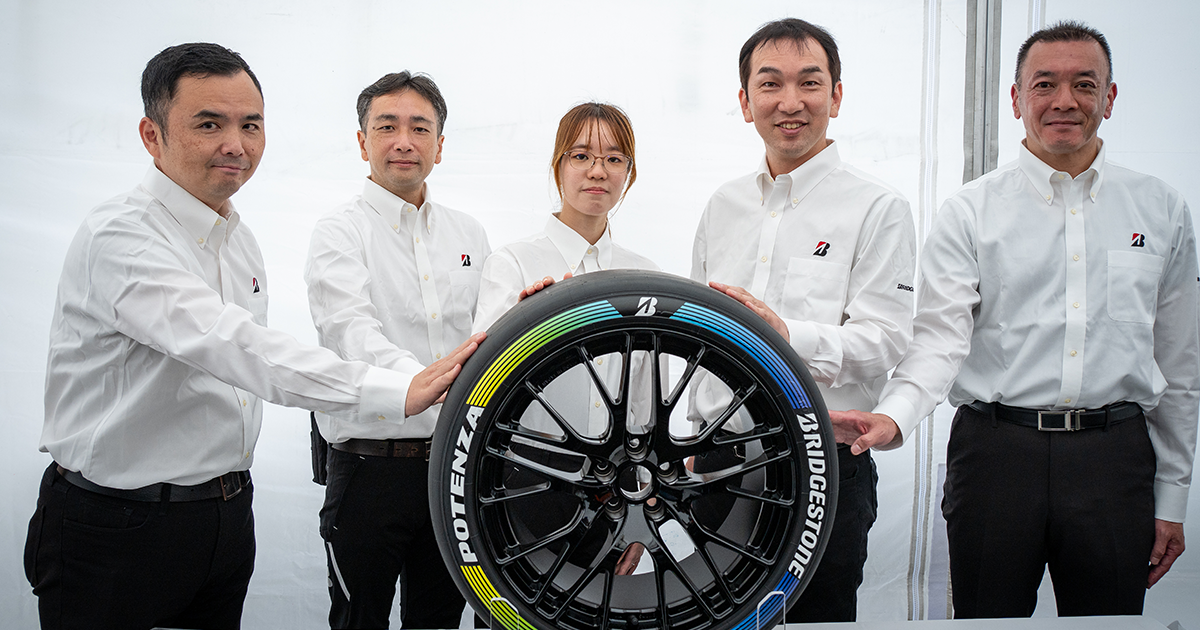
At the recent Super Taikyu event in Okayama, Bridgestone Corporation highlighted its decarbonization initiative focused on repurposing worn tires through advanced recycling techniques.
The connection between roads and cars is fundamentally established by tires, which provide essential feedback to drivers. However, the fate of tires once they are worn out is a pressing issue. In Japan, over 99% of end-of-life tires are repurposed, often as heat sources in factories, a process that unfortunately releases CO2 emissions.
Bridgestone's Evertire Initiative proposes an alternative: horizontal recycling through precise pyrolysis technology, which allows tires to be reborn as new tires. This technology was demonstrated at the ENEOS Super Taikyu Series 2026 at Okayama International Circuit on October 24 and 25.
Precise pyrolysis involves heating organic compounds in an oxygen-free environment to decompose them into their original materials. Car tires, composed of natural and synthetic rubbers, carbon black, reinforcing fibers, and steel, can be broken down to retrieve these raw materials. Bridgestone likens this process to extracting ingredients from a cooked dish.
During the Super Taikyu event, Bridgestone showcased a tire made with recovered carbon black, extracted via precise pyrolysis. Carbon black, a powdered carbon, is crucial for strengthening tire rubber and is responsible for the black color of tires.
Bridgestone's process involves shredding end-of-life tires, removing steel with magnets, and subjecting the remaining material to precise pyrolysis. The steel is recycled separately. The process converts heated rubber into pyrolysis oil, which ENEOS processes into naphtha and other raw materials for synthetic rubber.
To ensure high-quality raw materials, the pyrolysis process must be carefully controlled in terms of temperature, time, and pressure. Bridgestone, which also operates natural rubber plantations and synthetic rubber factories, began exploring pyrolysis in 2022 and has used motorsports as a testing ground for this technology.
The precise pyrolysis process now yields carbon black pure enough for racing tires, which debuted at the Super Taikyu event. Bridgestone prefers the term "end-of-life" tires, viewing them as resources for new tires rather than waste.
Bridgestone first used recovered carbon black in 2025 during the Bridgestone World Solar Challenge in Australia. The Super Taikyu event tested the tires' durability and grip under demanding conditions. Bridgestone's tires were used by the #12 MAZDA SPIRIT RACING RS Future concept and the #32 TGRR GR86 Future FR concept in the ST-Q class.
The ST-Q class, regularly featured on Toyota Times, allows companies to test automotive technologies on the racetrack. Bridgestone also utilized a Toyota fuel cell-powered FCEV truck to transport 60 tires over 700 kilometers from Tokyo to Okayama.
Both the #12 and #32 cars used tires with recovered carbon black throughout the event. Driver Hiroaki Ishiura from the #32 team noted that the carbon-neutral tires performed similarly to standard race tires in terms of grip and performance.
Eiichi Suzuki, head of Bridgestone’s Motorsports Operations Division, emphasized the role of motorsport in developing technologies that extend beyond racing. Bridgestone aims to continue exploring tire recycling possibilities, despite challenges such as material proportions and costs.
The company plans to launch a pilot demonstration plant for precise pyrolysis in Gifu Prefecture by September 2027. Bridgestone and its peers are committed to working towards a carbon-neutral future.
Source: Biomass & Recycled Carbons Feed