Shining blue light on gold-graphene nanodots achieves wound healing trifecta
Chinese researchers combined gold nanoparticles with graphene oxide quantum dots to form a Schottky junction nanocomposite that, when activated by blue LED light, achieved 97% bacterial eradication and nearly 99% wound closure in mice within nine days. The work demonstrates a functional wound-treatment application for graphene oxide quantum dots, advancing their use beyond structural roles into photodynamic and photothermal biomedical therapies.
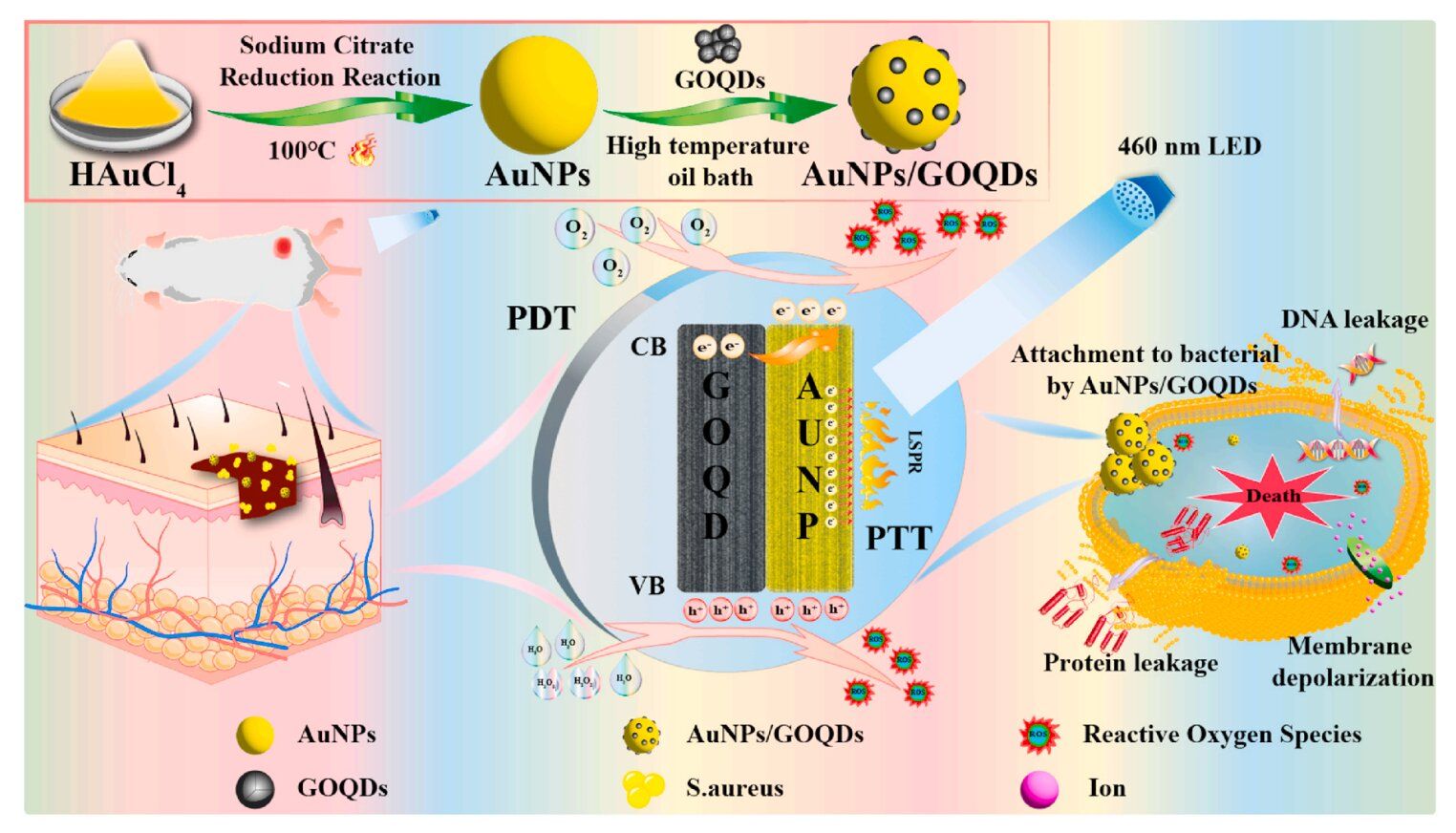
Researchers in China have developed a nanocomposite combining gold nanoparticles (AuNPs) and graphene oxide quantum dots (GOQDs) that, when exposed to blue LED light, can significantly enhance wound healing. This innovative material forms a Schottky junction, a specialized interface that boosts the production of reactive oxygen species (ROS), which are toxic to bacteria, thereby facilitating a cleaner wound environment.
The Schottky junction in the AuNPs/GOQD composite improves the efficiency of light-to-localized-heat conversion, enhancing the antibacterial effects through photothermal mechanisms. Laboratory tests showed that this light-activated nanocomposite eradicated approximately 97% of both gram-positive and gram-negative bacteria, allowing for effective wound healing without infection.
The study, published in Acta Physico-Chimica Sinica, highlights the potential of light-based therapies as alternatives to antibiotics, which are increasingly compromised by antimicrobial resistance. The composite addresses limitations of existing photodynamic and photothermal therapies by preventing electron-hole recombination and enhancing light absorption and electron transport.
In experimental settings, the composite reached temperatures of 38.8°C (101.8°F) after 10 minutes of illumination, demonstrating its efficacy in bacterial eradication. In vivo tests on mice with infected wounds showed nearly 99% healing in nine days, outperforming treatments with individual components or no treatment.
Microscopy analysis confirmed that the combination of blue light and the nanocomposite effectively ruptured bacterial cell membranes, leading to cell death. This drug-free strategy offers a promising approach for clinical phototherapy against multidrug-resistant pathogens, particularly in cases involving burns, diabetic ulcers, or trauma wounds. Further research is necessary to evaluate its effectiveness across various wound types and infections.
Source: Graphene Feed