Singapore builds its largest composite warship piece
Penguin Shipyard International has completed and delivered the largest composite superstructure ever built in Singapore for the Republic of Singapore Navy's new Multi Role Combat Vessel, with the first of six structures handed over to Saab on June 27, 2026. The use of carbon fiber composites in the superstructure reduces weight and radar cross-section, enhancing the ship's stability and stealth capabilities compared to conventional steel designs.
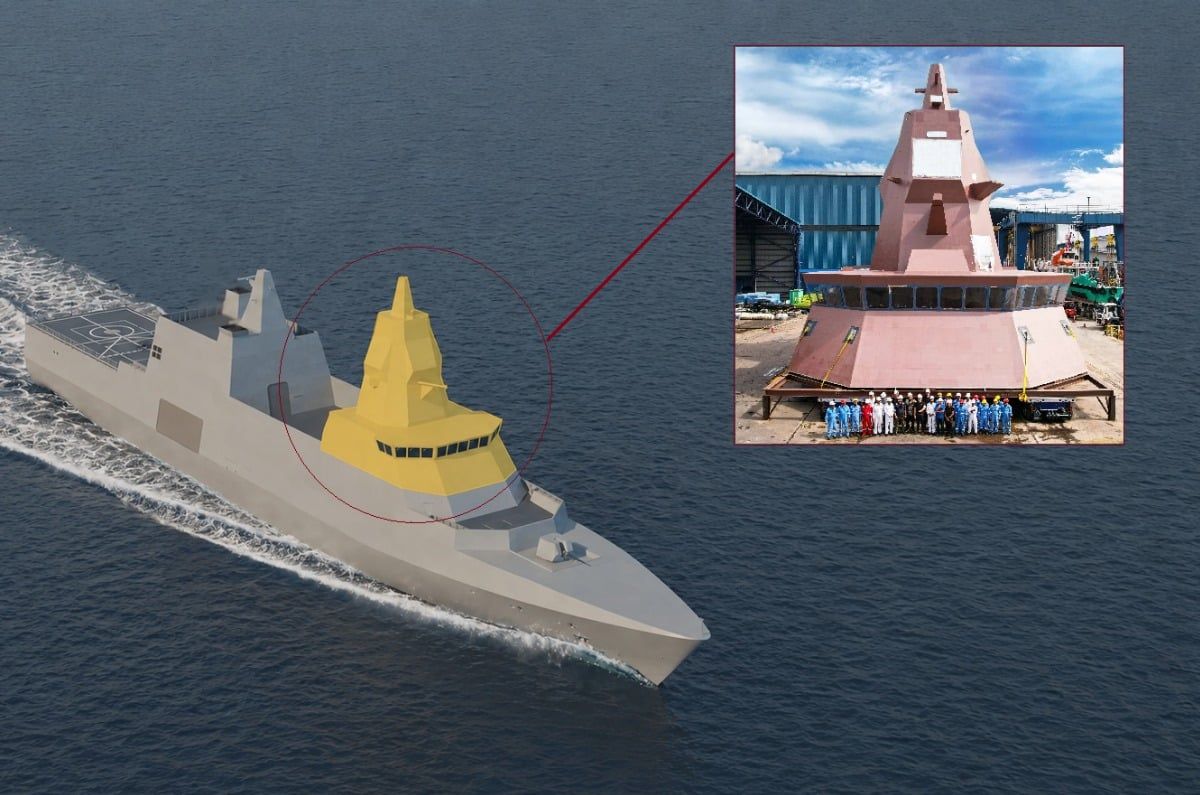
Penguin Shipyard International has completed the largest carbon fiber composite structure ever assembled for a vessel in Singapore. This significant component is part of the Republic of Singapore Navy's new Multi Role Combat Vessel (MRCV), designed to replace the aging Victory-class missile corvettes. The composite superstructure was delivered to Saab, the Swedish defense firm, for integration into the MRCV, a 150-meter vessel with a displacement of approximately 8,000 to 8,400 tonnes.
The composite structure, covering the ship's forward superstructure and integrated mast, highlights the benefits of carbon fiber in naval applications. Unlike the steel hull constructed by ST Engineering, the composite materials offer reduced weight, enhancing the ship's stability and allowing for additional equipment as mission requirements evolve. The forward mast, weighing about 60,000 kilograms, was shipped in sections from Sweden to Singapore, underscoring the scale of the project.
Saab has previously supplied similar carbon fiber structures for the Republic of Singapore Navy's Littoral Mission Vessels. However, the MRCV project marks the first collaboration with Penguin Shipyard International on a naval defense project. The use of carbon fiber composites provides advantages such as decreased radar cross-section and reduced life-cycle costs, making the vessel harder to detect and track.
The MRCV is designed to function as a mothership, capable of launching and controlling unmanned surface vessels, aerial drones, and underwater vehicles. The ship's mission bay can hold eight containerized modules, allowing for quick reconfiguration for different missions. Construction on the remaining vessels in the class is underway, with deliveries expected to begin in 2028.
Source: Carbon Fiber Feed