Thermal welding of biodegradable polymer and graphene oxide yields
Researchers achieved thermal welding of PBAT and graphene oxide, reducing it to form porous composites with reduced graphene oxide.
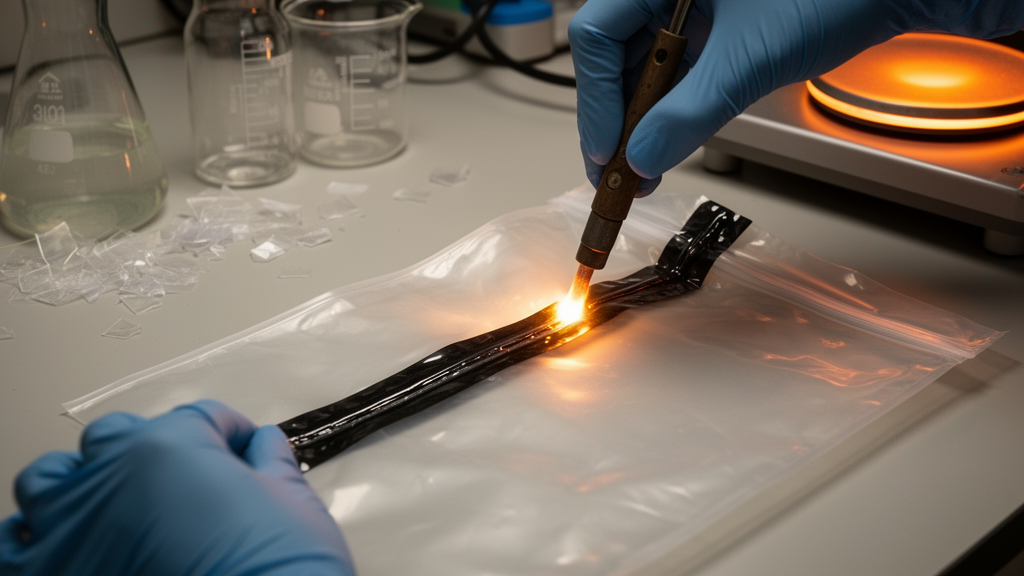
Researchers from Guizhou University and the Guizhou Institute of Technology have developed a novel method for creating biodegradable phase-change materials using poly(butylene adipate-co-terephthalate) (PBAT) and graphene oxide. This study, published in the Journal of Materials Science, highlights the use of thermal welding to combine these materials into a stable, porous composite capable of efficient thermal energy storage.
The process utilizes a graphene oxide aerogel as a medium for dispersing PBAT powder. When heated, the PBAT particles melt and fuse, forming a continuous porous structure. This innovative method avoids the use of toxic solvents and overcomes the limitations of traditional foaming techniques, resulting in a composite that can effectively encapsulate phase-change materials like polyethylene glycol (PEG).
The resulting PBAT/reduced graphene oxide (rGO) composites, labeled PG-x, demonstrate impressive thermal stability. They maintain structural integrity through 100 thermal cycles with minimal leakage, making them suitable for applications in solar thermal collectors and battery thermal management. The graphene oxide component also enhances photothermal conversion, allowing the composites to be charged directly by sunlight.
Importantly, the use of a biodegradable carrier aligns with circular economy principles, offering an environmentally friendly alternative to non-degradable supports. This method could potentially be adapted for other applications, such as filtration membranes and tissue engineering scaffolds, where solvent-free, interconnected porosity is advantageous.
While the enthalpy of the composites is slightly lower than pure PEG, the study presents a promising approach to sustainable thermal energy storage. Supported by the National Natural Science Foundation of China, this work underscores the potential of combining biodegradable polymers with carbon-based materials for advanced energy solutions.
Source: Graphene Feed