Triple-junction solar cell achieves record 27.3% efficiency
Researchers at Helmholtz-Zentrum Berlin built a perovskite triple-junction solar cell reaching 27.3% efficiency with no measurable degradation over 770 hours of operation.
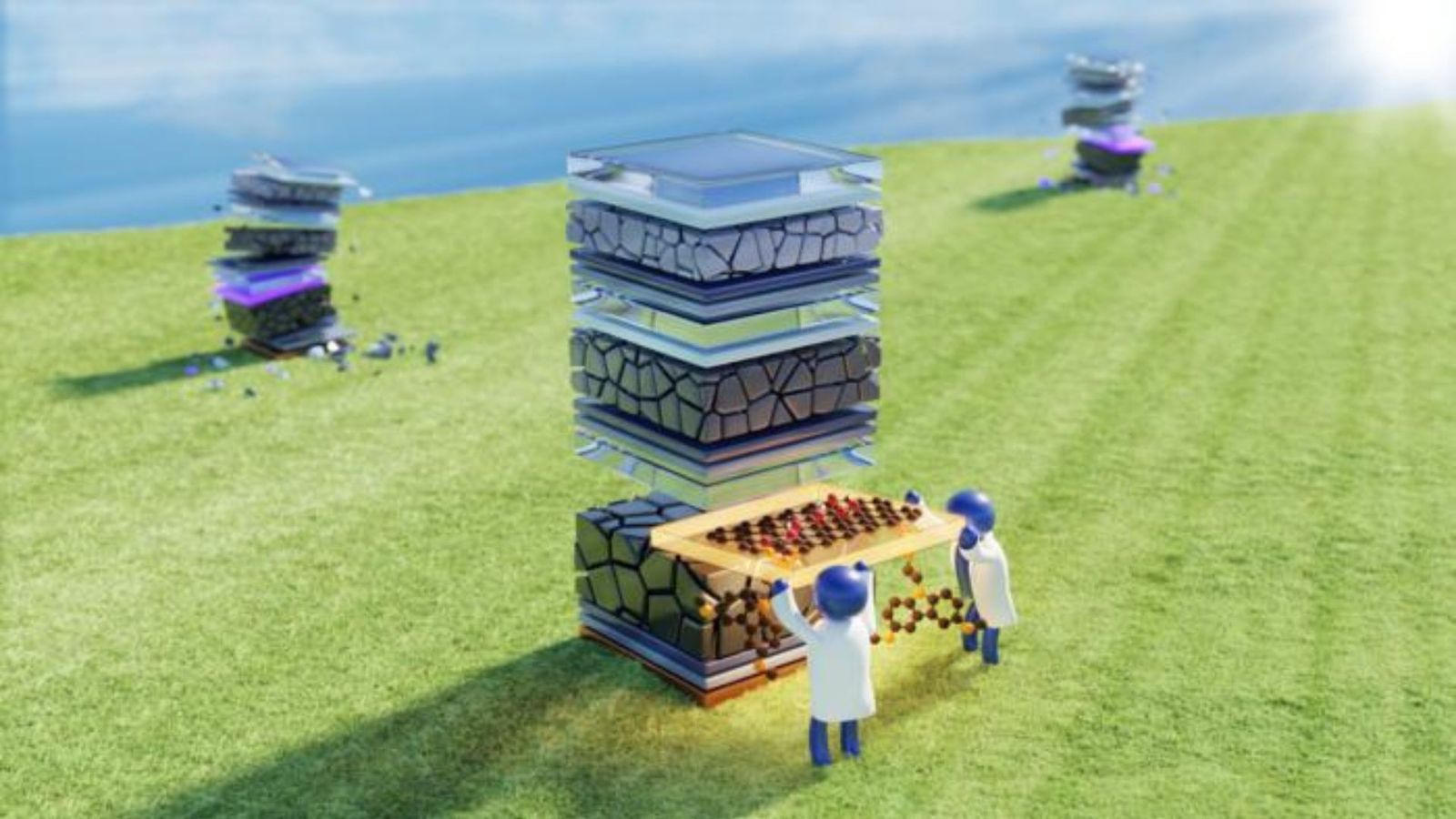
Researchers at Helmholtz-Zentrum Berlin (HZB) have developed a triple-junction solar cell utilizing perovskite, achieving a record efficiency rate of 27.3 percent. This solar cell also demonstrated remarkable stability, maintaining performance over 770 hours of continuous operation.
The design involves stacking three perovskite absorbers, each tuned to capture different band gaps in the solar spectrum, allowing for more sunlight harvesting compared to traditional silicon panels. Despite the potential of perovskite, its application has been limited by the instability of the polymer layer (PEDOT:PSS) used for charge transport. The HZB team addressed this by replacing it with a stable, low-loss chemical duo.
The innovative approach included the use of self-assembled monolayers (SAMs), which are ultra-thin layers of organic molecules. Initial attempts with SAMs alone were unsuccessful in efficiently transporting electric charges. The team then introduced a micro-thin layer of graphene oxide beneath the SAM, significantly improving charge transport and reducing optical losses.
The resulting solar cell not only achieved high efficiency but also set a new stability record, retaining over 90 percent of its performance after 770 hours. This is a significant advancement in the field of next-generation photovoltaics, as traditional tin-lead-based perovskites are prone to rapid degradation. The graphene oxide/SAM bilayer acts as a protective barrier, preventing environmental degradation.
Prof. Dr. Steve Albrecht from HZB noted that with further refinements, the efficiency of this lightweight solar cell architecture could exceed 30 percent. The findings were published in the journal Joule on July 9.
Source: Graphene Feed