UAS-B offers low-cost biochar technology and training to farmers
A team from UAS-B is training 100 farmers across Karnataka to create biochar from crop residue using an affordable, portable drum method.
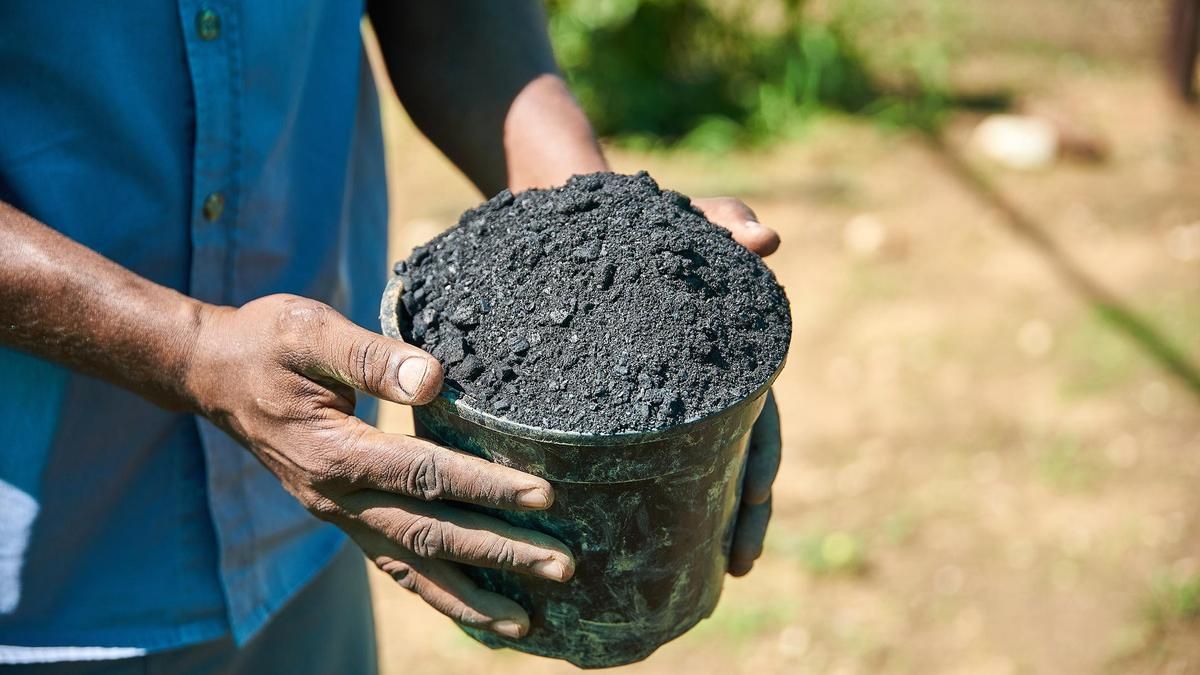
The University of Agricultural Sciences - Bangalore (UAS-B) is equipping farmers in Karnataka with the knowledge and tools to produce biochar from crop residues. This initiative involves training 10 farmers in each of 10 districts, utilizing materials provided by the university.
Biochar, a carbon-rich material resembling charcoal, is created through pyrolysis—a process of heating organic biomass like agricultural waste in a low-oxygen environment. Krishna Murthy and his team from the Department of Science and Agriculture Chemistry at UAS-B have developed an affordable, portable drum technology for biochar production.
Murthy explained that the technology is designed with small and marginal farmers in mind. The method involves a 200-liter drum with drilled holes and a chimney pipe. Farmers can convert crop residues, such as coconut shells and sunflower heads, into biochar instead of burning them in fields.
The project, funded by the Rashtriya Krishi Vikas Yojana (RKVY), provides free drums and training to selected farmers in districts including Chitradurga, Tumakuru, and Bengaluru Rural. The RKVY, launched in 2007, aims to enhance agricultural development.
Farmers fill the drum with crop residue, ignite it with dry grass or leaves, and close the lid to limit oxygen entry. This controlled environment allows the residue to convert into biochar within two to three hours. Unlike coal, biochar retains organic carbon, which is crucial for soil health.
Murthy highlighted that biochar can improve soil fertility and crop productivity by 10% to 30%, and water retention by 10% to 25%, particularly in low-SOC soils. This is significant for Karnataka, where soil organic carbon levels have declined sharply.
Research from UAS-B indicates that soil organic carbon is vital for long-term soil health, affecting water retention and nutrient cycling. However, over 52% of Karnataka's fields are deficient in SOC, with Kolar district being the most affected. Factors contributing to this include heavy reliance on chemical fertilizers, reduced use of farmyard manure, and monocropping.
Dr. Murthy noted that open burning of crop residue exacerbates the problem by destroying biomass-carbon essential for soil health. The biochar initiative aims to address these challenges by promoting sustainable agricultural practices.
Source: Biochar Feed