News & Intelligence

Original reporting and market intelligence on advanced carbon materials.

Full intelligence on every material

For in-depth production methods, pricing dynamics, applications by sector, and verified company profiles, explore the ACC market reports covering each advanced carbon material.

View market reports

Materials

Coverage forAI and Digital InfrastructureClear ×
Filtered by topic:StandardsClear ×
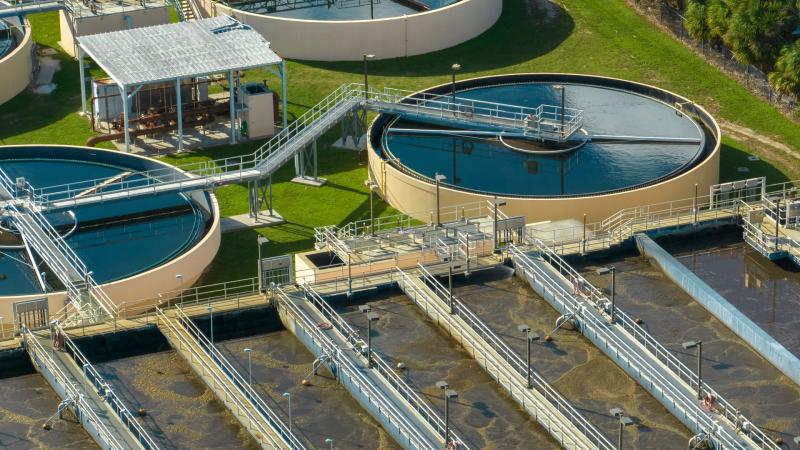
Industrial Water Treatment with Graphene and Antifouling
News30 June 2026

Industrial Water Treatment with Graphene and Antifouling

Researchers and engineers are evaluating graphene oxide and reduced graphene oxide as adsorbents, antifouling coatings, catalytic supports, and modified membrane layers within industrial water treatment systems targeting COD removal, biofouling control, and reverse osmosis feed protection. The graphene sector faces a clear scaling challenge, as industrial adoption of these carbon nanomaterials depends on demonstrating mechanical stability, resistance to chemical cleaning cycles, controlled delamination, and validated cost-per-cubic-meter performance in pilot tests using real effluent matrices.

News30 June 2026

Materials Verification Measurement Standards and Maturation of Advanced Carbon Technologies

Terrance Barkan of the Advanced Carbons Council and Dr. Andrew Pollard of the UK's National Physical Laboratory discussed how measurement science, standardization, and materials verification underpin the commercialization of graphene and other advanced carbon materials. For the sector, the conversation highlights that without validated characterization methods and traceable measurement standards, reproducible manufacturing and scalable deployment of carbon nanomaterials — including graphene, carbon nanotubes, and emerging MXenes — remain unachievable.

The Graphene Commercialization Maturity Journey
Research Summary12 June 2026

The Graphene Commercialization Maturity Journey

Terrance Barkan of The Graphene Council published a framework mapping the commercialization maturity journey of graphene through stages from discovery to mature commercialization, identifying nine recurring obstacles including capital access, regulation, standardization, and value chain complexity. The framework positions graphene as approaching proven commercial viability in multiple application areas—including composites, construction materials, and thermal management—while arguing that its "killer application" lies in broad adoption as a performance-enhancing additive across sectors rather than in any single use case.

Brookhaven National Lab reveals new graphene band structure tunable by magnetic field
News10 June 2026

Brookhaven National Lab reveals new graphene band structure tunable by magnetic field

Researchers at Brookhaven National Laboratory used a 36 Tesla magnet to observe a previously unknown flat-band state in pristine graphene that emerges at integer multiples of an applied magnetic field, publishing the findings in Physical Review Letters. The tunable band structure could inform the design of graphene-based Hall sensors and resistance metrology standards.

Hefei Institutes demonstrate graphene-based terahertz modulator at room temperature
News10 June 2026

Hefei Institutes demonstrate graphene-based terahertz modulator at room temperature

Scientists at the Hefei Institutes of Physical Science demonstrated a graphene-based terahertz modulator achieving 92% modulation depth at 0.4 THz and switching speeds approaching 100 GHz, with results published in Nature Photonics. The device's fabrication in standard semiconductor cleanroom processes positions graphene as a viable material for scalable 6G wireless components operating in the terahertz band.

News10 June 2026

Designing Graphene Defects Opens New Possibilities for Future Tech

Researchers from the University of Warwick, University of Nottingham, and Diamond Light Source grew graphene films with controllable defect densities using a molecule called azupyrene, which naturally incorporates five- and seven-membered carbon rings, with defect levels tuned by growth temperature. The method gives the graphene sector a reproducible route to engineer surface reactivity, with direct implications for graphene-based catalysts and gas sensors.