Wet mixing and carbon nanotubes enhance fuel cell bipolar plates
Researchers have enhanced composite bipolar plates for fuel cells using carbon nanotubes, surpassing stringent international performance standards.
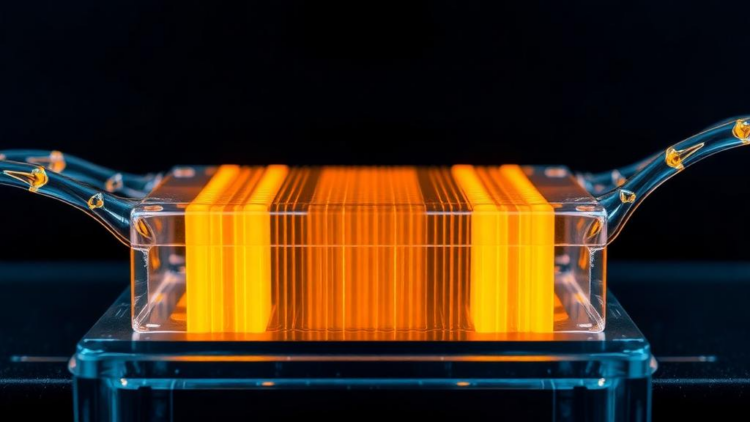
Carbon nanotubes (CNTs) are enhancing the performance of composite bipolar plates in proton exchange membrane fuel cells (PEMFCs), according to research from Chungnam National University and the Korea Institute of Energy Research. By adopting a solvent-assisted wet mixing process and optimizing CNT loading, researchers have improved the electrical and mechanical properties of these plates, which are crucial for fuel cell efficiency. The study, published in Advances in Industrial and Engineering Chemistry, highlights the potential for these advancements to meet international performance benchmarks and accelerate PEMFC commercialization.
The United States Department of Energy has set stringent targets for bipolar plates, including electrical conductivity above 100 siemens per centimeter and flexural strength above 40 megapascals. Traditional materials like metallic and pure graphite plates have limitations, such as corrosion and brittleness. Resin-based carbon composites offer a middle ground, but their performance is highly dependent on the fabrication microstructure.
The research team, led by Seon Ho Lee and Song Mi Lee, focused on three variables: CNT loading, graphite particle size, and the mixing method. CNTs, known for their conductivity and tensile strength, can clump due to van der Waals forces, reducing composite performance. The wet mixing process, involving dissolving epoxy resin in acetone before adding graphite and CNTs, allows for better dispersion and coating, resulting in improved mechanical continuity and fewer microvoids.
Scanning electron microscopy showed that wet mixing distributes CNTs evenly along graphite interfaces, enhancing conductivity and mechanical strength. The optimal formulation, W-LG-CNT7, achieved 151.6 siemens per centimeter in conductivity and 56.7 megapascals in flexural strength, surpassing DOE targets. However, increasing CNT content beyond 7 weight percent led to performance deterioration due to re-agglomeration.
Durability tests revealed that wet-mixed plates retained more strength after exposure to phosphoric acid, simulating long-term fuel cell operation. This chemical resilience, combined with corrosion resistance, addresses key challenges for fuel cell longevity. Real-world tests confirmed that optimized plates enhance electron transfer and power density in fuel cells.
This study underscores the importance of process-level refinements in manufacturing. By improving mixing techniques and material formulations, the commercialization of PEMFCs could advance significantly, supporting the global shift towards hydrogen energy.
Source: Carbon Nanotubes Feed