3D graphene biosensor detects uric acid in sweat at femtomolar levels
Researchers at Shanghai University and Shanghai General Hospital have built an electrochemical biosensor pairing a three-dimensional graphene framework with a heat-denatured casein interlayer to detect uric acid in sweat at femtomolar levels.
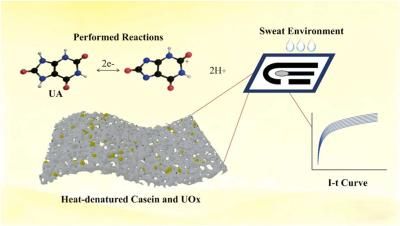
Researchers at Shanghai University and Shanghai General Hospital at Shanghai Jiao Tong University School of Medicine have developed an electrochemical biosensor utilizing a three-dimensional graphene framework combined with a heat-denatured casein interlayer. This innovative design allows for the detection of uric acid in sweat at femtomolar concentrations, surpassing the sensitivity of previous sweat-based uric acid sensors.
Uric acid serves as a crucial biomarker for conditions such as gout, hyperuricemia, kidney dysfunction, and cardiovascular disease. Traditional measurement methods rely on blood tests, which require trained personnel and are not suitable for frequent or continuous monitoring. Sweat-based sensing offers a non-invasive alternative, but challenges such as low uric acid concentration in sweat and the complexity of the sweat matrix have hindered reliable detection. Conventional two-dimensional graphene platforms face limitations due to restricted surface area for enzyme loading and slow analyte diffusion.
The research team addressed these challenges by mildly heat-treating casein to form a conformal, bioadhesive protein film that is anchored directly onto the 3D graphene scaffold. This interlayer enhances the loading and retention of the enzyme uricase (UOx) through multivalent interfacial interactions while maintaining its catalytic activity. This approach avoids the harsher chemical functionalization methods that can compromise enzyme activity. The 3D graphene framework's interconnected, porous architecture provides a large electroactive surface area and supports rapid mass transport between uric acid and the immobilized enzyme.
Under optimized conditions, the sensor achieved a dynamic range from 1 femtomolar to 10 micromolar, with a detection limit of 1 femtomolar and good selectivity. It showed negligible sensitivity to pH variation within the physiological sweat range. The researchers validated the platform using both artificial and real human sweat samples, finding a positive association with clinical blood uric acid measurements in a pilot cohort.
The authors suggest that heat-denatured casein could serve as a broadly useful bioadhesive interlayer strategy for enzyme immobilization on 3D graphene. This has potential applications in wearable, real-time sweat-analysis platforms for personalized health monitoring.
Source: Graphene Feed