16 articles on ACC Supplier.
Graphene is being formulated, screened, qualified and packaged around specific applications. Some of those products are beginning to move through conventional distribution networks. That may be one of the clearest signs yet that parts of the graphene industry are maturing.

This paper considers how graphene additions may improve mechanical and barrier performance in polymer-based materials while supporting lightweight designs. It notes that dispersion, processing and application-specific validation remain important.
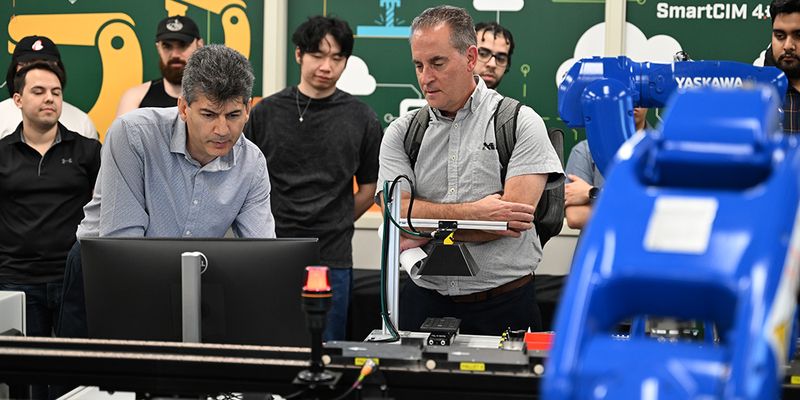
Cal Poly Pomona's College of Engineering received a $198,100 grant from the DENSO North America Foundation to fund advanced manufacturing equipment, including a large-scale carbon fiber 3D printer and an industrial multi-material printer, for student use. The addition of industrial-grade carbon fiber 3D printing at the undergraduate level expands hands-on access to composite fabrication technology that is otherwise largely confined to professional industry settings.

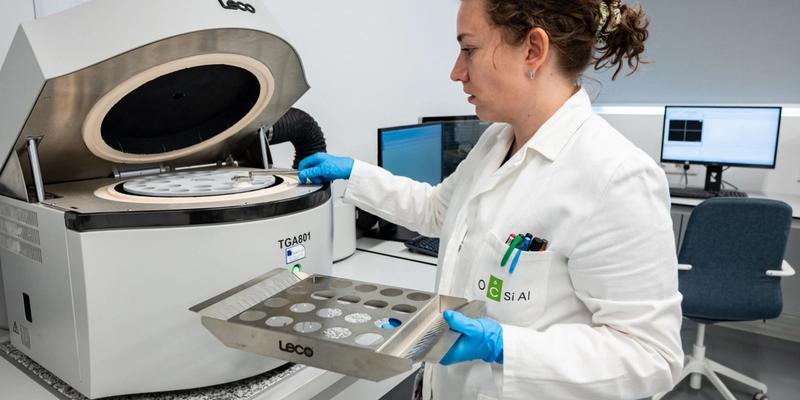
OCSiAl has been named a single-wall carbon nanotube supplier to Volkswagen Group's battery subsidiary PowerCo for its Unified Cell platform, with supply coming from OCSiAl's audited production facility in Serbia. The deal extends single-wall carbon nanotube use into a major European automaker's standardized battery platform, where the material serves as a conductive additive in graphite anodes to improve conductivity, heat dissipation, and fast-charging performance.

PowerCo, Volkswagen Group's battery subsidiary, selected OCSiAl to supply TUBALL single-wall carbon nanotube additives for the graphite anodes of its Unified Cell platform, manufactured at OCSiAl's Serbia facility. The deal expands the role of single-wall carbon nanotubes in large-scale EV battery production, with OCSiAl now supplying the majority of European EV battery manufacturers and planning a $300 million graphene nanotube facility in Luxembourg.

Terrance Barkan of the Advanced Carbons Council and Dr. Andrew Pollard of the UK's National Physical Laboratory discussed how measurement science, standardization, and materials verification underpin the commercialization of graphene and other advanced carbon materials. For the sector, the conversation highlights that without validated characterization methods and traceable measurement standards, reproducible manufacturing and scalable deployment of carbon nanomaterials — including graphene, carbon nanotubes, and emerging MXenes — remain unachievable.
Marstrom Composite AB, a subsidiary of Scandinavian Astor Group, signed a five-year framework agreement worth approximately SEK 100 million with an undisclosed western defence company to supply structural composite components. The deal provides a long-term revenue base for Marstrom's carbon fibre composites business and signals growing demand for advanced composite structural parts in western defence programmes.

Jamco joined a NEDO-led Japanese consortium—including Nagoya University, Subaru, and JAXA—to develop a circular economy supply chain for recovering and reusing CFRP from retired aircraft. The project targets a persistent gap in the carbon fiber composites sector: the lack of validated processes and standards needed to reintroduce recycled CFRP into certified aircraft components.

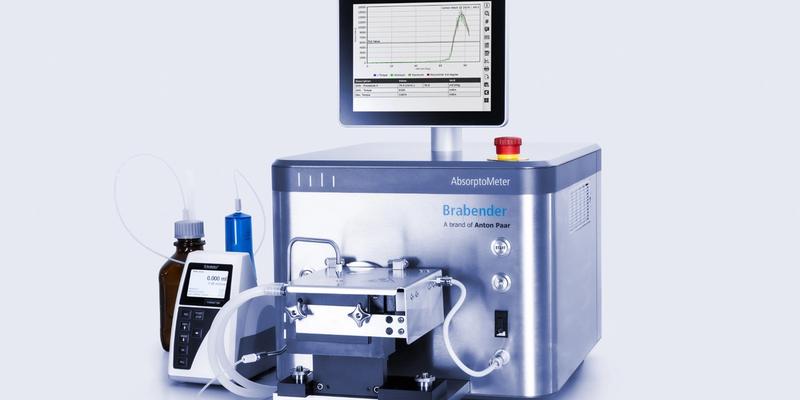
Anton Paar launched the Brabender AbsorptoMeter, an automated instrument that measures oil absorption numbers (OAN and COAN) in powders including carbon black, recovered carbon black, graphene, and battery electrode materials, supporting ASTM and ISO test methods. The system automates a previously manual testing process for carbon black and graphene characterisation, with software-controlled titration, real-time torque monitoring, and enterprise data integration via OPC UA and Brabender WebAPI.

The Advanced Carbons Council published an overview of graphene and other advanced carbon materials being adopted in construction, citing applications in concrete (Concretene, First Graphene, Versarien), asphalt, and corrosion-resistant coatings (Petronas). These developments indicate growing commercial deployment of graphene additives in construction materials, with documented performance gains in compressive strength, road durability, and steel protection at low material loadings.

The Advanced Carbons Council highlights graphene and related carbon materials being adopted in construction applications including concrete additives (Concretene, First Graphene), graphene-reinforced 3D-printed components (Versarien), asphalt modification, and corrosion-resistant coatings (Petronas). For the advanced carbon materials sector, construction has emerged as a leading commercial deployment area, with multiple suppliers demonstrating validated, scalable products that improve strength, durability, and emissions performance without requiring major process changes.

NeoGraf commissioned a new production line at its Lakewood, Ohio facility, adding 2,000 tonnes per annum of flexible graphite sheet capacity funded by a $38 million investment, bringing its total to 11,000 tonnes per annum. The expansion increases domestic supply of high-purity exfoliated graphite sheets for EV battery thermal management, where the material's in-plane thermal conductivity above 600 W/m·K at low density addresses a critical requirement for North American automotive manufacturers.

Premier Graphene Inc and Mitsubishi Pencil Company signed a joint development agreement to co-develop graphene-based conductive inks for printed electronics, targeting two co-branded product launches in late 2026 with a combined first-year revenue target of 12 million USD. The deal advances commercial adoption of single-layer graphene dispersions in printed electronics applications such as RFID tags, smart packaging, and biosensor electrodes.

Advanced Graphene Products has begun supplying ISO 10993-certified graphene oxide from its Zielona Gora facility to Boston Scientific under a $4.2 million contract for a two-year, 480-patient FDA-approved clinical trial of antimicrobial-coated cardiac catheters. The trial represents a direct application of graphene oxide in regulated medical devices, with a potential commercial supply pathway if Boston Scientific proceeds to FDA submission.

HydroGraph added Hubron International, a Manchester-based masterbatch and conductive polymer compounder with over 90 years of experience, to its Fractal Graphene Compounding Partner Program on February 10, 2026. The partnership gives HydroGraph access to Hubron's global distributor network and established carbon nanomaterial processing capabilities, supporting broader commercial adoption of graphene in thermoplastic applications across automotive, electronics, and other sectors.

SK On signed a five-year, $180 million supply contract with Hansolchemical for 4,500 tonnes per annum of graphene additive for NCM811 cathodes, with shipments starting Q1 2027. The deal signals growing industrial-scale demand for graphene as a functional cathode additive in EV batteries, and will require Hansolchemical to expand its Gumi facility beyond its current 1,200 tonne per annum capacity.