AZL consortium to set common benchmarking for CFRP rotor sleeves
AZL Aachen GmbH is leading a consortium to benchmark CFRP rotor sleeves for electric motors, focusing on press-fit and direct-winding concepts. Production starts in August 2026.
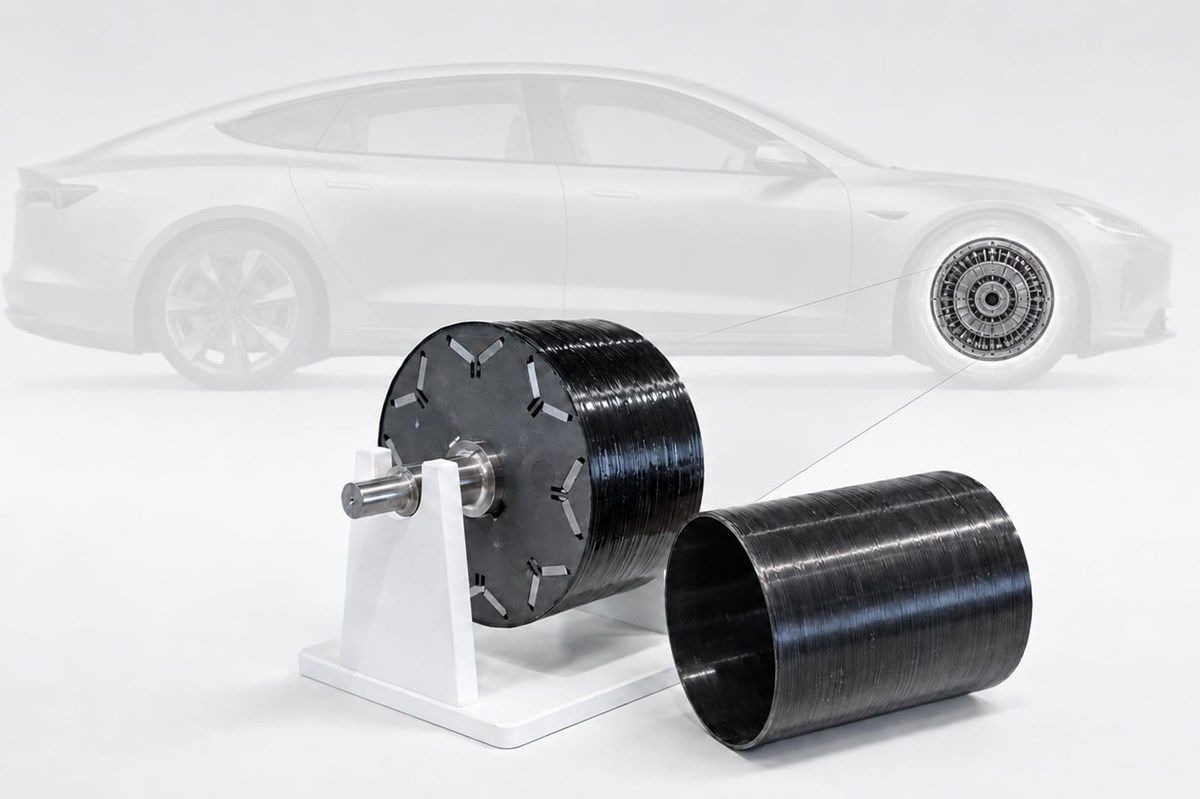
AZL Aachen GmbH is spearheading an industry consortium to establish a systematic benchmark for carbon fiber-reinforced polymer (CFRP) rotor sleeves used in electric motors. The project focuses on evaluating press-fit and direct-winding concepts, various manufacturing technologies, and material systems under uniform conditions. Concurrently, the consortium is developing new methods to characterize mechanical, thermal, and long-term loading properties.
The benchmarking initiative aims to optimize CFRP rotor sleeves for broader series applications by addressing technical and economic aspects. AZL emphasizes the need for suppliers, material producers, and equipment manufacturers to understand the performance attributes required for specific motor architectures and how to achieve them cost-effectively.
The consortium will assess press-fit and direct winding techniques, along with wet filament winding, towpreg winding, and thermoplastic tape winding. A reference rotor, approximately 150 millimeters in diameter with a surface speed of 200 meters/second, serves as the project's standard, ensuring consistent evaluation across different materials and processes.
Production of sleeve variants and direct windings is scheduled to begin in August 2026, alongside the development and optimization of test concepts. The project includes a direct comparison of different material classes, ranging from economical industrial-grade carbon fibers to high-stiffness and strength levels. The matrix materials under investigation include epoxy resins and various thermoplastic polymers, which influence mechanical properties, processing windows, and overall costs.
The program incorporates an adapted split-disk test, pre-stress measurement, a non-rotating radial load test rig, and high-temperature and long-duration testing. These methods are being refined to create a consistent evaluation framework for various material types, temperature levels, and load cases.
In addition to performance metrics, the project evaluates production capacities, process chains, and costs. The economic assessment covers the entire production route, emphasizing material utilization's impact on wall thickness, rotor expansion, air gap, and overall motor performance. The project will conclude in November 2026, and the consortium remains open to new partners across the value chain.
Participants will receive a benchmarking matrix, CAE-to-test correlations, cost comparisons, material selection criteria, and a validated test methodology. Specific data and conclusions will remain exclusive to the consortium.
Source: Carbon Fiber Feed