Beyond the kernel, cashew shells fuel new industries in Côte d'Ivoire
Valency International has opened Africa's first large-scale biochar plant using cashew nut shells in Côte d'Ivoire. This development could enhance the production of biochar, a carbon-rich material, from agricultural waste, promoting sustainable practices in the region.
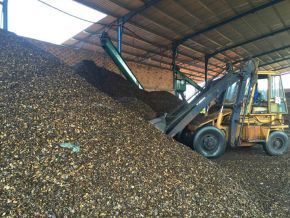
Valency International, based in Singapore, has launched a large-scale biochar production facility in Attinguié, Côte d'Ivoire. This plant is Africa's first commercial biochar facility utilizing cashew nut shells as feedstock.
Biochar is created through pyrolysis, a process that heats materials to high temperatures without oxygen. It enhances soil structure and improves water and nutrient retention. Additionally, biochar serves as a sustainable energy source, offering an alternative to fossil fuels like charcoal and coal.
The facility is set to process 20,000 tonnes of cashew shells annually, producing approximately 6,000 tonnes of biochar. Valency plans to scale up production to 100,000 tonnes by 2029, necessitating a substantial increase in shell processing.
This initiative is part of a broader trend where cashew shells in Côte d'Ivoire are increasingly recognized as valuable raw materials. A 2025 market study by the French NGO Nitidæ highlighted the growing value chain around cashew shells, which were once considered mere byproducts.
In 2024, Côte d'Ivoire's cashew industry generated an estimated 245,000 tonnes of shells, based on the assumption that shells constitute 70% of processed cashew nuts. That year, 350,000 tonnes of nuts were processed.
The supply of cashew shells is expected to rise as processing capacity expands, aligning with the country's strategy to develop its cashew industry. Data indicates an increase in processing levels since 2024.
The Cotton, Cashew and Shea Council (CCAK) reported that 660,000 tonnes of cashew nuts were processed in 2025, accounting for 43% of national production. This growth was driven by new plant openings, with a government target to reach a 50% processing rate by 2030, further increasing shell availability.
Cashew shells are no longer seen as waste. Some processing plants use them as fuel for heating, consuming up to 15% of their shells. A market for shells is emerging, with sales to other industries and potential for export.
Nitidæ indicates that biomass power plant projects under consideration in Côte d'Ivoire could boost demand for cashew shells as an alternative fuel.
Before biochar's emergence, cashew nut shell liquid (CNSL) was a primary industrial use for shells. CNSL is used in the chemical industry for resins, coatings, anticorrosion paints, and friction materials, and can also serve as a biofuel. Some plants already extract CNSL, with more planning to do so.
Nitidæ's 2024 sector overview reported that of approximately 30 operational plants in Côte d'Ivoire, eight extract CNSL, and five plan to start. CNSL extraction could utilize around 84,000 tonnes of shells.
The development of biochar complements the expanding uses for cashew shells. As Côte d'Ivoire enhances local cashew processing, these residues could provide increasing value, showcasing the industry's potential beyond kernel production.
Source: Biochar Feed