Bilayer transparent conductive film removes 96.36% of electrostatic dust
Researchers have developed a bilayer transparent conductive film combining single-walled carbon nanotubes with magnesium fluoride, achieving 96.36% efficiency in electrostatic dust removal.
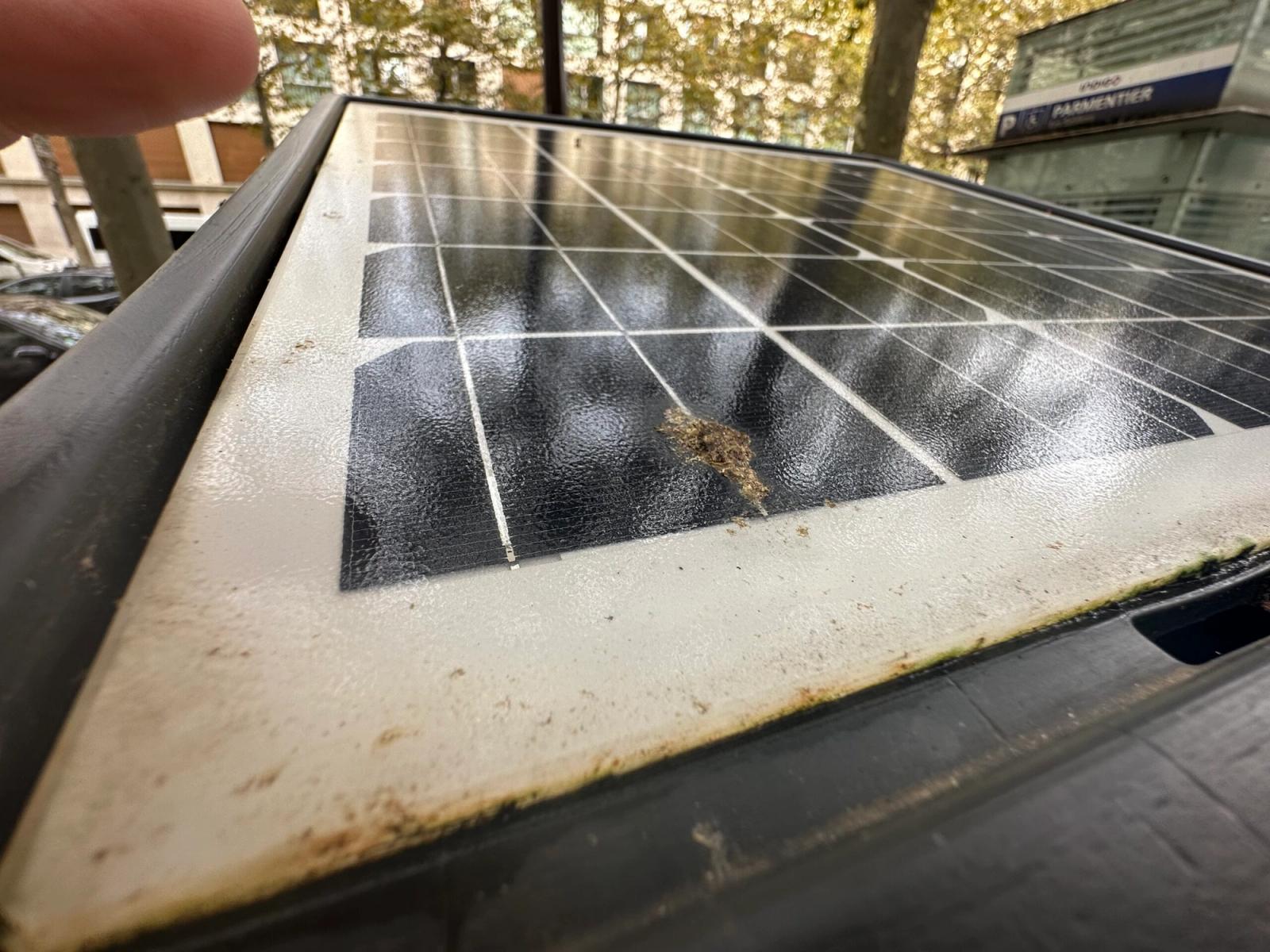
Researchers in China have developed a bilayer transparent conductive film leveraging single-walled carbon nanotubes (SWCNTs) for non-contact electrostatic dust removal from solar panels. The SWCNTs provide electrical conductivity and high optical transparency, while a magnesium fluoride (MgF2) layer smooths the surface to aid in dust removal.
The study examined the effects of MgF2 layer thickness on the optical, electrical, surface, and electrostatic dust-removal properties of SWCNT/MgF2 films on photovoltaic glass. The films were created by forming a conductive SWCNT network through bar coating, followed by MgF2 deposition via electron-beam deposition.
Fabricated on 50 mm × 50 mm × 0.7 mm glass substrates, the SWCNTs were dispersed in water with a dispersant and film-forming aid, applied to the glass, and then annealed and rinsed. MgF2 was deposited at thicknesses of 40 nm, 80 nm, 120 nm, and 160 nm, with an SWCNT film without MgF2 serving as a control.
The films' surface, optical, and electrical properties were characterized, and cleaning tests were conducted using natural sand from various deserts in China. An electric field was generated using an external DC power supply and a metal plate to measure sand removal and PV cell power output.
Results indicated that an MgF2 thickness of 80 nm to 120 nm balanced optical, surface, and electrostatic cleaning performance. Moderate MgF2 deposition preserved the SWCNT network while improving surface uniformity, reducing roughness from 5.316 nm to 3.747 nm.
The water contact angle increased to 111°, and surface energy decreased to 19.68 mN/m, enhancing the self-cleaning rate from 65.01% to 78.68%. MgF2 improved optical properties, though thicker layers reduced electrical conductivity. The highest transmittance was 91.4%, with haze minimized to 0.12%.
The electrostatic dust-removal rate increased from 84.08% to 96.36% after MgF2 deposition, and the normalized photovoltaic power-generation efficiency reached 91.97% post-cleaning. The 80 nm coating was optimal for optoelectronic properties and dust removal, while the 120 nm coating was preferable for higher transmittance and PV power recovery.
The research, "Thickness-engineered SWCNT/MgF2 bilayer transparent conductive films for coupled antireflection and electrostatic dust removal on photovoltaic panels," was published in Materials & Design. Contributors included scientists from North China Electric Power University, State Grid Sichuan Electric Power Research Institute, Yingli Energy Development, and Hebei University.
Source: Carbon Nanotubes Feed