Biochar nanocomposites emerge as low-cost sensors for water pollution tracking
Researchers have developed biochar nanocomposites to serve as low-cost sensors for monitoring water pollution.
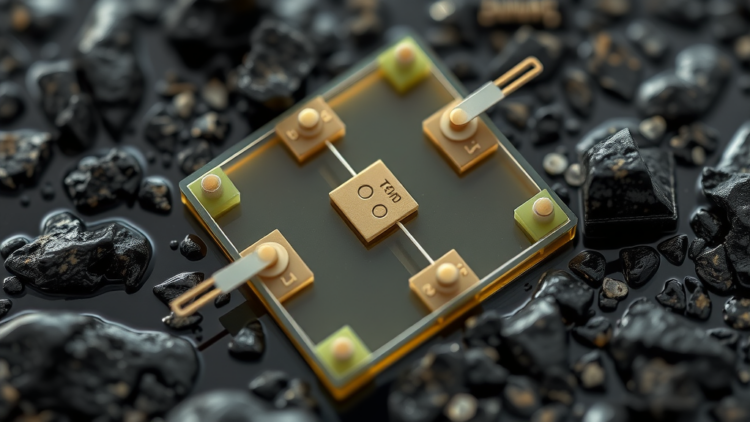
Biochar, a carbon-rich material derived from biomass, is gaining attention as a component of hybrid nanocomposites for electrochemical sensors targeting water pollution. A review in Discover Electrochemistry highlights the potential of biochar when combined with advanced nanomaterials to detect contaminants such as lead, mercury, pesticides, pharmaceuticals, and PFAS. Led by Sujittra Poorahong and Sakda Jampasa from Walailak University, the study outlines how these sustainable carbon platforms could transform environmental monitoring.
Biochar's appeal lies in its cost-effectiveness, abundance, and renewable nature, sourced from agricultural residues, wood waste, and other biomass. Its hierarchical pore structure offers a large surface area for molecule capture, while its surface functional groups facilitate analyte binding. However, biochar's low electrical conductivity and limited catalytic sites pose challenges. Hybridization with conductive or catalytic materials addresses these issues.
The synthesis method significantly influences the properties of biochar. Slow pyrolysis maximizes yield and carbon structure order, while fast pyrolysis favors liquid and gaseous products. Microwave-assisted pyrolysis and hydrothermal carbonization offer alternative routes, each affecting porosity and conductivity. Pyrolysis temperature is crucial, balancing carbonization and surface group retention.
Biochar serves as a scaffold for nanoscale materials. Metal nanoparticles, carbon nanotubes, and two-dimensional materials like graphene enhance conductivity and catalytic activity. Heteroatom doping further improves electrocatalytic performance. The choice of components should be guided by the analytical needs of the target pollutant.
Electrode engineering is critical for sensor development. Strategies include layer-by-layer assembly, electrochemical deposition, and screen-printing. These methods influence film thickness, particle density, and electrode architecture. The sensing mechanism involves contaminant adsorption, electron-transfer acceleration, and electrochemical signal amplification.
Recent studies demonstrate biochar's effectiveness in detecting heavy metals and pesticides. For example, biochar electrodes have detected multiple metal ions and pesticides in various samples. However, challenges remain in real-matrix validation and sensor stability.
Biochar-based conductive inks hold promise for future applications, offering potential advantages over traditional materials. The review calls for further research into optimizing these inks and integrating artificial intelligence to enhance material design. Despite challenges in reproducibility and field deployment, biochar's role in water monitoring is poised to grow.
Source: Biochar Feed