Biochar serves as electron bridge to enhance energy-saving wastewater treatment
A review indicates that adding biochar to anammox reactors could enhance their efficiency by acting as a conductive interface.
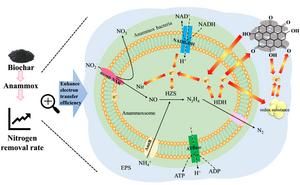
Biochar, a waste-derived material traditionally used to improve soil health, may significantly enhance the energy efficiency of wastewater treatment, according to a new review in the journal Biochar. Researchers from Suzhou University of Science and Technology in China have demonstrated that biochar can act as an 'electron bridge,' improving the performance of anaerobic ammonium oxidation (anammox), a microbial process that naturally removes nitrogen from wastewater.
Anammox bacteria convert ammonium and nitrite directly into nitrogen gas, reducing energy needs for aeration by 50 to 60 percent and eliminating the need for added organic carbon. This process also lowers operational costs by up to 90 percent compared to traditional nitrification-denitrification systems. However, the slow growth rate and environmental sensitivity of anammox bacteria have limited its widespread adoption. The review suggests biochar could address these challenges by enhancing electron transfer in anammox systems.
Biochar serves as a conductive interface, linking microbial electron donors and acceptors, or as a redox-active mediator. It facilitates electron transfer between bacteria, similar to how copper wire conducts electricity. The researchers identified three mechanisms through which biochar enhances electron transfer: increased secretion of extracellular polymeric substances (EPS), direct interspecies electron transfer (DIET), and reversible electron donation by redox-active chemical groups on biochar surfaces.
Biochar addition increased EPS secretion by 30 to 40 percent and boosted the electron transfer capacity of the biofilm by nearly 74 percent. Its conductive surfaces enable DIET, allowing microorganisms to exchange electrons through physical contact. Biochar's carbon-rich structure, especially when produced at high temperatures, forms conductive networks that connect bacterial species. Additionally, redox-active groups on biochar can shuttle electrons, functioning as reusable electron carriers.
In practical applications, biochar-amended anammox reactors have shown significant improvements in gene levels related to nitrogen removal and achieved a maximum total nitrogen removal efficiency of 90.5 percent. The review highlights that biochar properties can be tailored by selecting different feedstocks and pyrolysis temperatures. For example, cattle manure biochar has higher electron exchange capacity than sawdust-derived biochar, and metal-modified biochars show enhanced effects.
The authors recommend integrating machine learning with mechanistic investigations to optimize biochar formulations and improve electron transfer pathways. They also emphasize the need to balance the energy input for biochar production with the energy savings from reduced aeration and carbon addition in anammox processes. Emerging technologies like microwave-assisted pyrolysis could further reduce the energy footprint of biochar production.
While the review presents promising findings, the authors note that further research is needed to confirm the relative contributions of different electron-transfer mechanisms. Advanced techniques such as electron-flux measurements and isotope tracing will be essential for direct confirmation. Despite these uncertainties, biochar's potential as an electron bridge could make wastewater treatment more cost-effective and sustainable globally.
Source: Biochar Feed