Boeing 777-9 vs. Airbus A350-1000: 5 key differences between the big twins
The Boeing 777-9 aircraft incorporates 53% carbon-fiber reinforced polymer in its construction, contributing to the 70% total of advanced materials used.
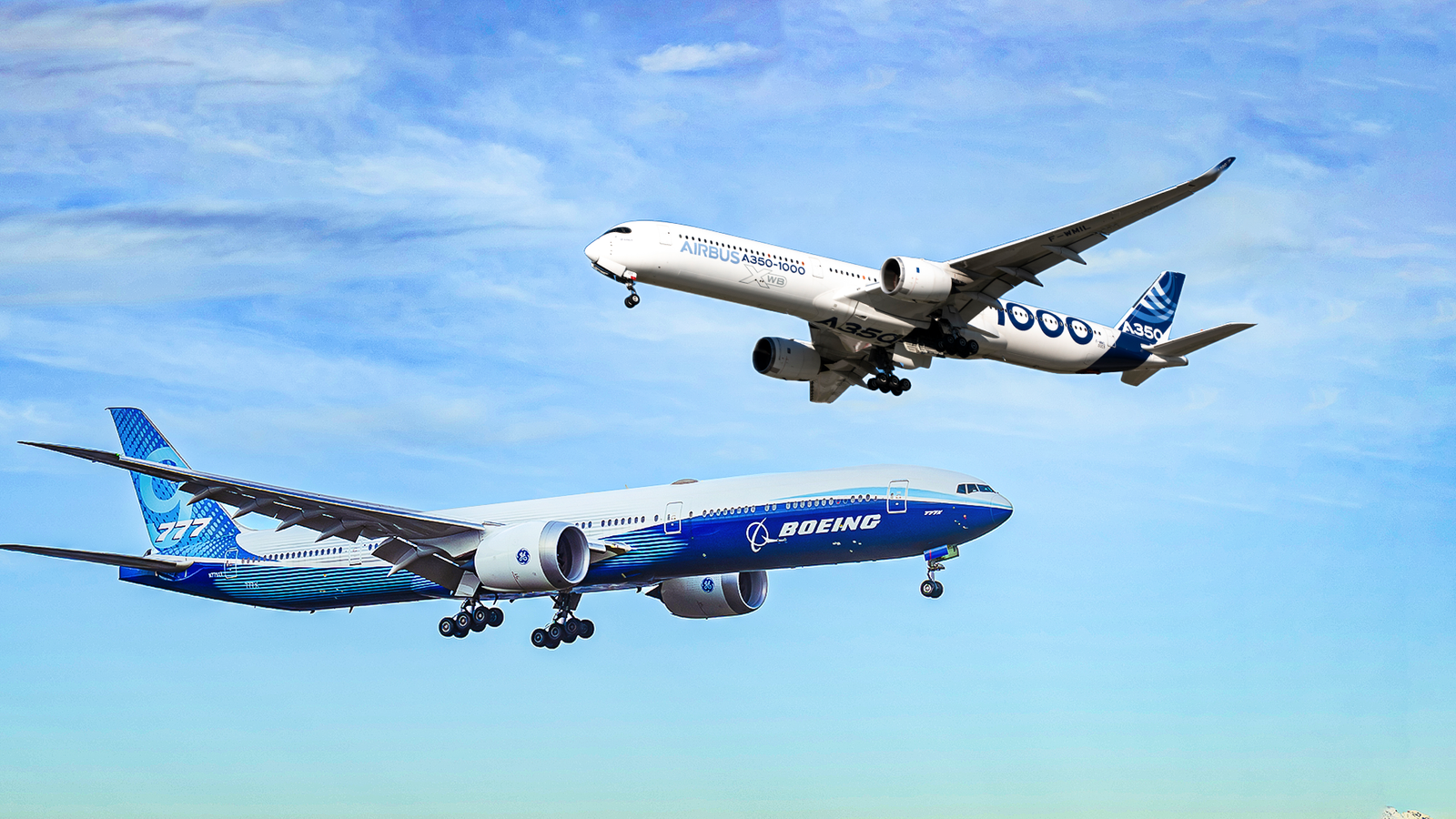
The transition from four-engine giants like the Boeing 747 and Airbus A380 to twin-engine widebodies has placed the Boeing 777-9 and Airbus A350-1000 at the forefront of modern aerospace engineering. These aircraft are designed for ultra-long-haul flights, offering improved fuel efficiency compared to their predecessors.
The Airbus A350-1000 features a carbon-fiber composite airframe, with advanced materials comprising approximately 70% of the aircraft, including 53% carbon-fiber reinforced polymer. This design reduces airframe weight and eliminates metal fatigue and corrosion, allowing for lower cabin pressure and higher humidity, enhancing passenger comfort and reducing maintenance costs.
Boeing's 777-9 employs a hybrid approach, utilizing a traditional aluminum fuselage with a new composite wing. This design leverages existing manufacturing processes but results in a heavier structure compared to the A350-1000's composite design. The 777-9's composite wing, inspired by the 787 Dreamliner, is a significant feature.
The engine choices further differentiate these aircraft. Boeing's 777-9 is powered by the GE9X, the largest commercial jet engine, featuring carbon-fiber fan blades and ceramic matrix composites. Airbus's A350-1000 uses the Rolls-Royce Trent XWB-97, which, while smaller, offers high efficiency with advanced turbine technology and titanium fan blades.
The 777-9 offers a wider cabin, accommodating more passengers, while the A350-1000 provides flexibility with its range and efficiency. The A350-1000's range of 9,100 nautical miles allows for ultra-long-haul routes, whereas the 777-9's range of 8,000 nautical miles focuses on high-capacity routes.
The 777-9's carbon-fiber wing includes a folding mechanism to fit standard airport gates, adding complexity but enhancing aerodynamic efficiency. The A350-1000's fixed wing offers simplicity and reliability. Both aircraft represent the pinnacle of twin-engine widebody design, each with distinct advantages for different airline strategies.
Source: Carbon Fiber Feed