Cannot Rewrite Title Without Full Original
South Korea's Ministry of Science and ICT rated four of its 14 Small-scale R&D Zones—Seoul Hongneung, Pohang, Incheon Seo-gu, and Jinju—as "Excellent" in the 2025 annual evaluation, with Pohang's zone directing roughly 11 billion won toward Graphene Square and POSTECH to build the world's first mass-production plant for graphene film. The Pohang result signals growing state-backed infrastructure for scaling graphene manufacturing, a persistent bottleneck for the advanced carbon materials sector.
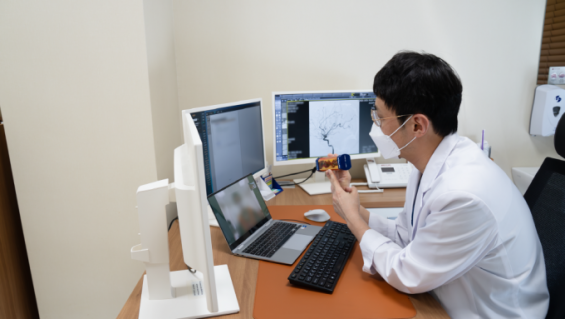
Seoul Hongneung, Pohang in North Gyeongsang Province, Incheon Seo-gu, and Jinju in South Gyeongsang Province have been recognized with an 'Excellent' rating in the 2025 annual evaluation of Small-scale Research and Development Zones. These zones have been pivotal in advancing technology commercialization and facilitating significant investments.
The Ministry of Science and ICT, along with the Innopolis Foundation, announced the evaluation results for the 14 designated Small-scale R&D Zones. These zones are compact, high-density clusters focused on disseminating R&D outcomes and accelerating commercialization through core technology institutions such as universities and research institutes.
The evaluation assessed performance across three areas and six indicators, including zone development projects, member satisfaction, and local government contributions. Key achievements such as technology transfer and global expansion were highlighted, leading to the top rating for the zones in Seoul Hongneung, Pohang, Incheon Seo-gu, and Jinju.
The Seoul Hongneung R&D Zone, specializing in advanced biotechnology, attracted 75.4 billion won in corporate investments. Endorobotics, a spin-off specializing in endoscopic surgical robots, benefited from technology transfer support and achieved FDA approval for its products, securing 32.5 billion won in Series C funding.
In Pohang, the focus on advanced materials resulted in substantial support for Graphene Square, a developer of graphene materials. With assistance from POSTECH, the company established the first mass-production plant for graphene film. Celloid, an advanced bio-materials company, also secured significant funding and international research agreements.
The Incheon Seo-gu R&D Zone emphasized environmental technologies, fostering global cooperation and hosting the Incheon International Environmental Technology Exhibition. Roots Lab, specializing in eco-friendly cosmetic ingredients, signed export contracts with luxury brands, including Chanel.
Jinju's R&D Zone, specializing in aerospace, supported ANH Structure in mass-producing lightweight composite parts for Boeing 737 aircraft. SD Aero received support for overseas certification and now supplies components to Boeing and Embraer, enhancing the aerospace sector's growth.
Lee Eun-young, Director-General for Research Outcomes Innovation at the Ministry of Science and ICT, emphasized the importance of industry–academia–research collaboration in these zones and pledged continued support for tailored regional and industrial development.
Source: Graphene Feed