Carbon quantum dots show promise against drug-resistant biofilms
Researchers used quaternized carbon dots to fully prevent S. aureus biofilm formation at a concentration of 1,000 micrograms per milliliter.
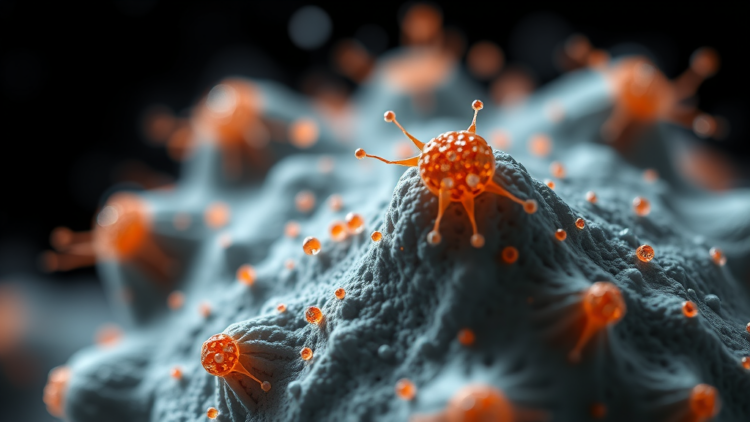
Carbon quantum dots, fluorescent nanoparticles smaller than ten nanometers, are emerging as potential agents against drug-resistant biofilms. These biofilms, which are structured communities of microbes encased in a self-produced matrix, are notoriously difficult to treat due to their high tolerance to antibiotics. A review published in MicrobiologyOpen explores the potential of carbon quantum dots, which can be synthesized from common materials like fruit juice and garlic, in dismantling these microbial fortresses.
Carbon dots have garnered interest for their photochemical stability, biocompatibility, low toxicity, and fluorescence. Their synthetic flexibility allows researchers to tailor surface functionalities, such as amines or carboxylic acids, to interact with biofilm structures. The review, led by Hadeer M. Bedair and Tamer M. Samir, categorizes synthesis methods into top-down and bottom-up approaches, with microwave-assisted synthesis standing out for its efficiency. However, challenges remain in scaling up production due to limitations in microwave penetration depth.
The review highlights that cationic carbon dots are particularly effective against Gram-positive bacteria like Staphylococcus aureus due to their ability to bind and disrupt negatively charged cell walls. Notably, guanidinium-based dots showed near-complete inhibition of methicillin-resistant S. aureus biofilms at low concentrations. For Gram-negative bacteria, which have a more complex outer membrane, effective carbon dot systems combine multiple mechanisms beyond electrostatic interactions.
Fungal biofilms, such as those formed by Candida species, present additional challenges due to the eukaryotic nature of fungal cells. The review notes promising results with carbon dots, including guanidine-functionalized dots that significantly reduced Candida albicans biofilms while preserving human tissue integrity. The authors emphasize the need for standardized testing protocols and further research into the molecular mechanisms and long-term safety of carbon dots in clinical settings.
The review concludes that while carbon quantum dots show promise, substantial research is needed to address production, consistency, and regulatory challenges before they can be used in clinical applications. The potential for these nanomaterials to evolve into effective platforms against biofilm-associated infections remains a compelling prospect.
Source: Emerging Nano Carbons