DLR and Omnidea-RTG develop thermoplastic AFP cryogenic tank
Researchers developed a 1-meter-diameter Type 5 cryogenic tank using carbon fiber/LMPAEK for hydrogen and methane storage under an ESA-funded project.
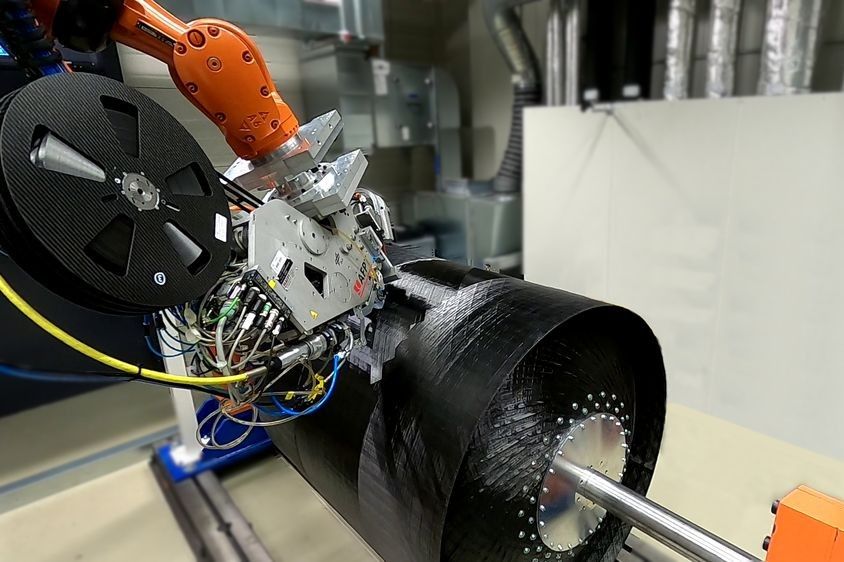
The DLR Institute of Structures and Design, in collaboration with Omnidea-RTG GmbH, has developed a Type 5 liquified natural gas (LNG) tank demonstrator using carbon fiber-reinforced low-melt PAEK (LMPAEK) from Victrex. This project, funded by the European Space Agency (ESA), aims to advance lightweight and high-strength storage systems for cryogenic fuels such as hydrogen and methane. The 1-meter-diameter tank was manufactured at DLR's Center for Lightweight Production Technology in Augsburg using an in situ automated fiber placement (AFP) process.
The tank's construction utilized thermoplastic in situ AFP technology, allowing the entire structure to be produced in a single, continuous process without the need for separate joining operations or specialized molds. This approach included structural design, material selection, permeability analyses to ensure leak-tightness under cryogenic conditions, and mechanical characterization of the joints.
This integrated manufacturing method reduces production costs and complexity by eliminating separate joining processes and dedicated tooling, while optimizing the use of existing manufacturing infrastructure. DLR and Omnidea-RTG highlight the demonstrator as proof of the technological maturity and industrial feasibility of thermoplastic AFP for cryogenic storage systems, with potential applications in future space missions and terrestrial uses.
The thermoplastic composite (TPC) material system now has expanded qualification, covering unidirectional (UD) tapes and processing methodologies such as AFP, ATL, and OOA. Victrex's LMPAEK continues to demonstrate its value in scenarios where processing ease meets extreme demands. Produced-to-size carbon and glass fiber format tapes and thin-ply options from 85 µm enable optimal fiber-matrix adhesion, temperature and chemical resistance, and high reproducibility.
Further information on the project can be found on DLR's project page and LinkedIn.
Source: Carbon Fiber Feed