Electric fields and smart materials combine to heal chronic wounds
Researchers have developed a MXene-based nanocomposite hydrogel designed to aid in healing chronic wounds.
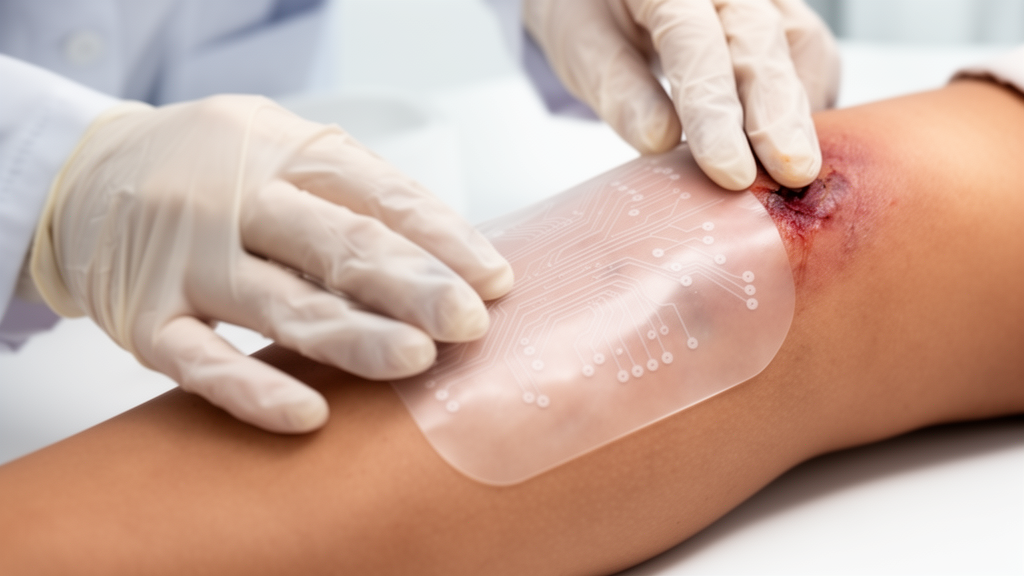
Researchers at Xinqiao Hospital of Army Medical University have reviewed the use of electroactive materials in wound healing, highlighting their potential to address chronic wounds. The team, led by Haihong Ge, Xi Ren, and Zeyuan Lei, discusses materials like conductive hydrogels, self-powered dressings, and multifunctional composites that can generate and transmit electrical signals to aid healing. Chronic wounds affect over six million people in the United States, with significant costs and prevalence, particularly among the elderly.
The concept of using electrical stimulation for healing dates back to the 19th century, with the discovery of bioelectric currents in injured skin. Modern understanding involves the transepithelial potential, where ion channels and pumps in cell membranes create a voltage difference. When the skin is damaged, this potential is disrupted, creating an electric field that guides cell migration crucial for wound repair.
Conductive hydrogels are promising due to their biocompatibility and ability to mimic soft tissue. By incorporating electroactive components like graphene, carbon nanotubes, and MXenes, these hydrogels can form flexible electrodes that conform to wound surfaces, facilitating safe electrical stimulation. However, challenges remain, such as the oxidation of MXenes and the degradation of hydrogels in moist environments.
Self-powered materials offer another approach by converting mechanical energy into electrical fields. Piezoelectric polymers and triboelectric nanogenerators can harness energy from body movements to power therapeutic fields. Despite their potential, these devices often produce voltages much higher than needed, requiring power management circuits to optimize their therapeutic use.
Integrated multifunctional systems aim to address multiple wound pathologies simultaneously. These systems combine various functionalities, such as infection control and inflammation reduction, into a single structure. Recent innovations include smart bandages that monitor wounds and deliver drugs responsively, though challenges in durability, biosafety, and scalability remain.
The review emphasizes the need for further research to optimize stimulation parameters and ensure the long-term safety and effectiveness of these materials in clinical settings. The goal is to develop intelligent repair systems that can adaptively manage wound healing processes.
Source: MXenes