From durian peels to biochar: The direction of the circular economy
Vietnamese researchers are producing biochar and charcoal pellets from durian peels to reduce waste and increase the value of agricultural byproducts.
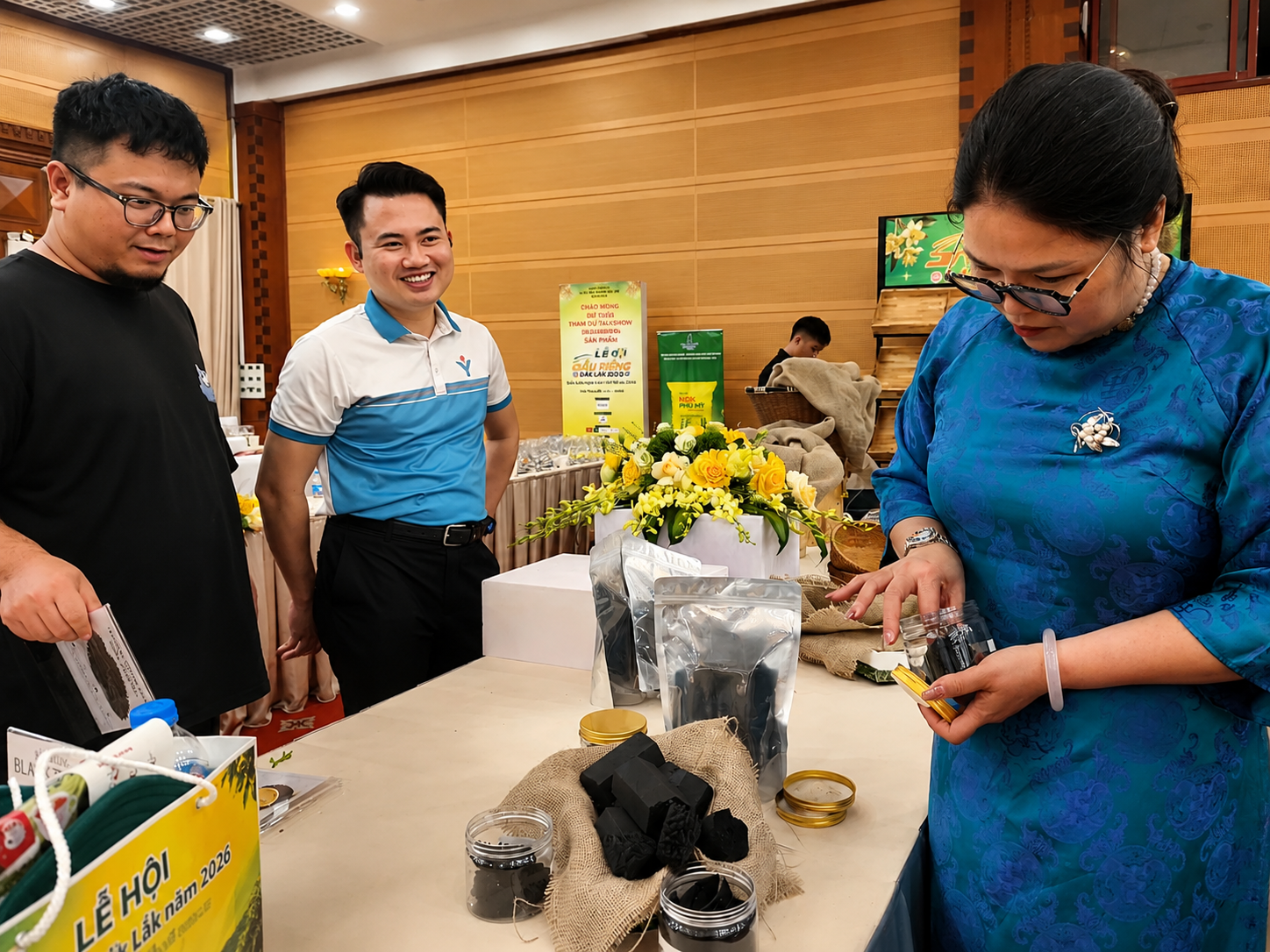
The 001 Ea Knuếc Agricultural Import-Export Cooperative in Dak Lak province is pioneering the transformation of durian peels into biochar, aligning with Vietnam's National Action Program on Sustainable Production and Consumption for 2021-2030. This initiative aims to efficiently utilize resources and minimize waste, promoting a circular economy and environmentally friendly products.
Durian peels, traditionally considered waste, are now being processed into biochar and charcoal pellets. The cooperative, led by Ms. Nguyen Thi Huong, utilizes a biochar furnace to convert the peels into charcoal over a six-hour burning process. The resulting charcoal is then cooled, crushed, and pressed into pellets. These products can serve as fertilizer or as a heating and grilling fuel, offering high calorific value and reduced smoke emissions.
The cooperative's efforts address the environmental pressure caused by the large volume of durian peels generated during harvest seasons. By integrating the processing of peels into the durian production cycle, the cooperative aims to create a closed-loop system that enhances the industry's sustainability. This approach not only reduces waste but also adds value to the durian industry by utilizing all parts of the fruit.
Currently, the biochar production is in the testing phase, but it has already attracted interest from international markets, including Europe. The cooperative plans to expand its production capacity by leasing land for a larger factory to meet potential demand. This expansion could further solidify the cooperative's role in promoting sustainable practices and circular economy principles.
Beyond durian peels, the cooperative is exploring the application of biochar production technology to other agricultural by-products such as coffee husks and sugarcane bagasse. This strategy leverages Dak Lak's abundant agricultural resources and aligns with the cooperative's goal of sustainable production.
In addition to biochar, the cooperative produces a range of processed durian products, including freeze-dried durian, durian powder, and durian coffee. These products are distributed nationwide and are gradually entering the Chinese market, contributing to the cooperative's long-term export goals. By transforming waste into valuable products, the cooperative exemplifies the potential of linking agricultural production with circular economy principles, in line with Vietnam's sustainable development objectives.
Source: Biochar Feed