Graphene-enhanced MOF coatings convert sunlight into drinking water from desert air
Researchers developed a graphene-enhanced MOF-303 composite that captures water from desert air using sunlight, achieving water collection of 0.254 grams per gram of material in 30 minutes.
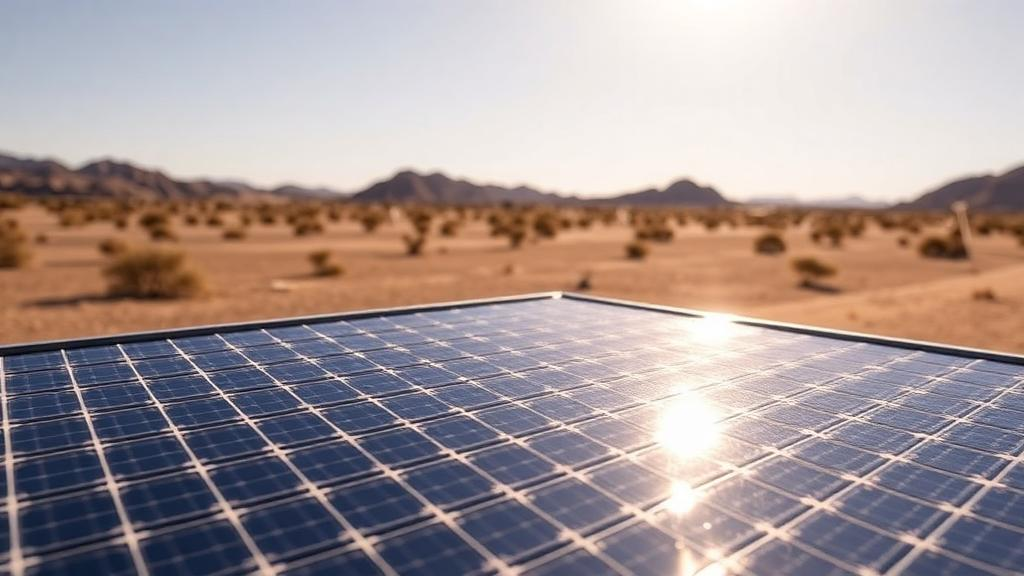
Graphene-enhanced metal-organic frameworks (MOFs) are advancing solar-driven atmospheric water harvesting, offering a promising solution to water scarcity. A study in Results in Chemistry details how MOF-303, combined with few-layer graphene, captures water vapor from the air using sunlight. This method leverages the high thermal conductivity of graphene to improve the efficiency of MOFs, which traditionally suffer from low thermal conductivity and poor sunlight absorption.
The research, led by Zhiyin Duan and Yu Cheng, addresses the limitations of conventional sorption-based systems that require high desorption temperatures. By incorporating 4 weight percent of graphene into MOF-303 through an in-situ solvothermal method, the team enhanced the material's water vapor diffusion coefficient by 48 to 74 percent. This composite, MOF-303-FLG4, maintained adsorption capacity while improving heat penetration and adsorption kinetics.
The study also explored the physical arrangement of the adsorbent, revealing that coated beds of MOF-303-FLG4 on copper foam substrates significantly outperform traditional packed beds. The copper foam, with a pore density of at least 60 pores per inch, facilitates better heat delivery and water capture. Under test conditions, the coated bed captured 0.254 grams of water per gram of adsorbent, surpassing other configurations.
The findings suggest that graphene sheets serve as conductive bridges between MOF crystals and the copper skeleton, enhancing both heat dissipation and solar heating. This research provides a practical blueprint for developing efficient water harvesters capable of turning desert air and sunlight into a reliable water source.
Source: Graphene Feed