Graphene may enable new lightweight hydrogen storage tanks
Researchers evaluated four graphene-based materials in carbon fibre/epoxy laminates for hydrogen storage tanks. The study focused on microwave-assisted graphene intermediate (MGI) composites.
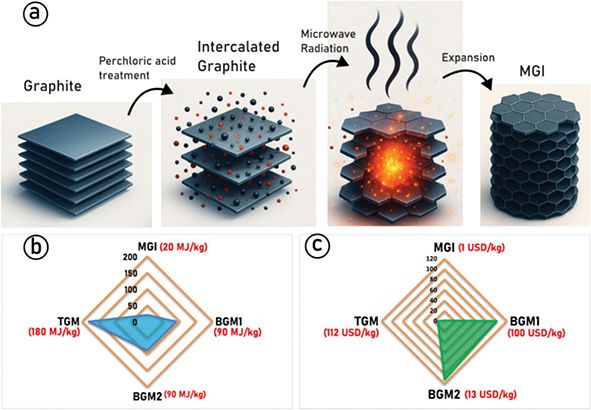
The integration of graphene into hydrogen storage tanks (HSTs) could significantly advance the development of lightweight solutions for automotive and aerospace sectors. Current Type IV HSTs, which utilize polymer liners and carbon fiber/epoxy composite overwraps, are favored for their high gravimetric efficiency and lightweight properties. However, the industry is actively exploring materials that can enhance structural performance without increasing mass.
A recent study has examined graphene and related materials (GRMs) as potential nanoscale reinforcements. Researchers evaluated various commercially available graphene materials and a novel microwave-assisted graphene intermediate (MGI) to understand how graphene's morphology, crystallinity, and dispersion affect the performance of carbon fiber/epoxy laminates in hydrogen storage. The study highlights that graphene's unique properties, such as its layered structure and large flake sizes, can improve both composite strength and hydrogen barrier performance, even at low concentrations.
Hydrogen storage tanks must meet stringent requirements due to hydrogen's low volumetric energy density, necessitating high-pressure resistance while maintaining minimal weight. Traditional methods often involve increasing wall thickness, which adds weight and reduces efficiency. Carbon fiber/epoxy composites have already demonstrated effectiveness in weight reduction while maintaining structural integrity. The study suggests that graphene's exceptional mechanical properties and hydrogen barrier characteristics make it a promising candidate for further enhancing these composites. However, the performance of graphene materials can vary significantly, presenting a challenge for their application.
Source: Graphene Feed