Guangdong uses carbon fiber expertise to boost Asia-Pacific cooperation
Guangdong is capitalizing on its cost-effective carbon fiber production to boost exports and support industrial transformation across the Asia-Pacific region. Local manufacturers now supply 86% of the market.
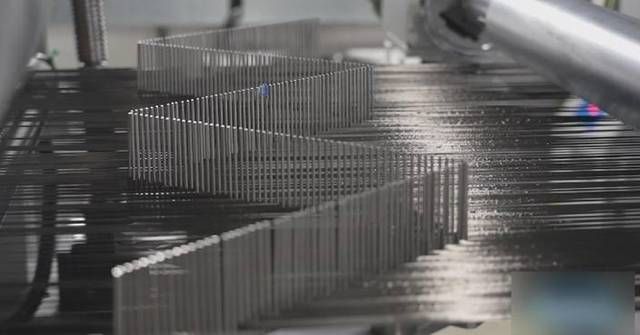
Guangdong Province in South China is capitalizing on its ability to produce carbon fiber at a lower cost and on a large scale, turning this capability into an export advantage. This move supports a broader industrial transformation across the Asia-Pacific region. From electric vehicles to greener shipping, industries in the region are increasingly utilizing carbon fiber, a material traditionally used in aerospace. Guangdong aims to harness the rising demand to create a larger industrial opportunity, leveraging its robust petrochemical sector and manufacturing capacity to advance up the value chain.
Historically, the high cost of carbon fiber limited its use primarily to the aerospace sector. In 2000, China imported carbon fiber at prices as high as 560 U.S. dollars per kilogram. By 2025, domestic factories had achieved mass production, increasing output by nearly 50 percent to 90,000 tons. This advancement reduced prices by 98 percent, with local manufacturers now supplying 86 percent of the market.
Guangdong is responsible for approximately one-third of China's carbon fiber consumption, with its factories excelling in producing finished products. However, local research labs have been slower in developing the raw fibers themselves. Zhu Caizhen, a professor from the College of Chemistry and Environmental Engineering at Shenzhen University, stated, "Guangdong's raw material research used to lag behind. So we are pairing factories directly with university labs, letting real-world product demand guide our science."
Located just 1.5 kilometers from Shenzhen University is Yuehai, a nationally renowned high-tech industry cluster that houses over 2,000 high-tech companies and 100 publicly listed firms. Carbon fiber is a crucial material for many of these businesses, which hope the upcoming 33rd Asia-Pacific Economic Cooperation (APEC) Economic Leaders' Meeting in Shenzhen will facilitate expanded regional trade in the material.
Zhu emphasized, "We aren't just exporting raw fiber; we are building it directly into finished goods like smartphones, laptops, and electronics tailored to local markets. That's Guangdong's real edge. And with the APEC summit spotlighting regional trade, it's a huge opportunity for our companies to go global."
The application of carbon fiber is also expanding into larger-scale sectors, such as shipbuilding. Liang Xiaofeng, assistant general manager of Guangdong Sinoway Composite Materials, noted, "That means better vessel performance and energy efficiency. They are also corrosion-resistant and offer better noise reduction, helping lower maintenance and fuel costs." The demand for such applications is growing beyond China, as ports across the Asia-Pacific region seek cleaner and more efficient vessels.
Liang mentioned that their main export markets currently include Hong Kong and Singapore, with plans to expand to Europe and the Middle East. With Singapore implementing a policy to subsidize the construction of all-electric boats, Liang believes the market there will soon open up.
During the Asia-Pacific Economic Cooperation (APEC) CEO Summit in Shenzhen, Malaysian Prime Minister Anwar Ibrahim highlighted the significance of China's opening-up policy for Asia-Pacific economies like Malaysia. Anwar stated that Chinese President Xi Jinping's keynote speech outlined the broad parameters for CEOs, governments, and the business community to collaborate, enhancing bilateral and multilateral cooperation with clear policy positions.
Anwar emphasized that China understands the international community's concerns over multilateralism and open trade, noting the importance of China's market opening for economies such as Malaysia. He remarked that the era of colonialism and imperialism is over, and emerging economies should be treated with respect and equality.
"Small countries, emerging economies must be treated with respect, dignity, and equal. They need to breathe a new life by using this trading and investment framework. That is why I think APEC has that particularly unique role," Anwar said. He praised China's stance that all regions, whether in Asia, Africa, or Latin America, including the most remote areas, deserve recognition.
Anwar concluded by stating that Malaysia is ready to collaborate with all parties, including China, to promote peace and prosperity and to ensure that the benefits of regional economic integration are shared more equitably among peoples.
Source: Carbon Fiber Feed