Surface-modified carbon nanotubes boost cadmium adsorption in water tests
Researchers enhanced cadmium adsorption in water with surface-engineered carbon nanotubes, achieving a maximum capacity of 293.57 mg/g using a non-covalently modified variant.
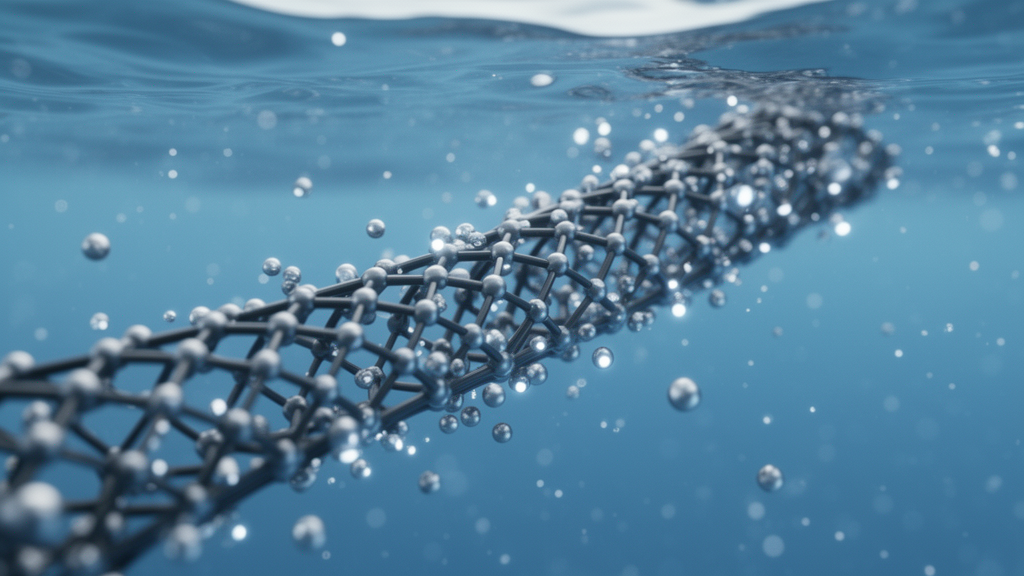
Surface-engineered carbon nanotubes, enhanced through non-covalent polymer wrapping and covalent grafting, have shown significant improvements in cadmium ion adsorption from aqueous solutions compared to unmodified materials. This finding was reported in a study published in Discover Materials. Researchers aimed to tackle aquatic heavy metal contamination by synthesizing and evaluating functionalized carbon nanotube adsorbents, focusing on how different surface modifications impact binding capacity and thermal resilience during cadmium sequestration.
The study began with the preparation of oxidized carbon nanotubes via acid treatment, which served as the baseline adsorbent. Researchers developed two functionalized variants to compare non-covalent and covalent surface chemistry approaches. For non-covalent modification, oxidized nanotubes were wrapped with poly(styrenesulfonate), creating a material known as OCNPSS. For covalent modification, a two-step chemical grafting process using aminosilane and succinic anhydride was employed, resulting in a material called OCNAPTESS.
After synthesis, the materials underwent structural, thermal, and colloidal characterization before batch adsorption trials. Colloidal stability analyses indicated that the nanotube dispersions were optimally stable below 1000 parts per million. Batch adsorption experiments were conducted across various cadmium concentrations and temperatures to assess uptake behavior under different conditions. The equilibrium adsorption data closely followed the Langmuir isotherm model, suggesting that cadmium binding occurred through a monolayer adsorption process on the nanotube surfaces.
Quantitative assessments showed that both functionalized variants surpassed the untreated base material in cadmium capture. The non-covalently wrapped OCNPSS exhibited the highest performance, with a maximum monolayer adsorption capacity of 293.57 milligrams per gram. The covalently grafted OCNAPTESS also showed improved capture, achieving a maximum monolayer capacity of 270.69 milligrams per gram. These engineered composites demonstrated significant performance enhancements compared to bare oxidized carbon nanotubes, which had a baseline maximum capacity of 227.90 milligrams per gram.
Thermodynamic analyses revealed that cadmium adsorption on these materials was an exothermic process. The researchers identified that cadmium uptake was facilitated by distinct mechanisms determined by the grafted chemical moieties, including electrostatic interactions, ion exchange, and multidentate chelation. Based on the observed binding capacities and thermodynamic properties, the study concluded that surface-engineered carbon nanotube variants hold strong potential as targeted adsorbents for aqueous heavy metal sequestration.
Source: Carbon Nanotubes Feed