Gyeongsangbuk-do Province to establish foundation for industrial innovation
Gyeongsangbuk-do Province secured 30 billion won in South Korean state funds across three projects targeting graphene 2D nanomaterials, ultra-precise electronic glass, and on-device AI for manufacturing, running from 2026 to 2030. The graphene project, organized by POSTECH Nano Convergence Technology Institute with 14.3 billion won, aims to build Korea's first end-to-end infrastructure covering graphene synthesis through to commercialization, addressing the country's longstanding gap between R&D capability and industrial-scale production.
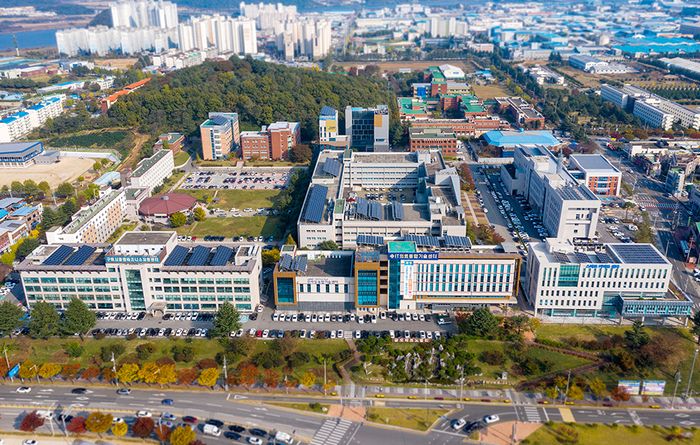
Gyeongsangbuk-do Province is set to establish a foundation for industrial innovation, prioritizing graphene, ultra-precise nanotechnology, and AI. These areas are recognized as pivotal for future materials development.
North Gyeongsang Province announced that it has selected three key tasks for this year's second industrial innovation infrastructure project, organized by the Ministry of Trade, Industry and Energy. The tasks include creating a foundation for AI-based materials and parts of graphene 2D nanomaterials, commercializing electronic glass parts using ultra-precise nanotechnology, and developing AI-based self-manufacturing capabilities. The province has secured 30 billion won in state funding for these projects.
The Industrial Innovation Foundation Establishment Project aims to support technological advancements by providing joint R&D infrastructure, which small and medium-sized companies often find challenging to develop independently. This infrastructure will be housed in non-profit research institutions such as universities and research institutes.
A major focus is on accelerating the commercialization of graphene. The graphene demonstration foundation project will receive a total investment of 14.3 billion won from this year until 2030. Graphene is known for being over 200 times stronger than steel and having superior electrical conductivity compared to copper. Despite these advantages, Korea has faced challenges in industrializing graphene due to insufficient empirical infrastructure.
With the new project, North Gyeongsang Province aims to overcome these barriers by establishing national infrastructure to verify graphene processes and demonstrate products. This will be the first support system in Korea for the entire graphene lifecycle, from material synthesis to commercialization. The project is led by POSTECH Nano Convergence Technology Institute.
Additionally, North Gyeongsang Province will focus on the commercialization of electronic glass, a key material in the semiconductor and display sectors. A 14.3 billion won investment will support the development of a commercialization foundation for electronic glass materials and parts. Electronic glass addresses issues like thermal deformation and signal loss in organic materials, with applications in semiconductor packages, ultra-thin displays, and high-frequency communication parts. The Gumi Electronics Information Technology Institute will manage this project until 2030.
The on-device AI-based self-manufacturing demonstration project will receive 19.5 billion won over five years, with 10 billion won in state funding. Managed by the Korea Institute for Robot Convergence, this project aims to establish infrastructure for on-device AI technology, enhancing productivity and quality in manufacturing by processing data independently without server connections.
Yang Geum-hee, deputy governor of Gyeongsangbuk-do, emphasized the importance of preemptive research facility construction to maintain competitiveness in high-tech industries. The province plans to continue fostering new industries and enhancing global competitiveness by actively participating in public offering projects.
Source: Graphene Feed