How does a smokeless fire pit work and can it make biochar?
Smokeless fire pits efficiently burn wood by heating air between double walls for a cleaner burn, but they are not designed to produce biochar, which requires restricted airflow.
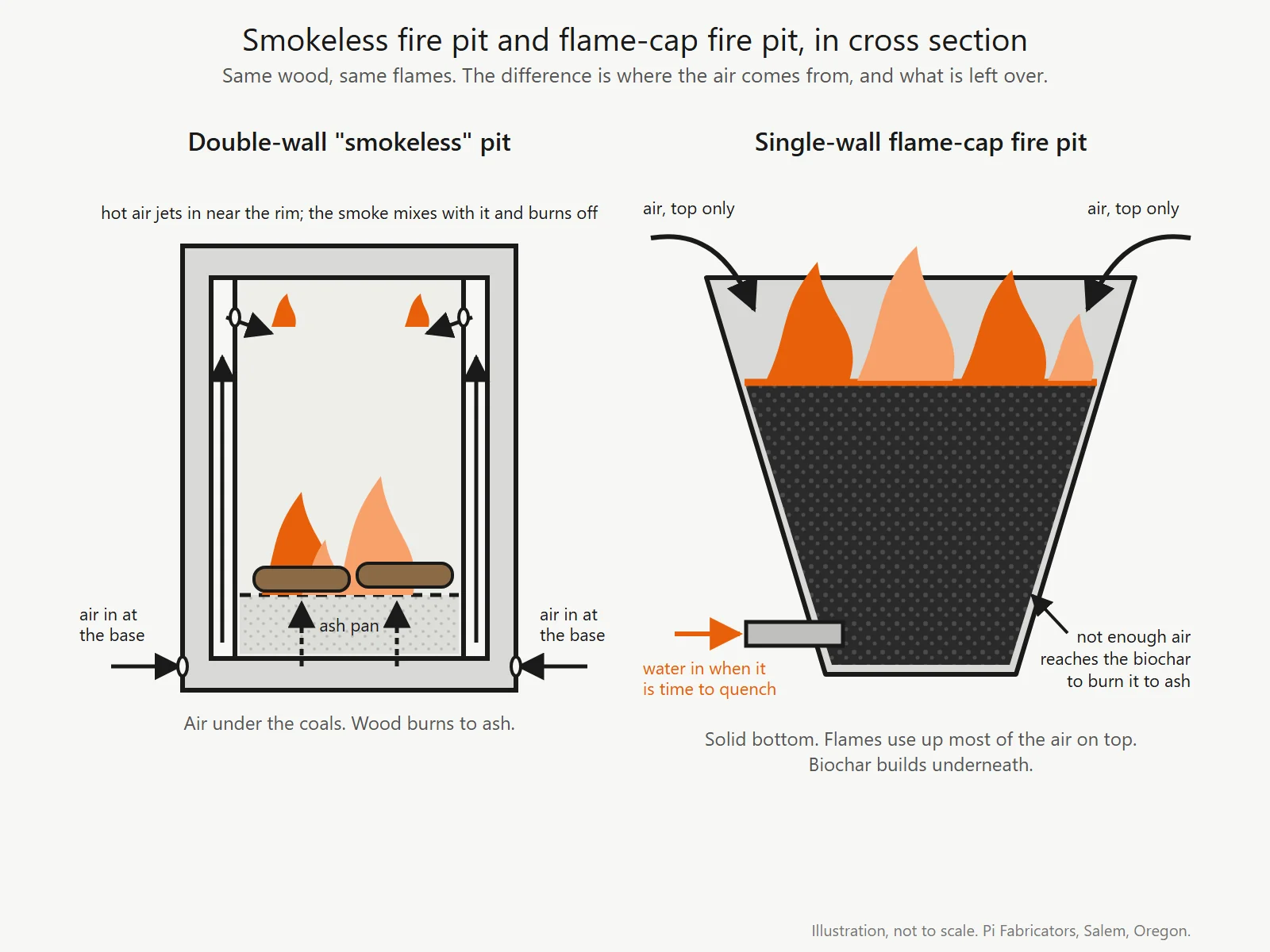
Smokeless fire pits, designed with a double-wall structure, enhance combustion by allowing air to enter at the base, heat up between the walls, and exit through holes near the top. This design facilitates a more complete burn of smoke, leaving behind minimal residue. However, these fire pits are not intended for biochar production. The airflow under the coals, essential for a smokeless pit's operation, converts potential biochar into ash.
To produce biochar, the fire pit must prevent air from reaching the coals and withstand being quenched with water at high temperatures. The biochar kiln buyer's guide offers insights into various kilns designed for this purpose. Conventional fire pits, which allow air to rise through the coals, do not achieve the same combustion efficiency as smokeless models. In contrast, flame-cap fire pits restrict airflow to preserve biochar by allowing air only over the rim, ensuring the coals remain intact.
While smokeless fire pits are not entirely smoke-free, they significantly reduce emissions once fully heated and when using dry wood. The design of these pits, including models like the Solo Stove and Breeo, focuses on directing heat upwards, with some manufacturers offering deflector rings to redirect heat. Single-wall pits, however, radiate heat more broadly, warming the surrounding area.
Both smokeless and flame-cap fire pits can be used for cooking, with appropriate grates and griddles. Safety regulations must be observed, including ensuring the fire is on level, fire-resistant ground and attended at all times. Despite their efficiency, smokeless fire pits should not be quenched with water, as this can cause damage. For those interested in biochar, dedicated kilns are recommended.
Wood ash, while useful as a soil amendment, lacks the water and nutrient retention properties of biochar. Thus, for those seeking a clean burn or biochar production, selecting the appropriate equipment is crucial.
Source: Biochar Feed