Inkjet-printed flexible photodetectors use carbon to detect light colors
Researchers have printed an entire photodetector array by inkjet, using carbon nanotube and organic macrocycle hybrids to tell colors apart. The approach points to bendable optical sensors made without rigid silicon.
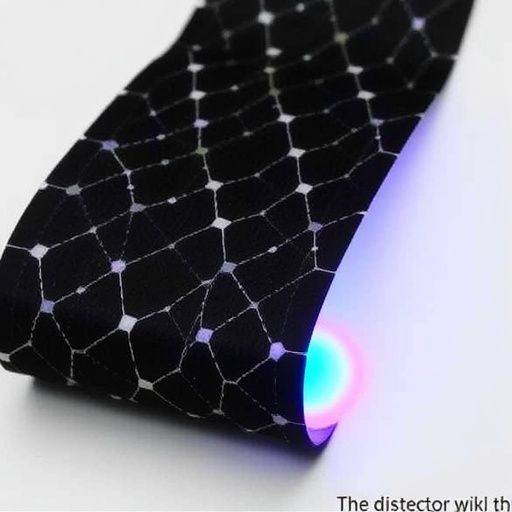
A recent study published in npj Flexible Electronics explores the potential of using inkjet printing technology to produce entire light-sensing systems. Led by researchers D. Koh, H. Im, J. Kim, and colleagues, the study introduces a fully inkjet-printed flexible photodetector array. This array is designed to detect light color through hybrid structures composed of carbon nanotubes and organic macrocycles. This research merges the fields of printed electronics and nanoscale optical sensing, paving the way for lightweight, flexible devices that do not rely on traditional silicon platforms.
Photodetectors are crucial components that convert light into electrical signals, used in various applications such as cameras, optical communication, and environmental sensors. Conventional photodetectors are typically fabricated on rigid substrates using complex semiconductor processes. These methods, while effective, involve high temperatures and materials that are not easily integrated onto flexible surfaces. The inkjet-printed alternative offers a simpler fabrication process, enabling electronics to conform to curved or moving objects.
Inkjet printing provides a distinct manufacturing approach by depositing tiny droplets of functional ink precisely where needed. These inks can contain conductive, semiconducting, or insulating materials that form functional structures upon drying. The digital control of this process allows for flexible design changes, beneficial for prototypes and customized sensors.
The study's innovation lies in using a hybrid sensing material that combines carbon nanotubes with organic macrocycles. Carbon nanotubes offer efficient charge transport and form interconnected networks in printed films. Organic macrocycles, with their ring-shaped structures, interact with light and other materials. This combination allows for a sensing layer where light absorption and electrical response are influenced by nanoscale interactions.
Color detection requires a photodetector to respond to different wavelengths, as color relates to the wavelength distribution of incoming light. An array of sensing elements can produce distinct response patterns, enabling spectral recognition without traditional camera systems.
The decision to fabricate the array entirely by inkjet printing affects more than appearance. Printing determines the functional layers' thickness, geometry, and connectivity, influencing the photodetector's sensitivity and reliability. The process must ensure that the printed material remains connected when the substrate bends or moves.
The hybrid architecture reflects efforts to control sensor behavior through molecular design. Carbon nanotubes create pathways for charge movement, while organic macrocycles introduce selective interactions. The performance depends on factors like nanotube distribution and macrocycle organization.
Flexible color-sensitive photodetectors could be used in wearable technology, robotic vision, smart packaging, and more. These sensors could monitor light exposure in clothing or indicate environmental changes on packaging. In robotics, lightweight sensors could provide optical information across curved surfaces.
As printed electronics progress, integrating sensing, computation, and communication on flexible substrates becomes crucial. The reported photodetector array demonstrates how nanoscale materials can be incorporated into a scalable manufacturing process for flexible electronics. This approach may bridge the gap between laboratory materials and practical devices.
The study also highlights the potential of hybrid materials in next-generation sensors. The combination of carbon nanotubes and organic macrocycles creates a platform for coordinated optical absorption and charge transport. As researchers refine printing methods, systems based on this concept could become more compact and adaptable than conventional alternatives.
Source: Carbon Nanotubes Feed