Insect-inspired electronic nose turns semiconductor chips into olfactory sensors
Bioengineers at UC San Diego integrated an insect olfactory receptor into graphene chips, creating a sensor that detects diverse organic compounds. This could lead to scalable, nature-inspired chemical sensors.
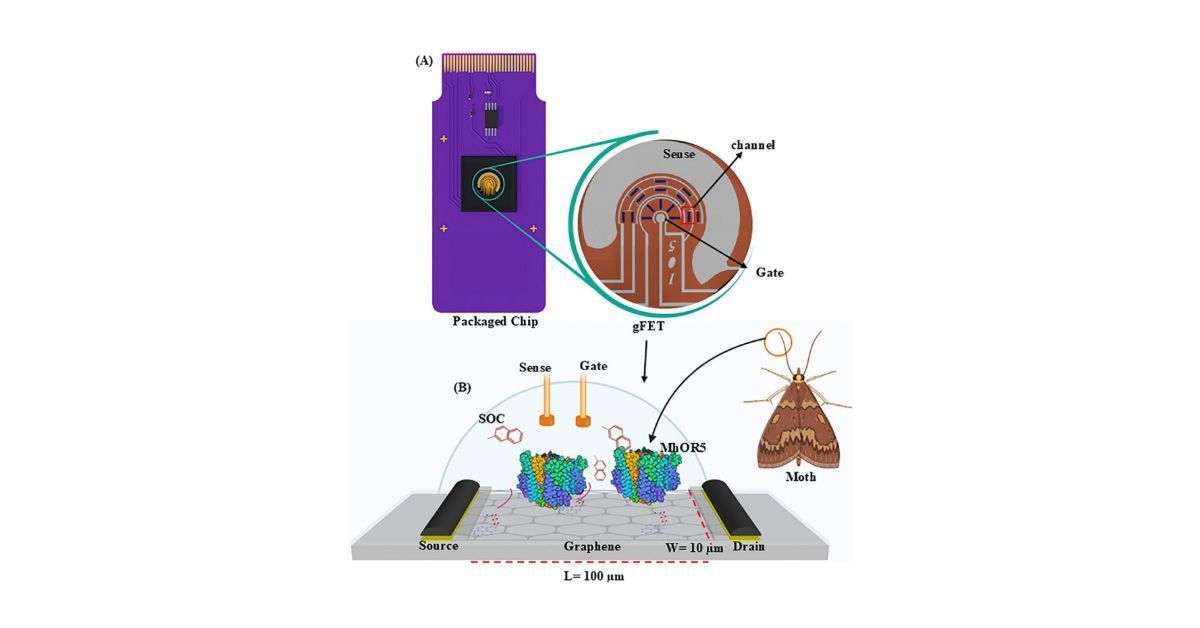
Bioengineers at the University of California San Diego have developed an electronic nose by integrating the olfactory receptor of the insect Machilis hrabei into graphene-based semiconductor chips. This biomimetic sensor can detect and differentiate small organic compounds that are challenging for conventional sensors. The innovation could lead to semiconductor-based chemical sensing systems for healthcare, environmental monitoring, food quality, agriculture, and biodefense.
In a study published in Advanced Materials, the UC San Diego team outlines their scalable method for manufacturing the MhOR5 odorant receptor and attaching it to graphene field effect transistors (gFETs). Unlike silicon, graphene in gFETs offers exceptional sensitivity to molecular changes.
The researchers tested their gFETs, functionalized with MhOR5, against 16 diverse compounds such as DEET, hexanol, and eugenol, observing concentration-dependent electrical responses.
Kiana Aran, professor of bioengineering at UC San Diego, stated, "Advances in engineering, biology, biomanufacturing, and semiconductor technology are enabling us to integrate biological functions with semiconductor technology at scale."
To integrate MhOR5 into the gFET, the team synthesized the receptor's genetic sequence, transfected it into mammalian cells, and purified the protein. The MhOR5 protein remained stable after storage and freeze-thaw cycles.
The purified MhOR5 was chemically attached to the graphene surface using Carbodiime Crosslinker Chemistry and the PBASE molecule, facilitating the first direct integration of MhOR5 onto a gFET for selective, label-free detection of organic compounds.
Researchers from Eurofins CALIXAR and Paragraf also contributed to this study.
Source: Graphene Feed