Kumho aims for CNT production for EV batteries
Kumho plans to increase production of multi-walled carbon nanotubes (MWCNT) to enhance electric vehicle battery performance.
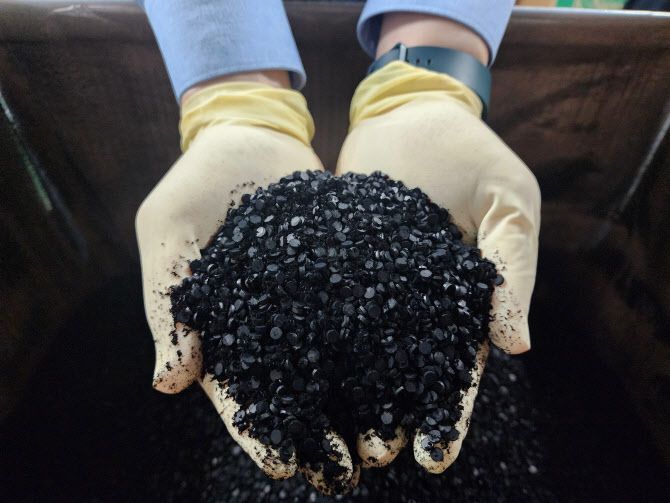
Kumho Petrochemical will commence mass production of few-walled carbon nanotubes (FWCNT) to serve as conductive additives in electric vehicle batteries. This move accelerates the company's transition toward a higher-value materials business.
Originally planned for the latter half of 2024, the production timeline was advanced due to a resurgence in the EV battery market. According to SNE Research, global EV battery usage rose by 9.1% to 244.6 GWh in the first quarter of this year, with EV sales also on the rise.
Carbon nanotubes (CNT) provide electrical conductivity 1,000 times greater than copper and have a tensile strength 100 times that of steel. FWCNT, offering superior conductivity compared to carbon black, enhances battery capacity, lifespan, and energy density. CNT products are categorized into multi-walled CNT (MWCNT), FWCNT, and single-walled CNT (SWCNT), with fewer walls leading to higher electrical conductivity.
Kumho Petrochemical has increased its CNT production capacity from 120 tons to 360 tons. The mass production of FWCNT using existing facilities is anticipated to improve profitability.
The company aims to expand its high-value product lineup by completing the development of CNT for lithium iron phosphate (LFP) batteries this year and commercializing it next year. This strategy is designed to address oversupply in the basic petrochemical market.
Additionally, Kumho Petrochemical is enhancing its competitiveness in the EV market by expanding the capacity of solution styrene-butadiene rubber (SSBR), a high-performance synthetic rubber used in EV materials.
Source: Carbon Nanotubes Feed