Light pollution from Starlink: "Blackest black" as a remedy
Vantablack, developed in Great Britain from carbon nanotubes, absorbs 99.965% of light, offering a potential solution to light pollution from satellite constellations like Starlink.
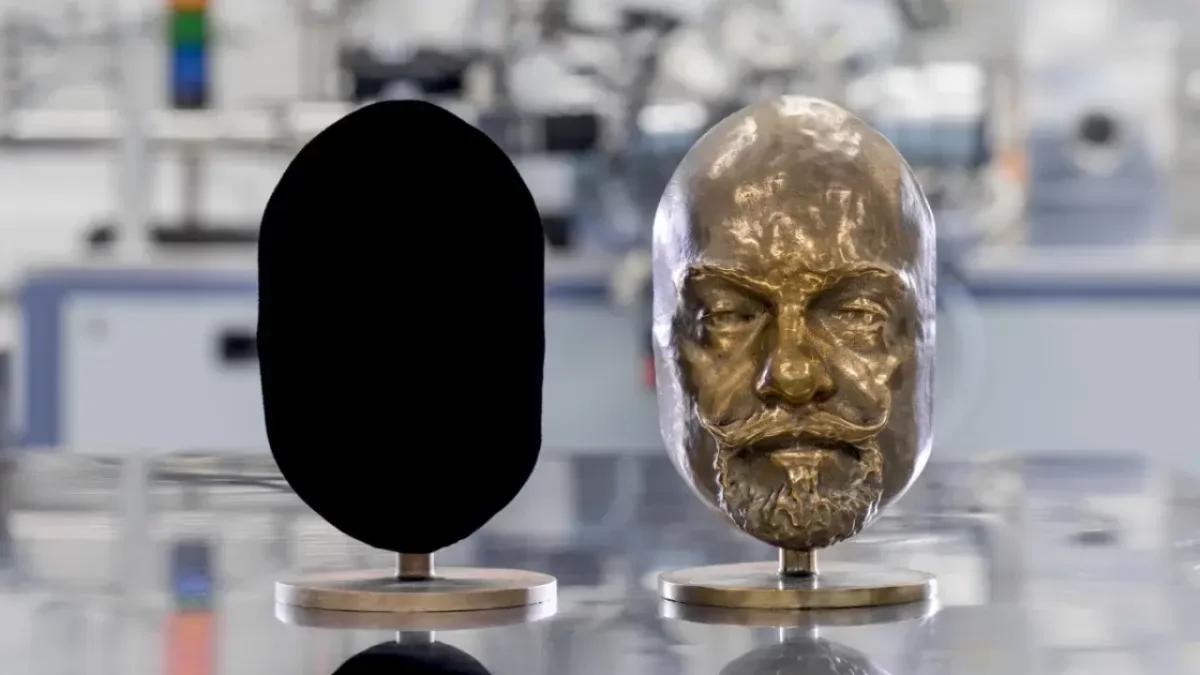
The application of Vantablack, a coating developed from carbon nanotubes, could significantly reduce the brightness of satellites and mitigate their impact on astronomical observations. Researchers at the University of Surrey conducted simulations indicating that this coating could bring satellite brightness below the threshold set by the International Astronomical Union, thus protecting astronomy without hindering space exploration. The research team plans to demonstrate this with the CubeSat Jovian 1.
The issue of satellite brightness has become more pressing with over 14,000 active satellites in orbit, two-thirds of which are part of SpaceX's Starlink network. Additionally, there are nearly 20,000 inactive satellites and debris, with plans for up to 1.7 million more satellites. This poses a significant threat to optical astronomy and traditional stargazing, prompting warnings from the European Space Agency.
Vantablack absorbs 99.965 percent of light, appearing deep black, and a variant called Vantablack 310 reflects only about two percent of light. This variant scatters the remaining light diffusely, preventing satellites from flashing. However, it is only applicable to satellites that can be darkened, and not those criticized for reflecting sunlight. The study detailing these findings was published in the Monthly Notices of the Royal Astronomical Society.
Source: Carbon Nanotubes Feed