11 articles on Carbon Nanotubes (CNTs) in Aerospace.
Researchers have developed closed-form entropy measures for degree-based topological indices in hyper armchair carbon nanotubes.

Researchers developed a carbon nanotube foam with mechanical memory, retaining its shape after compression. This property could lead to advanced impact-resistant materials and mechanical computing applications.

The Advanced Carbons Council calls for a U.S. carbon materials innovation platform focused on standards, testing and buyer qualification. The paper links engineered-carbon supply chains to manufacturing, energy, defense and AI infrastructure. Serves as a model for governments world-wide.
South Korean researchers developed a 17.5-micrometer-thick film that blocks 99.9999999% of radar waves by combining carbon nanotube fibers with MXene nanosheets, enhancing stealth technology.

Researchers at MEPhI have developed a new ultra-strong composite material incorporating carbon nanotubes, aimed at applications in aviation, space, and machinery.

A company led by Cambridge PhD Liu Zhenyu is advancing carbon nanotube materials for lightweight applications.

Himadri Specialty Chemicals will establish India's first carbon nanotube production facility at its West Bengal complex, with an initial capacity of 200 tons per year, starting commercial production by FY2027.

Researchers at Skoltech and the Harbin Institute of Technology have modelled how carbon nanotube smart sensors behave under the extreme temperatures and loads found in aircraft, predicting performance without physical testing.

Himadri Speciality Chemical is focusing on carbon nanotubes as a potential growth area to complement its existing battery materials business.

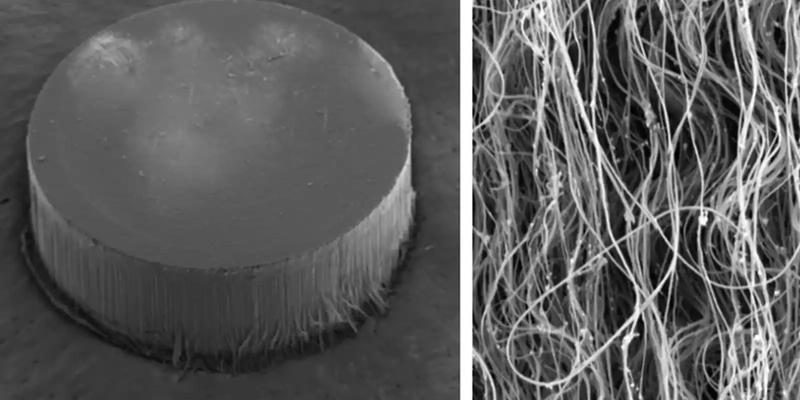
Carbice has partnered with Noctua to introduce a thermal pad for DIY PC builders that uses vertically aligned carbon nanotube technology. This collaboration brings advanced thermal management solutions, previously used in aerospace and AI infrastructure, to the consumer electronics market.
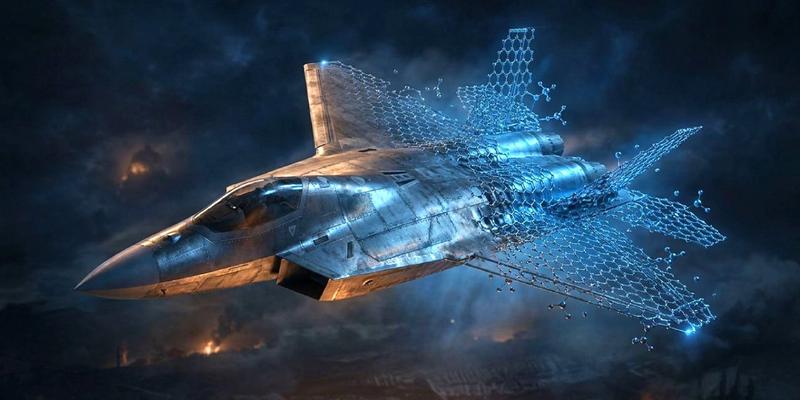
Composites reinforced with graphene and multi-walled carbon nanotubes are reshaping defence and aerospace design, where strength-to-weight now counts for more than the tonnage of steel and platforms.