MEPhI develops new ultra-strong composite for aviation, space, and machinery
Researchers at MEPhI have developed a new ultra-strong composite material incorporating carbon nanotubes, aimed at applications in aviation, space, and machinery.
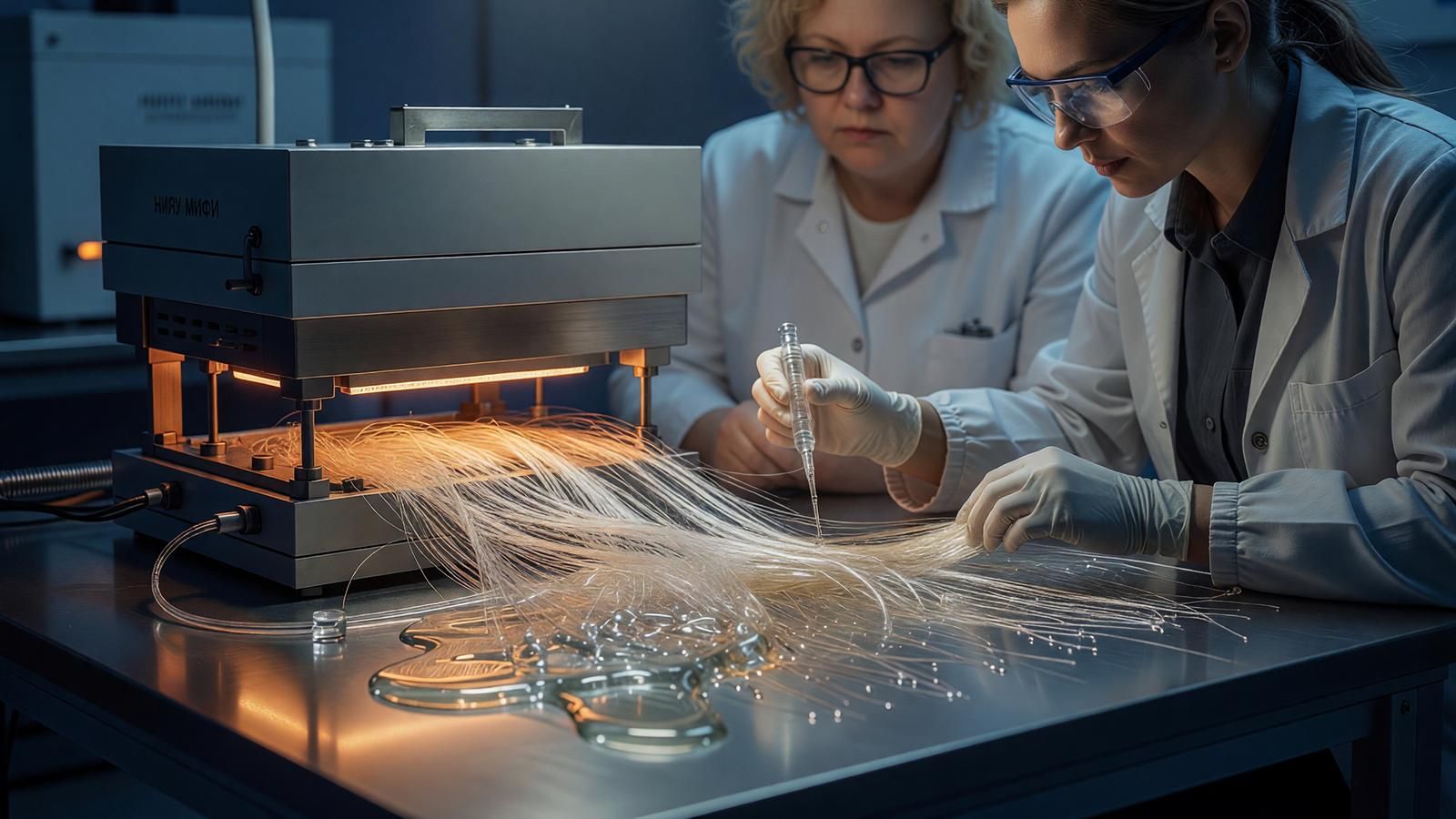
Researchers at the National Research Nuclear University MEPhI have patented a method for producing epoxy composite materials using an oxidized polyacrylonitrile (PAN) fiber precursor. This development targets the creation of high-strength polymer composites applicable in aviation, space, and mechanical engineering sectors.
The process involves impregnating the fibrous filler with an epoxy compound, followed by molding under pressure. The composite consists of approximately equal parts fiber and binder. A special modifier is used to enhance the properties of the filler. The material is then pressed at 4.5–5.5 MPa and heated to around 110 °C for one hour.
According to the patent description, this method results in increased composite strength and reduced water absorption. The material is suitable for manufacturing components that operate under high loads and in aggressive environments, with potential applications in the aviation, space, and automotive industries. The technology allows for the creation of materials with specific properties tailored to customer requirements.
In related developments, Pervy Tekhnichesky reported that the Moscow Aviation Institute developed a technology for strengthening polymer composites with carbon nanotubes. An addition of just 0.05% by weight significantly increases fatigue strength and resistance to cyclic loads, crucial for aviation structures.
Similarly, the Moscow Institute of Physics and Technology has developed an ultra-strong epoxy resin through plasma-chemical synthesis, enhancing the strength of the base material by 3–10 times. The resulting carbon composite rivals aluminum in strength while offering reduced weight and cost.
Parallel advancements in metal-matrix systems include a method from Tomsk scientists for creating composites with an aluminum matrix reinforced with tungsten, silicon, and boron carbides. These materials exhibit hardness four times greater than commercially available counterparts. The NRNU MEPhI patent continues this trend, focusing on a polymer approach with an oxidized PAN precursor to minimize water absorption, a critical factor for use in harsh environments.
Source: Carbon Nanotubes Feed