Nanotechnology revolutionizes defense and aerospace, changing the nature of warfare
Composites reinforced with graphene and multi-walled carbon nanotubes are reshaping defence and aerospace design, where strength-to-weight now counts for more than the tonnage of steel and platforms.
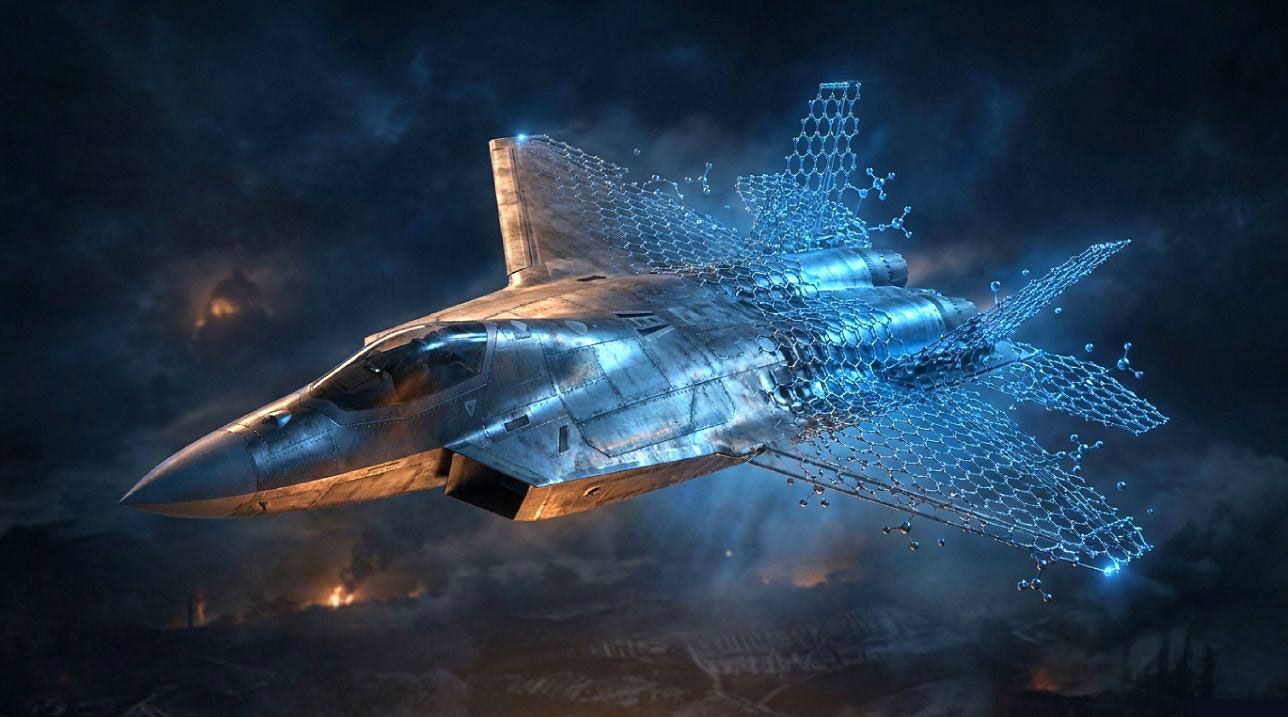
The evolving landscape of modern warfare increasingly relies on advanced carbon materials to enhance strategic capabilities. Traditional metrics of military power, such as the quantity of vehicles and ammunition, are giving way to innovations at the molecular level. Carbon nanotubes, graphene, and hybrid nanomaterials are at the forefront of this shift, offering unprecedented capabilities in weight reduction, thermal management, and radar visibility.
In aviation, the constraints of weight, thermal load, and radar cross-section (RCS) have reached their limits with conventional materials. Carbon-based nanostructures provide solutions by enabling lighter, stronger, and more heat-resistant composites. These materials not only enhance fuel efficiency and maneuverability but also maintain structural integrity at hypersonic speeds.
Türkiye's National Nanotechnology Strategy and Action Plan emphasizes the importance of becoming a leader in nanotechnology, particularly in defense and aerospace. The Turkish Defence Industry Agency’s 2024-2028 Defense Industry Sectoral Strategy Document highlights the shift from large systems to precise molecular engineering, underscoring the strategic role of advanced materials.
MXene, a titanium/carbon-based nanomaterial, offers a novel approach to stealth technology. Its atomically thin layers create an "Infinite Reflection Maze" that significantly reduces radar detectability without the weight penalties of traditional coatings. This innovation is applicable to both high-end combat aircraft and mass-produced unmanned aerial platforms.
Graphene and Multi-Walled Carbon Nanotube (MWCNT) composites are transforming aerospace applications by reducing structural weight by approximately 30% while enhancing strength. These materials improve operational range, payload capacity, and provide de-icing and lightning protection due to graphene’s electrical conductivity.
Nanotechnology also addresses extreme thermal conditions. Titanium Carbide (TiC) nanoparticles serve as ceramic shields in hypersonic flight, while Nano Indium Tin Oxide (ITO) enhances cockpit stealth. Boron-based nanocomposites protect against laser weapons, and aerogels and nanofluids manage thermal emissions and cooling.
Türkiye's strategy aims to eliminate external dependency on critical materials and advance technologies in defense, aerospace, and energy. The integration of advanced nanomaterials into platforms like the KAAN fighter aircraft and indigenous UAVs is crucial for achieving technological independence and strategic superiority.
The future of warfare will be shaped by those who can manipulate materials at the atomic scale, combining stealth with lightweight structures and leveraging advanced composites. Türkiye is committed to this paradigm shift, as outlined in its national technology initiatives, to secure its position as a leader in nanotechnology and defense innovation.
Source: Carbon Nanotubes Feed