13 articles on Graphene in Automotive.
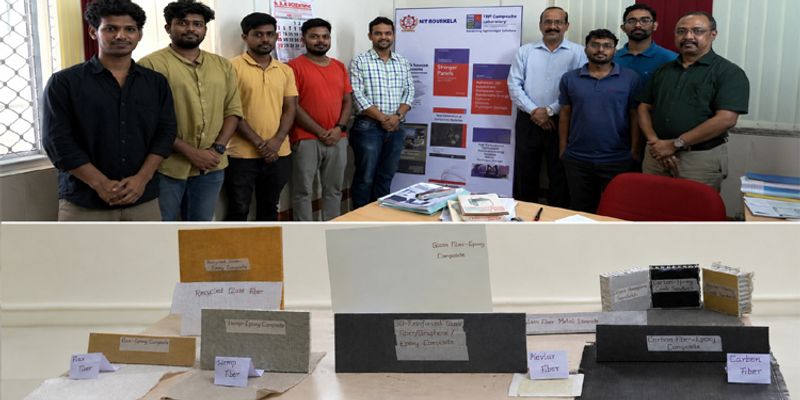
NIT Rourkela has patented a 3D-reinforced composite technology that boosts Fibre-Reinforced Polymer strength and durability, with potential applications in aerospace and automotive industries.

Mivium is developing high-quality gallium nitride nanopowders to enhance semiconductor performance, while Avadain is licensing technology to produce large-scale, defect-free graphene for industrial applications.

Lyten showcased its 3D graphene technology and high-temperature adhesives, emphasizing their applications in AI data centers.
Lyten and Modovolo have partnered to enhance Modovolo's BFP 3D printing platform with graphene-enhanced PA1205 filament, doubling X-Y tensile strength compared to carbon fiber-based filaments.

NanoMalaysia (NMB) is set to begin small-scale production of a graphene-enhanced lithium-ion battery for electric vehicles at its 15,000-square-foot facility in Sepang, Malaysia. By incorporating graphene instead of graphite, the battery aims to triple energy storage capacity, which could significantly enhance the performance of carbon-based materials in EV applications.
HydroGraph has certified Midland Compounding & Consulting (MCC) as a U.S. compounding partner for graphene-enhanced polymer applications. This certification enables MCC to support the development and commercialization of advanced graphene-enhanced materials, focusing on performance improvements and functional enhancements in industrial applications.

European semiconductor companies raised substantial funding in 2025, with the ten largest rounds ranging from NXP Semiconductors' €1 billion EIB loan down to IQE's £18 million convertible note, spanning AI chips, photonics, power electronics, memory, and chip cooling. Two graphene-focused companies, Paragraf ($55M Series C) and CamGraPhIC (€25M Series A), secured funding to scale graphene-based electronic devices and graphene silicon photonics respectively, signaling continued investor commitment to graphene's commercial role in semiconductors and optical interconnects.

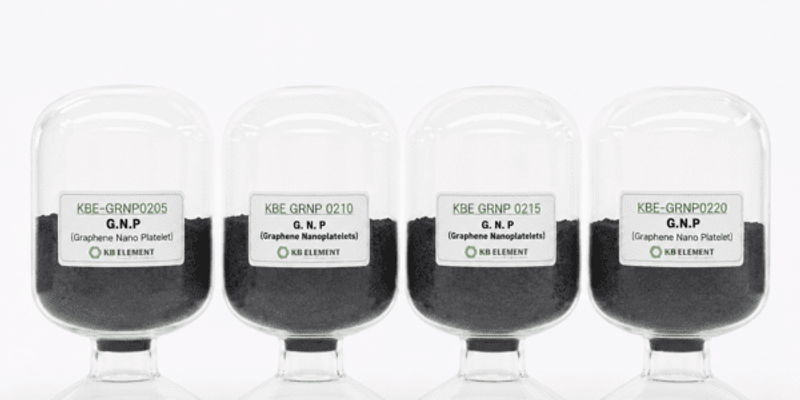
KB-Element will exhibit its non-oxidized graphene products, including graphene masterbatch pellets, at Nano Korea 2026 in Goyang, South Korea, from July 8 to 10. The company's plasma-based exfoliation process cuts production costs to roughly one-tenth of conventional methods, and its masterbatch format addresses graphene's longstanding dispersion challenges in polymer composites.

Sicona Battery Technologies validated 600 Wh/kg energy density in graphene-wrapped silicon anode pouch cells at its Wollongong pilot line, achieving 1,200-cycle retention above 80 percent capacity with a 200 MWh/year scale-up targeted for late 2027. The result advances graphene's role as a structural buffer for silicon anodes, a combination the carbon materials and battery sectors have pursued to overcome silicon's volumetric expansion problem at commercial scale.
CSIC researchers developed an 18-micron graphene-polymer composite separator combining polypropylene with 0.5 wt% reduced graphene oxide, achieving 4x greater puncture resistance and a 60% reduction in thermal-runaway initiation temperatures in lithium-ion batteries. The development advances reduced graphene oxide as a functional additive in battery separators, with pilot-scale production underway alongside a Spanish cell manufacturer targeting NCM-based EV applications.
NeoGraf commissioned a new production line at its Lakewood, Ohio facility, adding 2,000 tonnes per annum of flexible graphite sheet capacity funded by a $38 million investment, bringing its total to 11,000 tonnes per annum. The expansion increases domestic supply of high-purity exfoliated graphite sheets for EV battery thermal management, where the material's in-plane thermal conductivity above 600 W/m·K at low density addresses a critical requirement for North American automotive manufacturers.

HydroGraph added Hubron International, a Manchester-based masterbatch and conductive polymer compounder with over 90 years of experience, to its Fractal Graphene Compounding Partner Program on February 10, 2026. The partnership gives HydroGraph access to Hubron's global distributor network and established carbon nanomaterial processing capabilities, supporting broader commercial adoption of graphene in thermoplastic applications across automotive, electronics, and other sectors.

SK On signed a five-year, $180 million supply contract with Hansolchemical for 4,500 tonnes per annum of graphene additive for NCM811 cathodes, with shipments starting Q1 2027. The deal signals growing industrial-scale demand for graphene as a functional cathode additive in EV batteries, and will require Hansolchemical to expand its Gumi facility beyond its current 1,200 tonne per annum capacity.