Molecules prevent carbon nanotubes from clumping, enhancing heat-to-electricity performance
Researchers at Queensland University of Technology used a small molecule to stop single-walled carbon nanotubes clumping, achieving record heat-to-electricity conversion in a problem that had stalled the field for two decades.
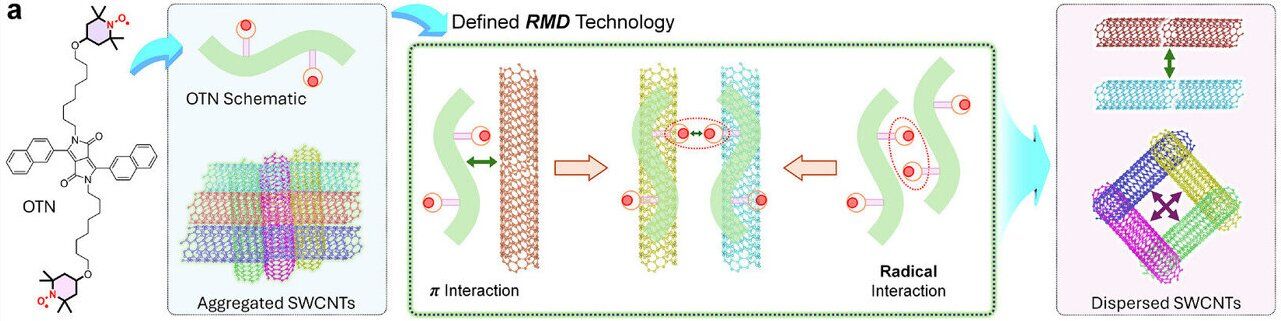
Researchers at Queensland University of Technology (QUT) have developed a new molecular strategy to enhance the performance of carbon nanotubes, a material with significant potential for energy-harvesting applications. Carbon nanotubes are known for their flexibility and conductivity, making them ideal for wearable technologies. However, their tendency to clump together has historically limited their effectiveness.
The team at QUT, led by PhD researcher Shanshan Zhou, has devised a method to prevent this clumping, setting a new benchmark for converting heat directly into electricity. This advancement could lead to more efficient wearable electronics and innovative methods of utilizing wasted heat.
Published in Angewandte Chemie International Edition, the research achieved record thermoelectric performance, surpassing long-standing benchmarks in the field. Professor Zhi-Gang Chen, director of the ARC Research Hub in Zero-Emission Power Generation for Carbon Neutrality, emphasized the potential of carbon nanotubes in wearable thermoelectric devices due to their lightweight and conductive properties.
The new molecular design fundamentally alters the interaction between carbon nanotubes, using specially designed molecules to maintain separation without compromising electrical conductivity. This innovation was demonstrated in a flexible device that generated electricity from body heat and remained durable through extensive testing.
Professor Chen highlighted the potential for this technology to enable battery-free wearable devices, such as health monitoring sensors and smart textiles, which could continuously harvest energy from body heat. The technology also holds promise for waste heat recovery, flexible sensors, and sustainable electronics.
This discovery is part of QUT's broader research efforts in zero-emission energy technologies, aiming to convert wasted heat into useful electricity and advance sustainable energy systems for future wearable and portable electronics.
Source: Carbon Nanotubes Feed