MXene biosensors detect ultra-trace drug pollution in water
Researchers highlight MXene biosensors' ability to detect pharmaceuticals and personal care products in water at ultra-trace levels, with detection limits below 10^-10 molar for various drugs.
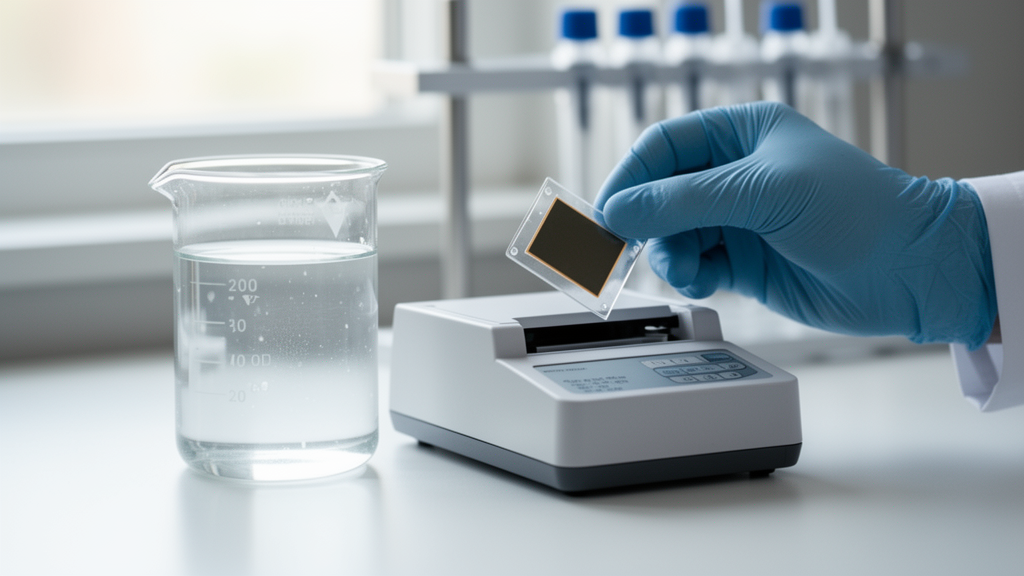
Pharmaceuticals and personal care products (PPCPs) are increasingly persistent pollutants in global water systems, found in concentrations from nanograms to micrograms per liter in surface water, groundwater, sediments, and organisms. Wastewater treatment plants, not designed to remove these diverse compounds, inadvertently introduce them into aquatic environments. A review in Discover Nano highlights that MXenes, a family of two-dimensional materials, could revolutionize the monitoring of these pollutants through advanced electrochemical and bio-inspired sensors capable of detecting PPCPs at ultra-trace levels.
MXenes, composed of transition metal carbides and nitrides, are typically produced by etching aluminum from layered ceramic precursors like titanium aluminum carbide. Ti3C2Tx, the most researched MXene, offers metallic conductivity over 10,000 siemens per centimeter, a large surface area, and tunable surface terminations such as oxygen, hydroxyl, and fluorine. According to authors Seyed Morteza Naghib, Mohammad Ali Khorasani, Fariborz Sharifianjazi, and Ketevan Tavamaishvili, these properties enable strong adsorption and rapid charge-transfer kinetics with pharmaceutical residues, making MXenes ideal for electrochemical sensing. Studies from 2023 to 2025 show functionalized Ti3C2Tx and Nb2CTx MXenes achieving detection limits below 10^-10 molar for non-steroidal anti-inflammatory drugs, antidepressants, and UV filters, outperforming graphene and molybdenum disulfide-based sensors.
The review uniquely consolidates MXene research into a framework for PPCP detection in real aquatic environments. Previous reviews focused broadly on MXene electrochemical sensing or targeted gases, heavy metals, and pesticides, while MXene biosensors primarily addressed clinical diagnostics. The authors emphasize the need for a systematic approach to bio-inspired recognition, surface functionalization, antifouling strategies, matrix effects, and transitioning from laboratory to real-world monitoring.
Innovative sensor designs include peptide-functionalized Ti3C2Tx nanosheets, modeled on fish olfactory receptors, achieving sub-picomolar selectivity for musk compounds in personal care products. Molecular imprinting on MXene substrates creates antibody-like recognition sites with low cross-reactivity and nanomolar dissociation constants. Enzyme-mimicking MXene-hemin nanoconjugates exhibit peroxidase-like activity, enabling colorimetric drug detection suitable for field testing. Hybrid platforms with horseradish peroxidase and gold nanoparticles on Ti3C2Tx offer detection ranges from femtomolar to micromolar concentrations, with high correlation values and quick response times in wastewater tests.
Signal amplification through noble metal nanoparticles is another key focus. Gold and platinum nanoparticles formed in-situ on Ti3C2Tx surfaces enhance redox signals, achieving picomolar detection limits and broad linear ranges. Multi-metal systems like Au-Pd decorated MXenes improve catalytic efficiency for pharmaceutical oxidation without electrode fouling. Molecularly imprinted polymer layers on reduced graphene oxide and Ti3C2Tx hybrids have been used for selective acetaminophen detection, while interdigitated MXene electrode arrays demonstrate dynamic ranges of 0.05 to 1000 nanograms per milliliter with sub-nanogram detection limits.
Real-world application is challenged by the water matrix, which contains organic matter, acids, salts, particles, and ions that can foul sensors and alter detection. MXenes are susceptible to oxidative degradation in water, affecting conductivity. Many detection limits were achieved under ideal conditions, and more data on signal suppression due to humic acid or ionic strength is needed. A low lab detection limit does not guarantee field effectiveness.
Emerging countermeasures include zwitterionic polymer coatings and mussel-inspired polydopamine layers that protect MXene surfaces from oxidation and fouling while allowing further functionalization. Polydopamine interlayers enable sensors to renew active binding sites, maintaining over 92% sensitivity after extensive use. Conducting polymer intercalation, especially with polypyrrole, enhances conductivity and reduces biofouling. Ti3C2Tx-polydopamine composites have detected carbamazepine in wastewater with good recovery rates in hospital effluent tests. Machine-learning-assisted calibration against chromatography benchmarks achieved a mean absolute error of 0.04 nanomolar over a wide dynamic range.
Field deployment is beginning, with portable MXene-based transistors detecting diclofenac at sub-nanomolar levels in surface water, aligning with lab mass spectrometry data. Multiplexed devices with various MXene composites can detect multiple PPCP categories simultaneously, with low cross-talk. In a European wastewater project, MXene sensors matched chromatographic measurements, suggesting potential as real-time monitors of community pharmaceutical exposure. MXene-MOF hybrid sensors have operated continuously for six months in prototype facilities.
Challenges remain for routine regulatory use. High-quality MXene production often involves hydrofluoric acid etching, with associated costs and hazards, though alternative methods are in development. Batch variations in surface composition can affect performance, yet are inconsistently documented. Long-term ecotoxicology is underexplored, with some studies indicating potential risks. No disposal protocols or emission thresholds for MXenes exist, and comprehensive risk assessments are needed.
The review concludes that MXene-based platforms offer promise for sensitive and rapid PPCP monitoring, but current effectiveness is limited to certain pharmaceuticals and water matrices. More validation across matrices, standardized method comparisons, and extensive aging studies are necessary. If addressed, MXene sensors could become integral to protecting aquatic ecosystems and public health.
Source: MXenes