Portuguese graphene breakthrough to reshape military aviation
Researchers at the University of Lisbon have developed a new graphene-based composite material that significantly enhances the strength-to-weight ratio of military aircraft components. This advancement could lead to lighter, more durable aircraft structures, improving fuel efficiency and performance in military aviation.
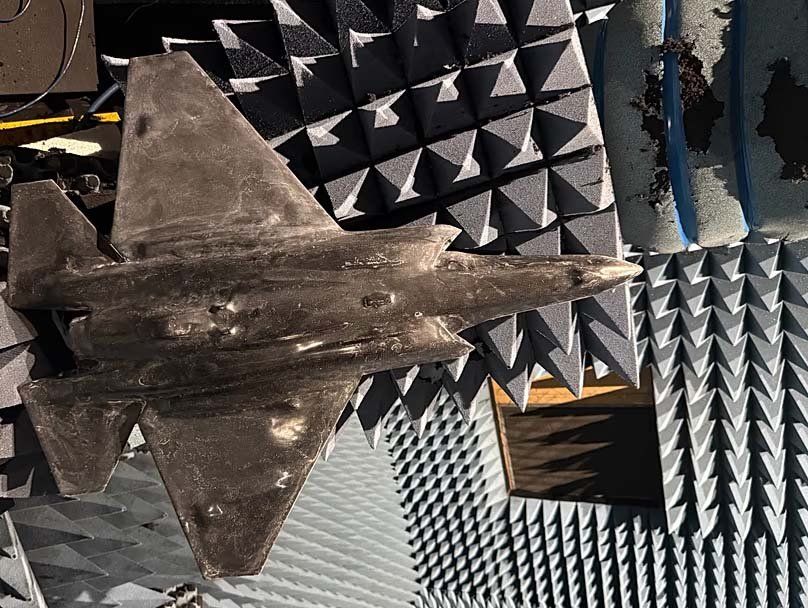
Portuguese scientists have developed a graphene coating that could transform European military aviation by significantly reducing the radar signature of aircraft and drones.
In Lisbon, researchers at GTechPlasma, a spin-off from the Institute for Plasmas and Nuclear Fusion at Instituto Superior Técnico, have engineered a plasma-produced graphene coating that absorbs electromagnetic radiation. This material could make standard warplanes and unmanned aerial vehicles (UAVs) nearly invisible to conventional radar, enhancing Europe's defense capabilities.
GTechPlasma's proprietary production system manipulates carbon-based precursors like methane and ethyl alcohol at an atomic level. This process creates high-quality graphene sheets, one atom thick, that trap and dissipate radar waves. Bruno Soares Gonçalves, co-founder of GTechPlasma, noted that applying this graphene to aircraft like the F-16 drastically reduces their radar cross-section, making them appear as small as birds on radar.
While not rendering aircraft completely invisible, the coating delays enemy detection, providing a strategic military advantage. Current stealth technologies, such as those used in the F-35 Lightning II, rely on complex coatings and geometries, which are costly and difficult to maintain. In contrast, the graphene coating offers a lightweight and versatile alternative that can be applied to various aircraft without altering their aerodynamics.
Beyond stealth, the graphene material provides electromagnetic shielding, protecting against electronic warfare, radar-jamming, and radiation. GTechPlasma is scaling up production with Plasmaphene, an industrial manufacturer, supported by the EU's Compete 2030 program. This partnership aims to transition the technology from laboratory to industrial scale.
GTechPlasma has already delivered 260 grams of the radar-absorbing graphene to a Portuguese drone manufacturer, indicating its readiness for defense applications. As European defense ministries seek to enhance regional security, this graphene innovation may play a crucial role in future military strategies.
Source: Graphene Feed