Proton irradiation transforms graphene oxide into needle-like structures
Researchers found that 3 MeV proton irradiation transforms Hummers’ graphene oxide into needle-like structures, while oxo-graphene maintains its structural integrity under similar conditions.
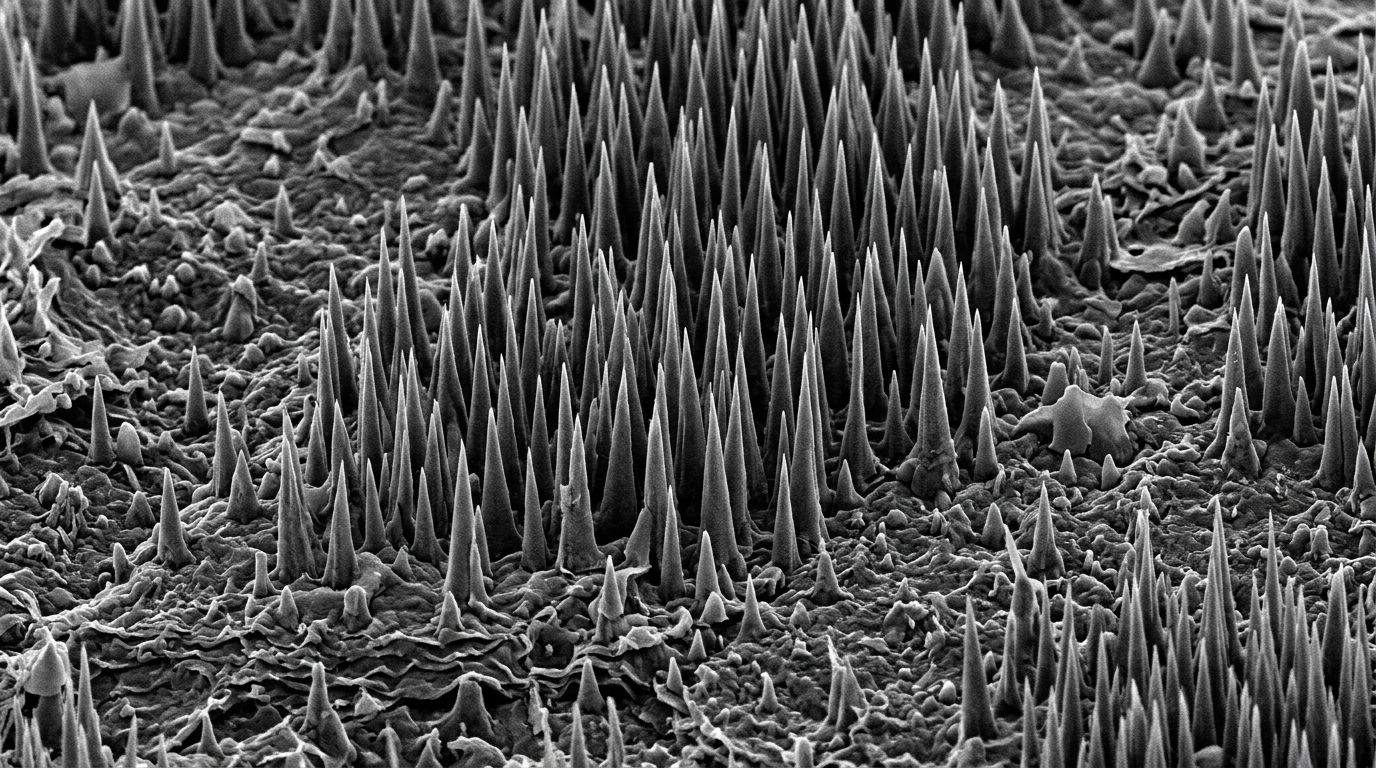
Graphene oxide's resilience to high-energy proton irradiation has been demonstrated, with some forms undergoing significant morphological transformations. Researchers have found that 3 MeV proton irradiation causes changes in two types of graphene oxide layers on silicon substrates: Hummers’ graphene oxide (HGO) and Eigler’s oxo-graphene (oxoG). The study examined fluences ranging from 5 × 10^12 to 5 × 10^15 protons per square centimeter, analyzing alterations in surface chemical composition, layer spacing, and structural defects before and after exposure.
High-resolution transmission electron microscopy (HRTEM) of HGO layers revealed notable structural changes, suggesting a mechanism for the formation of needle-like structures. The proposed model indicates that proton irradiation induces carbonyl group formation at defect sites, which deforms the carbon skeleton. This deformation causes graphene flakes to bend due to differential stress, leading to self-assembly into tubular, needle-like structures. This shape results from the interaction between radiation-induced chemical changes and mechanical strain within the material.
In contrast, oxo-graphene layers exhibited stability under similar conditions. Statistical Raman spectroscopy showed that the full width at half maximum of the 2D band, Γ(2D), for oxoG monolayers remained between 100 and 125 cm−1 across the fluence range. This stability suggests a high degree of radiation hardness in the carbon framework, maintaining its structural integrity even at the highest proton doses.
The study also investigated the effects of combining irradiation with chemical reduction. The researchers propose a two-step process where proton irradiation is followed by reduction with HI/TFA vapor, resulting in reduced graphene oxide with a sheet resistance of 5.56 kΩ per square.
HRTEM evidence specifically linked the needle-like structures to HGO layers, with the proposed mechanism involving carbonyl formation at defect sites, skeleton deformation, flake bending, and self-assembly into tubular shapes. Raman spectroscopy provided quantitative analysis for oxoG monolayers, showing that Γ(2D) remains stable, indicating the carbon framework's resistance to proton impacts.
The research, published in the Journal of Materials Science in 2026, involved Bangun Satrio Nugroho, Franck Nadji Adjim, Herry Wijayanto, Triyono Basuki, Vladimir Tuboltsev, Kenichiro Mizohata, Christian E. Halbig, and Satoru Nakashima. It highlights that the response of graphene oxide to proton irradiation is highly dependent on the oxide variant, with HGO transforming into needle-like structures while oxoG maintains its structural order throughout the dose range.
Source: Graphene Feed