Scientists find new use for hard-to-recycle wind turbine blades
Researchers developed a method to transform decommissioned wind turbine blades into silicon carbide and graphene using flash Joule heating, potentially reducing greenhouse gas emissions by up to 92%.
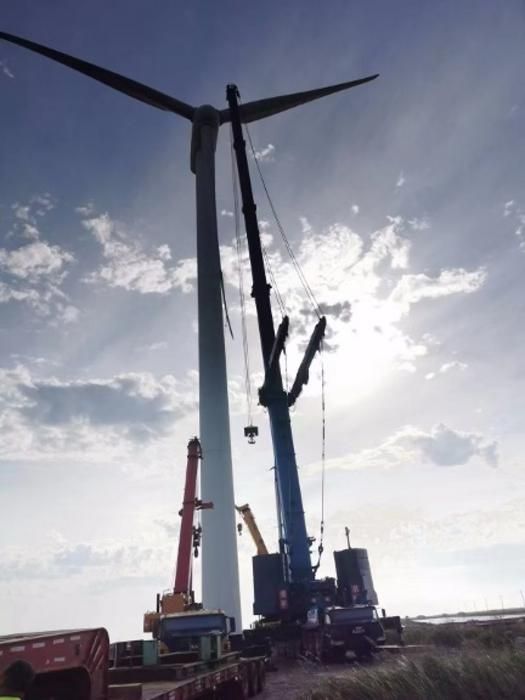
Researchers have developed an innovative method to recycle wind turbine blades, which are notoriously difficult to process due to their durability. A study published on November 6 in the Cell Press journal Chem Circularity outlines a process that transforms these blades into valuable materials like silicon carbide and graphene. This method not only reduces greenhouse gas emissions by 83% to 92% compared to traditional recycling methods but also has the potential to be profitable.
Wind turbine blades, designed to endure harsh environmental conditions, typically last about 20 years. As these turbines are decommissioned, especially in rapidly expanding markets like China, they often end up in landfills. Bing Deng, a senior author and chemical and environmental engineer at Tsinghua University, highlights this as a significant waste of resources.
The team's approach leverages the chemical composition of the blades, which are made from silica-containing fiberglass and carbon-rich polymer resin. Using flash Joule heating, the researchers heated the waste to approximately 2000°C (3632°F) in seconds. At this temperature, carbon reacts with silica to form silicon carbide, a hard and heat-resistant material, while also reorganizing into graphene, known for its strength and thermal and electrical conductivity.
The study found that integrating the recycled materials into other substances enhanced their properties. For instance, adding just 0.3% by weight of the recovered materials to resin increased its stiffness and strength, improving resistance to deformation by 27% under tension and 9% when bent. At a 0.1% concentration, the thermal diffusivity of the resin increased by 41%, allowing heat to spread more efficiently.
Deng notes that the mixture of silicon carbide and graphene can be reintegrated into resins for new wind turbine blades, enhancing their mechanical and thermal properties. This process offers a cleaner and more economical alternative to conventional recycling techniques like pyrolysis and chemical dissolution, which are costly and less environmentally friendly.
Lead author Hao Bi, also an environmental engineer at Tsinghua University, states that their method could generate a profit of about $80 per ton, compared to the costs of $460 per ton for pyrolysis and $1,800 per ton for chemical dissolution. The team is exploring ways to scale up the process and hopes to collaborate with industry partners. Their method could also be adapted for other durable materials used in sectors like aerospace, automotive manufacturing, electronics packaging, and construction.
“This is more than recycling. It’s upcycling,” Deng emphasizes, highlighting the transformation of low-value waste into high-value materials. The research received funding from various Chinese foundations, including the Fundamental and Interdisciplinary Disciplines Breakthrough Plan of the Ministry of Education of China.
The full study, titled “Upcycling of waste wind turbine blades by electrothermal reduction toward circular resin composite applications,” is available in Chem Circularity, a journal dedicated to sustainable and circular systems in chemical and material production.
Source: Graphene Feed