3D-printed carbon nanotube and graphene oxide antennas enable ultrawideband
Researchers have developed flexible antennas using carbon nanotubes and graphene oxide that operate across frequencies up to 39 gigahertz, suitable for curvilinear and deformable platforms.
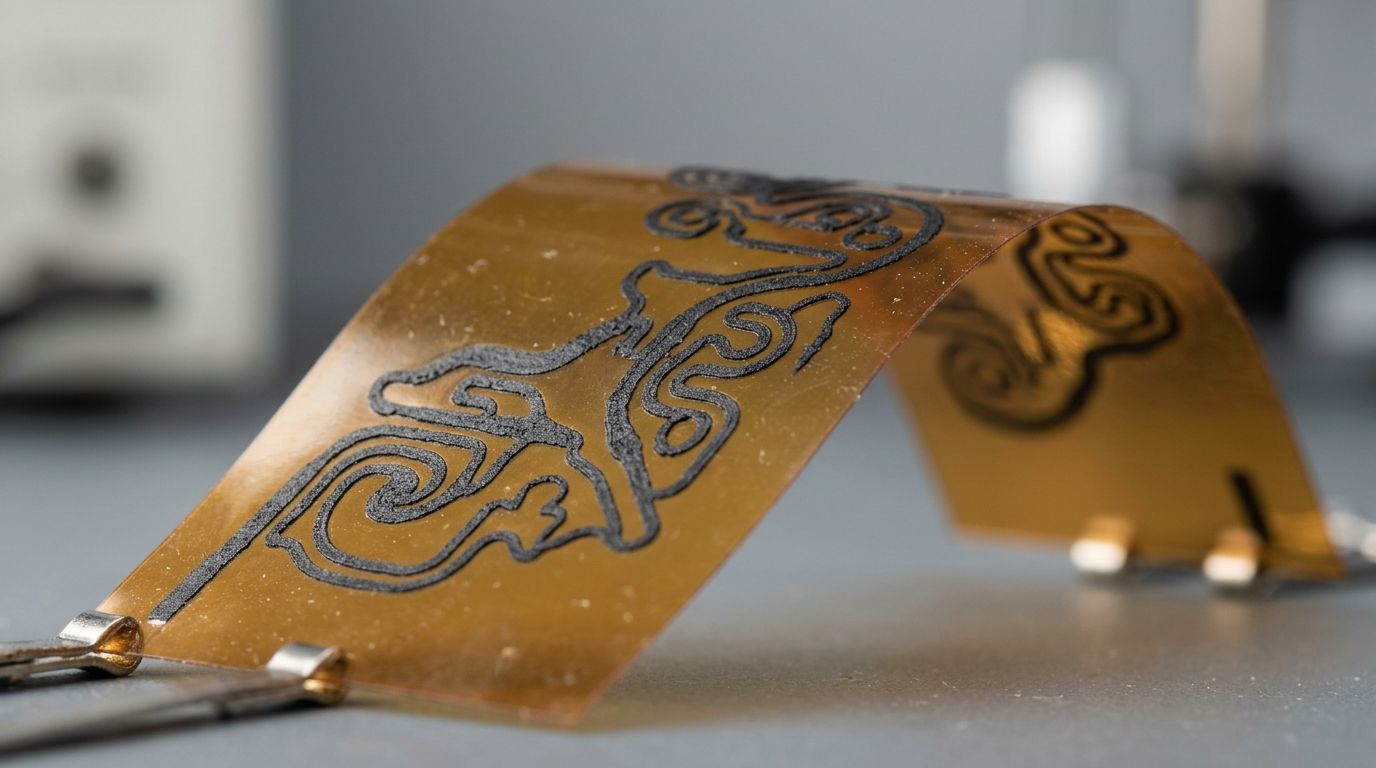
Researchers have successfully demonstrated the additive manufacturing and characterization of flexible rectangular patch antennas using a hybrid nanomaterial ink composed of carbon nanotubes and graphene oxide. These antennas are designed for integration onto curvilinear and deformable platforms, achieving ultra-wideband operation across super-high-frequency bands, with frequencies reaching up to 39 gigahertz. Unlike traditional metallic antennas that require rigid planar substrates and complex machining, these carbon-based antennas can be deposited at thicknesses of just a few microns, conforming to irregular surfaces. Tests on flat dielectric materials and 3D-printed curved substrates showed that the antennas maintained reflection coefficient values below minus ten decibels over broad bandwidths. This development provides an additive approach for creating lightweight, compliant antennas suitable for millimeter-wavelength wireless communication networks, biomedical monitors, and flexible electronic systems where conventional circuit board technologies are not feasible.
The growing demand for wireless communications in the tens of gigahertz range aligns with the rapid expansion of flexible electronics, wearable physiological sensors, and medical devices that require conformal integration. Microstrip patch antennas are widely used in aerospace, vehicular, mobile, and wearable applications due to their compact size, manufacturing simplicity, and low cost. However, antennas made from conventional metallic conductors like copper or gold face physical limitations at millimeter-wave frequencies. In these regimes, metallic conductors experience significant skin-effect losses, where alternating current flows only near the conductor surface, increasing electrical resistance. In contrast, conductive networks formed from carbon nanotubes do not exhibit significant skin-effect restrictions, allowing more uniform current flow. Additionally, the slow-wave propagation characteristics of carbon nanotube assemblies enable the miniaturization of resonant antenna elements at high frequencies.
To address mechanical rigidity and high-frequency processing constraints, the research team developed an aqueous conductive ink made of single-walled carbon nanotubes and graphene oxide flakes without chemical binders. Purified single-walled carbon nanotubes with bundle lengths between 0.5 and 1.5 microns were mixed with an aqueous dispersion of graphene oxide flakes at a mass concentration of five milligrams per milliliter. The carbon nanomaterials were combined in a one-to-one weight ratio and homogenized through mechanical vibration and ultrasonication in distilled water. The inclusion of flake-like graphene oxide particles suppresses the coffee-stain effect that often hinders drying nanoparticle droplets. The ellipsoidal geometry of graphene oxide flakes promotes homogeneous drying and guides the self-assembly of uniform carbon nanotube networks. The resulting binder-free suspension exhibits shear-thinning behavior under applied stress, allowing smooth extrusion through fine-gauge syringe nozzles.
The antenna structures were fabricated using an automated Hydra 16A syringe printer programmed with numerical machine code to direct ink deposition. Instead of printing directly onto varied substrates, the researchers used a peel-and-stick method by printing antenna patterns onto thin polyethylene terephthalate films backed with pressure-sensitive adhesives. Once printed and cured through solvent evaporation, these flexible films with conductive patch patterns can be detached and adhered onto flat, curved, or articulated target surfaces. Surface profilometry across single-pass traces confirmed consistent deposition with cross-sectional thicknesses under three microns, while three-pass printing of the antenna patch yielded a uniform thickness of approximately ten microns across horizontal and vertical directions.
Designing an efficient patch antenna with carbon-nanotube and graphene-oxide composite materials involves addressing trade-offs related to nanomaterial conductivity. Although the interconnected carbon nanotube network establishes finite electrical pathways, oxygen-rich functional groups on graphene oxide flakes introduce resistive losses, increasing surface resistance compared to bulk copper. Guided by transmission line theory, the authors recognized that input impedance is governed by surface resistance and radiating width. By scaling up the dimensions of the radiating patch to ten millimeters in length and thirty millimeters in width, the design reduced surface current density while increasing radiation resistance, achieving effective impedance matching with standard fifty-ohm coaxial lines. For structural deployment and testing, the team prepared three distinct substrate environments: commercial flat FR4 dielectric boards, customized curvilinear polylactic acid substrates, and articulated polylactic acid substrates with mechanical hinge joints, each backed with adhesive copper ground planes.
Radio-frequency characterization using a calibrated vector network analyzer and a 2.92-millimeter coaxial edge connector demonstrated remarkable ultra-wideband performance for the printed patch antennas mounted on flat FR4 substrates. Experimental reflection coefficient measurements showed that parameter S11 dropped below the minus ten decibel threshold at approximately 12 gigahertz and remained consistently below this benchmark up to 39 gigahertz. This sustained return loss corresponds to a fractional bandwidth of 104 percent relative to a center frequency of 25 gigahertz, with sharp resonant notches plunging to minus thirty decibels at 18, 32, and 34 gigahertz. In contrast, a reference copper patch antenna operated only within a narrow band from 18 to 20 gigahertz, exhibiting a fractional bandwidth of merely 10.5 percent. The authors explained that the broad bandwidth of the carbon nanomaterial antenna results from the lossy, dispersive nature of the composite, which lowers the quality factor and enables multiple overlapping resonant modes.
To analyze electromagnetic radiation mechanisms, the researchers conducted three-dimensional simulations using ANSYS High Frequency Simulation Software, modeling the antenna patch on an FR4 substrate with a bulk conductivity of 3.3 times ten to the third power siemens per meter. In the model, ideal excitation was provided through a lumped port, and the ground plane was assigned lossless boundary conditions. While numerical simulation predicted well-defined resonances with smooth reflection profiles, comparison against physical measurements revealed frequency shifts, bandwidth variations, and higher return loss in physical experiments. The research team identified several non-idealities responsible for these discrepancies, including material inconsistencies in the deposited nanomaterial and adhesive layers, minor air gaps, imperfect adhesion to the substrate, parasitic reactive effects introduced by the SMA connector, and physical transitions across the feed line that departed from the idealized lumped excitation source.
Antenna radiation efficiency was experimentally evaluated across the 17 to 19 gigahertz band by measuring the transmission coefficient S12 in a reciprocal two-port configuration using the vector network analyzer, with the reference copper antenna serving as an ideal receiver. Under this arrangement, the printed carbon-nanotube and graphene-oxide patch antenna exhibited an estimated radiation efficiency of approximately 15 percent, comparable to recently reported metal-free antenna designs. Parallel numerical simulations predicted an efficiency of approximately 30 percent. This discrepancy in physical prototypes is primarily caused by conductor losses within the printed network, where sheet resistance dissipates input power as heat rather than radiated power, supplemented by contact resistance, film porosity, and near-field measurement coupling. Simulated surface-current distributions revealed weak currents near the feed at an inter-resonant frequency of 10 gigahertz, whereas strong, distributed current profiles formed at 12.5 gigahertz, generating multi-lobed radiation patterns with a peak realized gain of 1.4 decibels at 12.25 gigahertz.
The adaptability of the printed antennas to non-planar geometries was evaluated by laminating adhesive-backed patches onto 3D-printed polylactic acid substrates fabricated via fused deposition modeling. On curvilinear substrates with fixed radii of curvature measuring 2.5 millimeters and 5.0 millimeters, the antennas maintained an operational reflection coefficient below minus ten decibels across a broad frequency span from 7 to 22 gigahertz, exhibiting peak reflection coefficients of minus 16.5 decibels and minus 18.5 decibels, respectively. However, severe bending angles induced degradation, shifting peak reflection values toward minus 20 decibels. The authors attributed this reduction to mechanical strain altering network contact resistance alongside microscopic inter-layer porosity created by stair-stepping voids during 3D printing.
Environmental durability is crucial for practical deployment, prompting the team to subject the printed patch antennas on flat FR4 substrates to thermal cycling and accelerated humidity stress tests. In the thermal cycling evaluation, samples were placed inside an environmental chamber and exposed to temperature extremes ranging between minus forty degrees Celsius and 125 degrees Celsius. Post-test vector network analyzer measurements showed minimal alteration in reflection coefficient characteristics, demonstrating that the direct-written carbon-nanotube and graphene-oxide network possesses robust thermo-mechanical resilience against cyclic thermal shock. Conversely, an accelerated humidity assessment conducted at sixty degrees Celsius and 85 percent relative humidity for three hours revealed noticeable degradation in resonant bandwidth and peak reflection performance, indicating susceptibility to moisture absorption.
Benchmarking evaluations against previously reported flexible and high-frequency antenna architectures highlight the distinct performance profile of the carbon-nanotube and graphene-oxide design. The authors noted that primary technical challenges remain centered on optimizing electrical conductivity, which is currently limited by unaligned nanotube orientation and resistive oxygen content on graphene oxide flakes. Future research will focus on tailoring carbon nanomaterial chemistry through machine learning models to identify optimal reduction states, integrating electromagnetic reflectors, metamaterials, and antenna arrays to enhance radiated gain and efficiency, and conducting extended environmental reliability trials. Overall, this direct-write additive manufacturing strategy demonstrates a robust approach for producing high-frequency, wideband antennas capable of conforming to complex deformable surfaces.
Source: Carbon Nanotubes Feed