Recovered carbon black from end-of-life tires used in Continental production
Continental is incorporating recovered carbon black from end-of-life tire pyrolysis into its tire production.
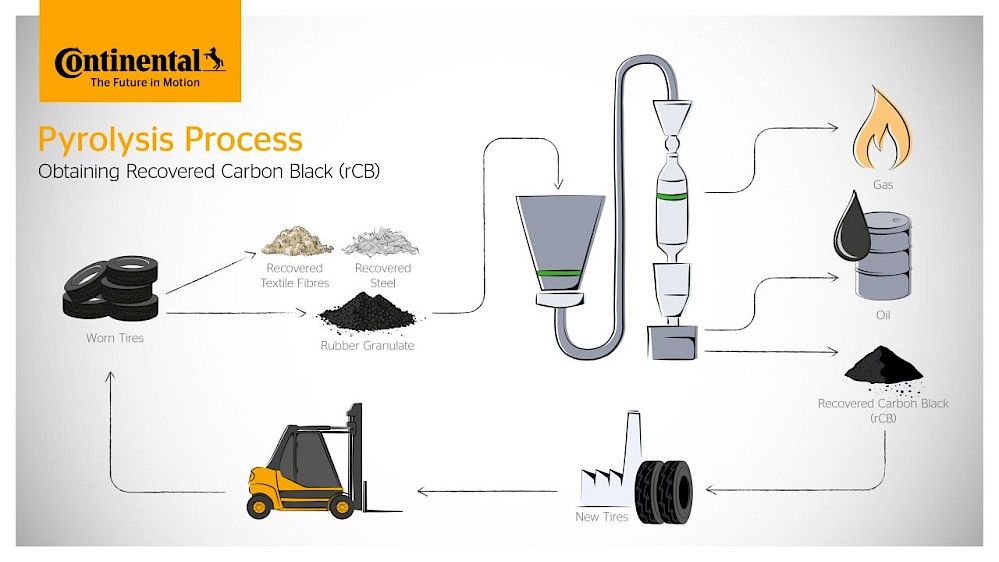
Recovered carbon black (rCB) from end-of-life tires is now being integrated into Continental AG's tire production, marking a significant step in the use of circular raw materials. At its Korbach, Germany plant, Continental is utilizing rCB supplied by Pyrum Innovations AG in the manufacturing of Super Elastic solid tires. This process reduces the need for fossil-derived virgin carbon black and helps lower the carbon footprint of tire production.
The use of rCB by a major tire manufacturer like Continental highlights the potential for tire-to-tire circularity, where end-of-life tires are seen as a valuable source of recoverable materials, including carbon, hydrocarbons, and steel, rather than waste. This approach supports the commercialization of tire pyrolysis, emphasizing the importance of reintegrating recovered materials into high-value industrial applications.
Traditional carbon black is typically produced from fossil hydrocarbon feedstocks and is essential for tire and rubber production due to its reinforcing properties. Pyrolysis of end-of-life tires allows for the recovery of carbonaceous material, which can be upgraded into rCB suitable for industrial applications. Pyrum's technology facilitates this process, with Continental incorporating the rCB into its rubber compounds, thus reducing fossil raw material consumption and CO₂ emissions.
Continental's Super Elastic tires, which already contain a high percentage of renewable and recycled materials, now benefit further from the inclusion of rCB. These tires are used in demanding industrial applications and require durability and efficiency. The integration of sustainable materials alongside performance requirements is crucial for the adoption of recovered materials in tire manufacturing.
The collaboration between Continental and Pyrum has evolved from development agreements to long-term commercial supply. In 2024, Continental announced a 10-year purchase agreement with Pyrum for rCB, with plans to expand its use into passenger-car tires. This partnership exemplifies the industrial ecosystem needed to scale circular tire technologies, highlighting the importance of offtake agreements in financing tire pyrolysis infrastructure.
Tire pyrolysis not only recovers carbon but also other valuable materials like steel and oil, contributing to a circular economy. Continental's strategy to use 100% sustainable materials by 2050 underscores the role of rCB in transforming the tire industry's raw-material supply chain. The collaboration with Pyrum demonstrates the potential for creating a circular market for carbon, where recovered materials are reintegrated into manufacturing processes, closing the loop in the tire lifecycle.
Source: Biomass & Recycled Carbons Feed