Review on preparation of LDHs/biochar composites and their water applications
Researchers have reviewed the preparation and application of layered double hydroxides (LDHs) and biochar composites for water pollution control. The coprecipitation method shows promise for industrial-scale production due to its simplicity and effective pollutant adsorption.
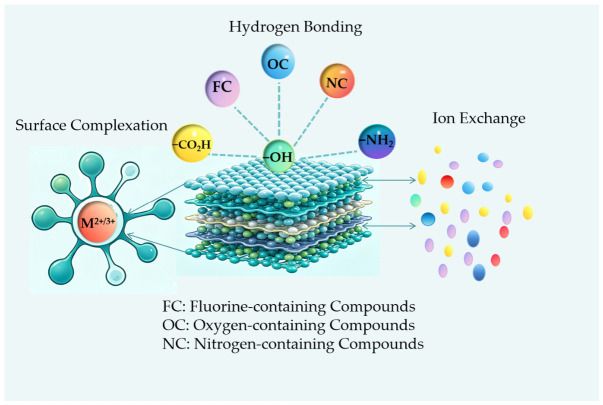
This article reviews the structural characteristics and preparation methods of layered double hydroxides (LDHs) and biochar composites, focusing on their application in water pollution control. The review highlights the adsorption mechanisms of these composites for various pollutants, including organic contaminants, heavy metals, and nutrients. It also discusses the potential for industrial-scale production and future research directions. LDHs/biochar composites show promise in removing dyes, antibiotics, heavy metal ions, and phosphates from wastewater, with coprecipitation being a simple and effective preparation method. The composites' removal mechanisms include electrostatic attraction, ion exchange, hydrogen bonding, complexation, and π–π electron interactions. Designing LDHs/biochar composites based on specific pollutant characteristics is crucial for effective pollution control.
The rapid industrialization and urbanization have led to increased wastewater discharge containing heavy metal ions and organic pollutants, posing threats to aquatic ecosystems and human health. Efficient, cost-effective, and eco-friendly wastewater treatment technologies are urgently needed. Adsorption is a promising approach due to its simplicity and high removal efficiency. While activated carbon has been widely used, its high cost and limited selectivity have prompted the exploration of alternative adsorbents like natural minerals and modified materials.
Layered double hydroxides are anionic layered materials with high anion exchange capacity, making them suitable for adsorption applications. However, their tendency to aggregate and poor mechanical strength limit their practical use. Biochar, a carbon-rich material produced from biomass, offers a solution by providing a porous scaffold to anchor LDH particles, enhancing the composite's adsorption performance. The LDHs/biochar composite combines the advantages of both components, improving pollutant removal efficiency.
LDHs/biochar composites have been used in advanced wastewater treatment, including phosphorus recovery and heavy metal purification. Despite their effectiveness, more research is needed on their microstructure, adsorption mechanisms, and long-term stability. This review aims to provide a comprehensive overview of LDHs/biochar composites and guide future research in developing high-efficiency adsorbents for water pollution control.
Layered double hydroxides consist of positively charged layers and exchangeable interlayer anions, with common cations including Mg2+, Zn2+, Ni2+, Al3+, and Fe3+. These materials have a high anion exchange capacity and hydrophilicity, making them effective for pollutant capture. However, their aggregation in aqueous solutions limits their practical application.
Biochar, produced by pyrolysis of biomass, features a hierarchical pore structure and oxygen-containing functional groups. It effectively sequesters heavy metals and organic pollutants, although its negatively charged surface limits its affinity for anionic pollutants. By integrating LDHs with biochar, the composite can capture both cationic and anionic pollutants, enhancing its overall adsorption capacity.
The preparation of LDHs/biochar composites involves methods like coprecipitation and hydrothermal synthesis. Coprecipitation is favored for its simplicity and potential for industrial scale-up. The hydrothermal method offers an environmentally friendly alternative, while ball milling is less effective. These methods enable the production of composites with high loading uniformity and favorable adsorption performance.
In summary, LDHs/biochar composites offer a promising solution for water pollution control, combining the strengths of both materials to enhance adsorption capacity and pollutant removal efficiency. Further research is needed to optimize their design and application in real-world conditions.
Source: Biochar Feed