Self-healing sensor inspired by skin reads wrist motion and handwritten digits
Researchers developed a self-healing MXene-polyurethane sensor that, with deep learning, can identify handwritten digits.
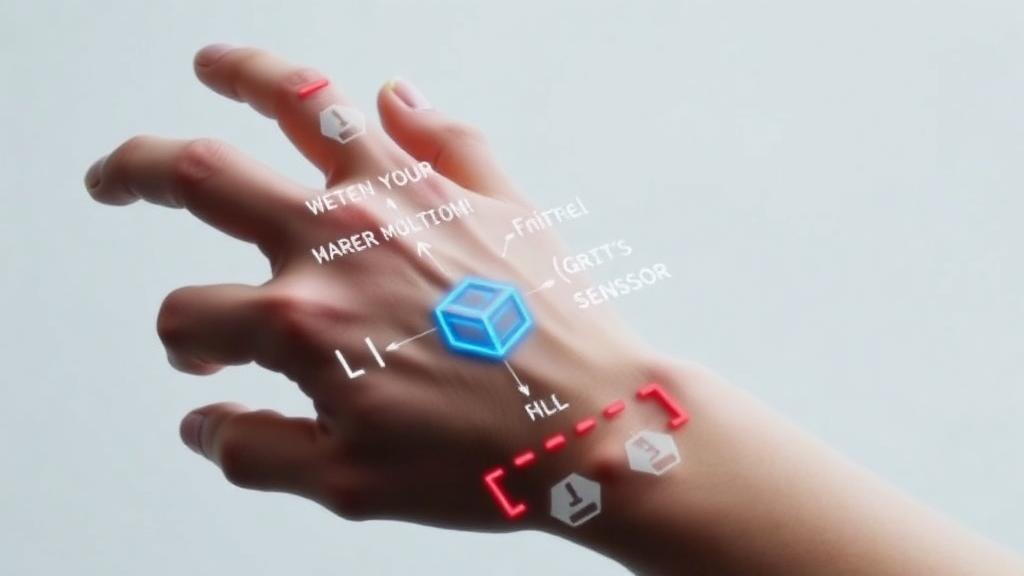
Researchers have developed a flexible sensor inspired by human skin that utilizes MXene nanosheets to achieve advanced motion recognition capabilities. The study, published in Advanced Composites and Hybrid Materials, details a biomimetic film with a layered structure that allows it to detect bending direction. This sensor, created by a team from Zhejiang Sci-Tech University, China Jiliang University, and Jilin University, integrates deep learning algorithms to interpret complex signals, enabling it to recognize handwritten digits and track wrist and forearm movements in activities such as table tennis.
The sensor's design mimics the asymmetrical distribution of sensory structures in human skin, achieved through a gravity-driven self-assembly process. MXene nanosheets, known for their conductivity, are modified with tannic acid and dispersed in a polyurethane matrix, forming a Janus structure with varying responses to mechanical stimuli. This configuration allows the sensor to differentiate between bending directions, applied pressure, and tensile strain.
The composite material demonstrates a balance of properties, stretching to 114% of its original length while maintaining a tensile strength of 7.56 megapascals and an electrical conductivity of 9.2 × 10⁻³ siemens per centimeter. Its ability to withstand repeated deformation and maintain conductivity is attributed to the asymmetric MXene distribution.
A key feature of the sensor is its self-healing capability, facilitated by a host-guest interaction between cyclodextrin and adamantane. These interactions form reversible cross-links in the polyurethane, allowing the material to recover 77.8% of its mechanical and electrical performance after damage. This self-repair mechanism ensures the sensor's durability under continuous use.
The integration of deep learning enhances the sensor's functionality by classifying complex electrical signals into distinct categories. In practical demonstrations, the sensor accurately identified handwritten digits and distinguished table tennis return postures, showcasing its potential for motion capture and gesture recognition applications.
This study highlights the synergy between biomimetic design, self-healing materials, and artificial intelligence, offering a new approach for high-performance flexible sensors. The research was supported by the Zhejiang Provincial Natural Science Foundation of China and the Zhejiang Sci-Tech University Fund, with the findings available open access for further exploration by the scientific community.
Source: MXenes