Texas A&M develops scalable graphene oxide production from methane
Researchers at Texas A&M University have developed a scalable process to produce graphene oxide from methane, a component of natural gas. This advancement could lower the cost of graphene oxide production, enhancing its availability for use in batteries, coatings, and electronics.
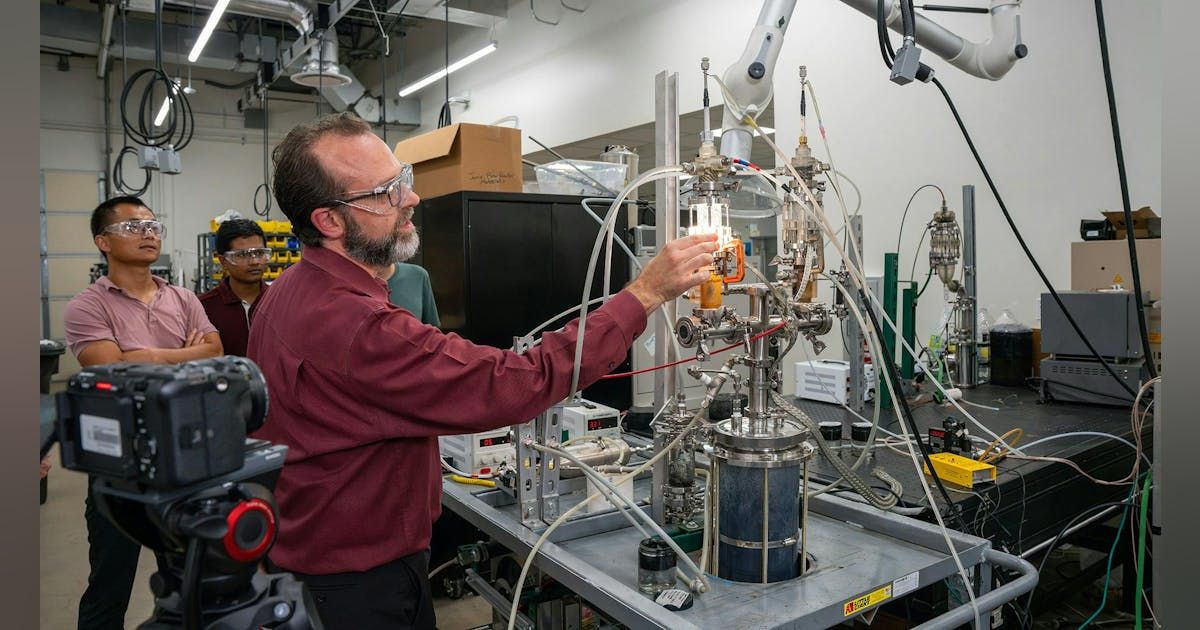
Researchers at Texas A&M University have developed a method to produce graphene oxide from methane, offering a potentially more cost-effective and scalable alternative to traditional methods.
Published in Nature Communications, the study outlines a process using a nonthermal plasma-water interface to transform methane, the main component of natural gas, into high-purity graphene oxide while also generating hydrogen. This research was led by Dr. David Staack, associate professor in the J. Mike Walker '66 Department of Mechanical Engineering and deputy vice chancellor for research at Texas A&M University.
Conventional graphene oxide production typically starts with mined graphite and involves chemically intensive processes. The new method, however, synthesizes graphene oxide directly from methane molecules. Graphene oxide, a carbon nanomaterial, is utilized in lithium-ion batteries, electronics, coatings, composites, and other advanced manufacturing applications.
The team highlighted that the current supply chains for graphite and graphite-derived materials are limited in the United States, prompting interest in alternative production methods. The graphene oxide produced via the plasma process demonstrated properties comparable to commercially available graphene oxide, and the study showcased a scalable approach capable of producing high-purity, single-layer graphene oxide under atmospheric conditions.
Dr. Micah Green, professor and associate department head of chemical engineering and co-principal investigator, stated that this work marks the first reported scalable production of graphene oxide from natural gas precursors. He emphasized that the process supports industry efforts to convert petrochemical feedstocks into valuable carbon nanomaterials rather than emissions.
The technology could bolster domestic production of carbon nanomaterials, creating opportunities in energy storage, electronics, and advanced manufacturing. The research was supported by LTEOIL, an energy company based in College Station, Texas. The process not only converts carbon into graphene oxide but also generates hydrogen, offering a dual pathway for producing advanced materials and energy from the same feedstock.
Source: Graphene Feed