Tiny wrinkles alter electricity flow in graphene, Penn State finds
Researchers found that tiny wrinkles in graphene can alter its electrical properties. This discovery could lead to advanced control of electricity in ultrathin materials, enhancing sensor and electronic device performance.
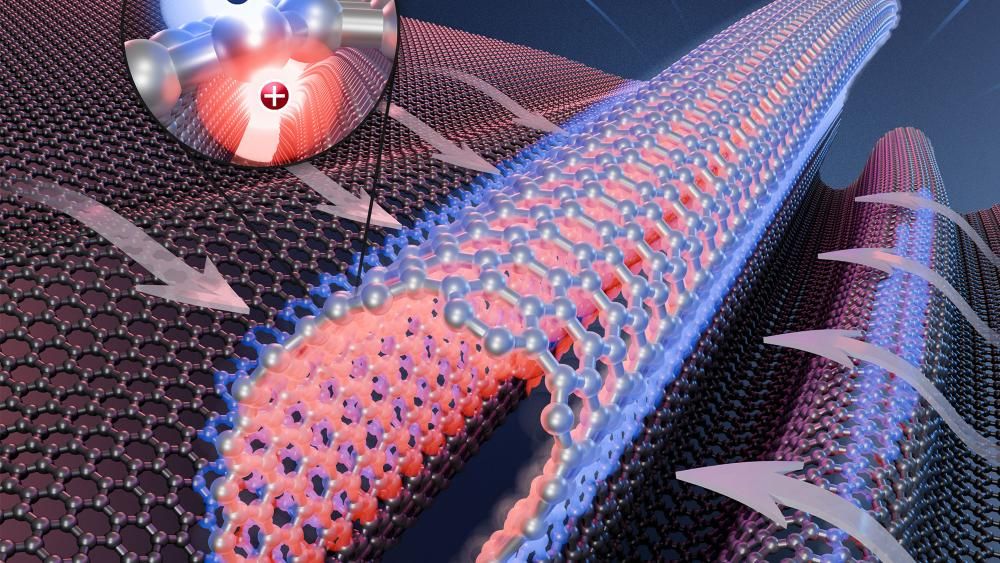
Recent research has demonstrated that tiny wrinkles in graphene can alter its electrical properties. This discovery suggests that scientists could potentially control electricity in atomically thin materials like graphene by modifying their shape, rather than introducing new chemicals or materials. This approach could lead to the development of more responsive sensors and ultrathin electronic devices.
A study published in Advanced Materials reveals that small bends in graphene's two-dimensional structure can change its electrical characteristics. The research team, including Vincent Meunier from Penn State, found that this wrinkling behavior is evidence of flexoelectricity—a phenomenon where uneven bending generates an electric dipole.
The concept of sharply bending graphene to rearrange electrons and produce an electrical response was first predicted by Meunier and Sergei V. Kalinin nearly two decades ago. Advances in fabrication technology have now enabled experimental testing of this theoretical prediction.
Sathvik Ajay Iyengar, the lead author of the study, revisited data collected with Manoj Tripathi and observed unusual electrical signals at the sharpest graphene wrinkles. These findings provided experimental validation of the earlier theoretical predictions.
The research team used specialized microscope probes and Raman spectroscopy to measure the wrinkles' shape and electrical properties. They found that the sharpness of the wrinkles, rather than their height, significantly influenced the electrical response, acting like tiny electrical speed bumps.
The study indicates that controlling curvature at the nanoscale could allow for tuning electrical behavior, supporting the development of advanced sensors and electronic devices. Understanding how natural wrinkles in materials influence electrical behavior offers a new tool for designing future technologies.
Additional contributors to the research include James McHugh, Jonathan Salvage, Robert Vajtai, Venkataramana Gadhamshetty, and Alan Dalton. The work was supported by various fellowships and the U.S. National Science Foundation.
Source: Graphene Feed