Autonomous heavy-lift platform launch aligns with composites manufacturing expansion
Tekever has introduced the AR6 heavy-lift drone family and broadened its collaboration with iCOMAT to boost AR5 drone production in the U.K.
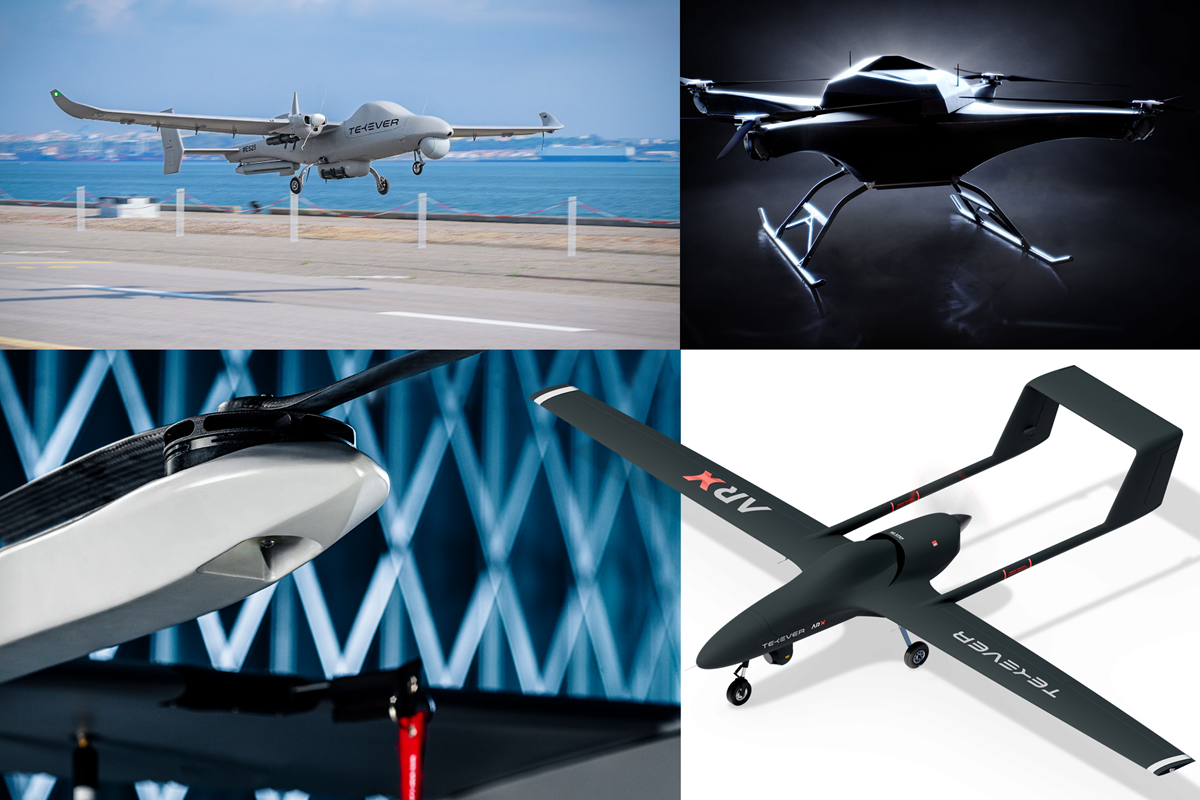
Tekever (Lisbon, Portugal) has introduced its AR6 family of heavy-lift autonomous aircraft, utilizing carbon fiber prepregs and other composites in its unmanned aerial systems (UAS). The company has also expanded its partnership with iCOMAT (Bristol, U.K.) to support the production of its existing AR5 system.
The AR6 aircraft extends Tekever's autonomous capabilities into the heavy-lift category, designed for civil applications such as logistics, medical support, and disaster relief, as well as military missions. The aircraft is developed in the U.K. with local SME partners, providing a sovereign solution for heavy-lift autonomy. Production is scheduled to begin by the end of 2026 at Tekever's Swindon manufacturing hub.
The AR6 features a maximum takeoff weight of 700 kilograms and can carry 200-kilogram payloads over distances of approximately 500 kilometers. This performance is attributed to a digitally controlled hydraulic pump and motor technology developed by Flowcopter (Edinburgh, Scotland), replacing traditional battery and electric-motor systems.
Tiago Nunes, Tekever's platforms director, emphasizes the use of optimal composite materials, including autoclave-cured carbon fiber-reinforced prepregs, to minimize weight and complexity. Carbon fiber is noted for its strength and radar reflectivity, while glass and aramid fibers are used for radio frequency transparency and impact resistance, respectively.
Tekever's CEO, Ricardo Mendes, highlights the centrality of composites in the company's strategy, even as it explores next-generation materials like metamaterials. The partnership with iCOMAT, known for its rapid tow shearing fiber placement process, supports the industrialization of the AR5 system under Tekever's £400 million OVERMATCH program.
The collaboration aims to scale manufacturing capacity and strengthen the U.K.'s defense industrial base. Both companies are supported by the NATO Innovation Fund, positioning them to demonstrate how technology developers and manufacturers can scale capabilities together.
Source: Carbon Fiber Feed